Diseases
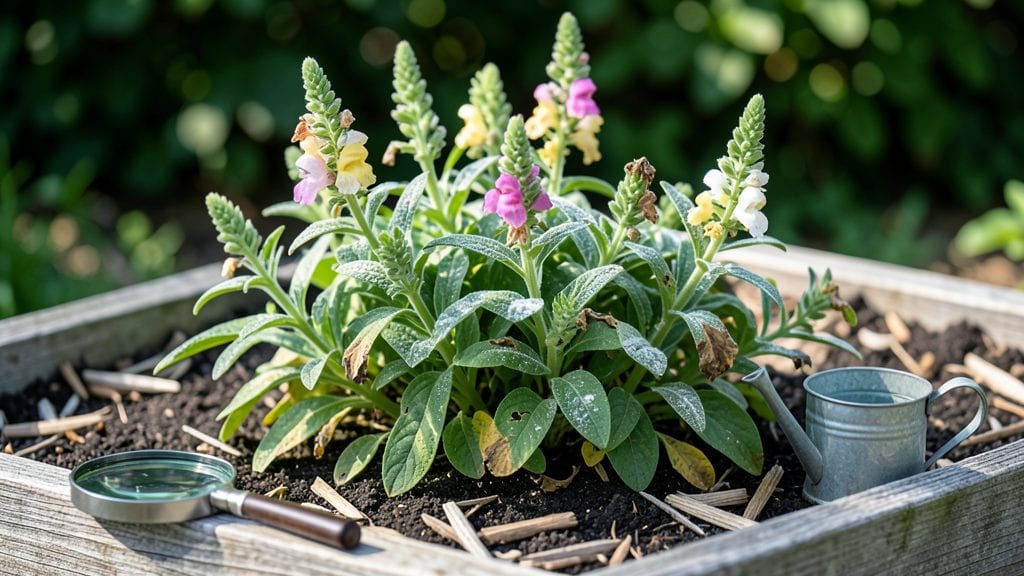
Snapdragon plant diseases can turn your vibrant garden into a sad, spotted mess if you don’t catch them early. 🌿 I’ve seen powdery mildew turn those velvety blooms into gray fuzzballs within weeks—and once it spreads, it’s a nightmare to fix.
The good news? Most of these fungal foes follow predictable patterns, so knowing the symptoms means you can act fast before they ruin your plants.
Powdery mildew, downy mildew, and rust are the top three culprits, each leaving its own telltale marks: white dust, yellow spots, or orange pustules. Bacterial spot shows up as tiny, water-soaked lesions, while root rot sneaks in when the soil stays too soggy.
The key to stopping them? Better airflow, less overhead watering, and a few simple organic sprays like neem oil or baking soda mix—all of which I’ll walk through step by step.
You’ll learn how to spot these diseases before they take hold, plus my go-to remedies that actually work (no more guessing if it’s “just a phase”).
With the right prevention, your snapdragons will stay tall, sturdy, and bursting with color all season. Let’s get those plants fighting back—before the fungi win.
Whether you’re dealing with a single infected leaf or a full-blown outbreak, this guide covers what to do now and how to keep your garden healthy next year. No more losing plants to mystery spots—just clear, actionable steps to save your snapdragons and keep your garden thriving.
Root Causes Of Snapdragon Struggles
Snapdragons (Antirrhinum majus) are stunning, but their vibrant blooms can quickly fade when battling fungal invaders. Understanding why these diseases strike is half the battle—because once you know the culprits, you can outsmart them.
Let’s break down the science behind the most common triggers, so you can protect your garden before trouble starts.
Fungal diseases like powdery mildew and downy mildew thrive in damp conditions, and snapdragons are especially vulnerable when their roots sit in soggy soil. Here’s why:
- Excess moisture creates the perfect breeding ground for spores. Fungi release enzymes that break down plant cell walls, leading to necrosis (dead tissue) and stunted growth.
- Poor aeration in compacted or clay-heavy soil suffocates roots, weakening the plant’s defenses. Weakened snapdragons can’t fight off infections as effectively.
- Fungal spores (like Peronospora for downy mildew) germinate in 24–48 hours when leaves stay wet overnight. Snapdragons’ fuzzy foliage traps moisture, accelerating spread.
💡 Pro Tip: Test your soil’s drainage by digging a 6-inch hole, filling it with water, and timing how long it takes to drain. If it’s slower than 6 hours, amend with perlite or compost to improve airflow.
Snapdragons love cool weather (ideal temps: 60–75°F), but when conditions swing to extremes—especially warm nights + high humidity—diseases like gray mold (Botrytis cinerea) and rust (Puccinia) pounce. Here’s the science:
| Condition | How It Helps Fungi | Snapdragon Reaction |
|---|---|---|
| High humidity (>75%) | Fungal spores stick to leaves via water films, germinating faster. | Leaves develop oily spots (downy mildew) or white powder (powdery mildew). |
| Cool, wet mornings | Slows plant transpiration, keeping foliage damp longer. | Stems rot at the base; flowers fail to open or drop prematurely. |
| Sudden temp drops | Stresses plants, lowering chlorophyll and weakening cell walls. | Leaves yellow (chlorosis) or develop rust-colored pustules. |
🌡️ Actionable Fix: Space plants 12–18 inches apart for airflow, and water early in the day so foliage dries by evening. Use a hygrometer to monitor humidity—aim for 40–60%.
Fungi don’t just appear—they hitchhike on wind, tools, or even old plant matter. Snapdragons in tight clusters or near infected debris (like last year’s flower stalks) are sitting ducks. Here’s how it works:
- Spores spread via splashing water or insects (like aphids carrying Erysiphe for powdery mildew). In crowded beds, spores have direct pathways to new hosts.
- Organic debris (leaves, stems) provides food and shelter for fungi over winter. For example, Botrytis overwinters in dead petals, then reinfects when spring arrives.
- Poor sanitation—like reusing contaminated pots or tools—transfers pathogens directly to healthy plants.
✨ Prevention Hack: Remove all plant debris after flowering, and sterilize pruners with a 10% bleach solution (1 part bleach to 9 parts water) between cuts. Rotate crops yearly to starve soil-borne fungi.
Snapdragons need a balanced diet—too much nitrogen or phosphorus throws their immune system off-kilter, making them 3x more susceptible to diseases like black spot (Alternaria). Here’s the breakdown:
- Excess nitrogen promotes soft, lush growth but thins cell walls, making leaves easier targets for fungal penetration.
- Low phosphorus (P deficiency) delays root development, so plants can’t absorb water or nutrients efficiently, stressing them.
- Magnesium or calcium deficiencies (common in acidic soils) cause intercellular gaps in leaves, giving fungi entry points.
📊 Soil Test Tip: Aim for a pH of 6.0–7.0 for snapdragons. If your soil is deficient, amend with bone meal (for P) or dolomitic lime (for Mg/Ca). Avoid high-nitrogen fertilizers like blood meal—opt for balanced 10-10-10 instead.
Now that you know the why, the next step is what to do. Stay tuned for our deep dive into identifying symptoms and organic treatment strategies to save your snapdragons!
Fixing Snapdragon Fungal Foes
Now that you’ve identified the culprit behind your snapdragon’s woes, it’s time to roll up your sleeves and restore your plants to their vibrant best! 🌱✨ Fungal diseases may sound intimidating, but with the right approach—prevention, prompt action, and proper care—you can turn things around.
Below, we’ve mapped out practical, step-by-step solutions for each common snapdragon disease, along with prevention tips to keep future outbreaks at bay.
Cause: Erysiphe or Golovinomyces fungi thrive in humid, shaded conditions, leaving white, powdery patches on leaves.
How to Fix It: 🔥 Remove Infected Foliage – Snip off heavily mildewed leaves with sterilized pruners (wipe with rubbing alcohol between cuts). Dispose of them in the trash—not the compost!
🍳 Cleanse with Baking Soda Spray – Mix 1 tsp baking soda + 1 tbsp horticultural oil + 1 tsp mild soap in 1 gallon of water.
Spray both sides of leaves every 5–7 days until symptoms fade. (Why it works: Baking soda raises leaf pH, making it inhospitable for fungi.)
👨🍳 Boost Airflow – Thin out crowded plants and space them 12–18 inches apart. Use a fan on low for 10–15 minutes daily to reduce humidity around leaves.
🥘 Prevent Recurrence – Plant snapdragons in full sun (6+ hours daily) and water at the base (avoid overhead sprinkling). Choose resistant varieties like ‘Matrix’ or ‘Rocket’ series.
Cause: Peronospora fungi spread in wet conditions, causing yellow spots on top leaves and fuzzy gray growth underneath.
How to Fix It: 🔥 Prune and Destroy – Cut off all infected stems (down to healthy tissue) and sterilize tools with bleach (1 part bleach to 10 parts water).
🍳 Apply Copper Fungicide – Use copper-based sprays (like Bonide Copper Fungicide) every 7–10 days for 3–4 weeks. (Organic option: Neem oil + potassium bicarbonate spray.)
👨🍳 Adjust Watering – Water early in the morning so leaves dry by evening. Avoid mulching too close to stems to prevent soil splashing.
🥘 Rotate Crops – Don’t plant snapdragons in the same spot next year. Fungi linger in soil for years—switch to a different family (like brassicas) for 2–3 seasons.
Cause: Botrytis cinerea thrives in damp, cool weather, causing brown, mushy stems and flowers (especially after rain).
How to Fix It: 🔥 Deadhead Religiously – Remove spent blooms and dead flowers daily to limit spore spread. (Pro tip: Use clean, sharp scissors—never tear stems!)
🍳 Hydrogen Peroxide Soak – Mix 1 tbsp 3% hydrogen peroxide per quart of water and spray every 3 days for 2 weeks. (Kills spores on contact!)
👨🍳 Improve Drainage – Ensure pots have drainage holes and avoid overwatering. Let soil dry 1–2 inches deep between waterings.
🥘 Solarize Soil (Advanced) – For severe cases, cover infected soil with clear plastic for 4–6 weeks in summer sun to kill fungi.
Cause: Puccinia fungi create orange pustules on leaves, weakening plants over time.
How to Fix It: 🔥 Burn or Bag Infected Leaves – Rust spores spread via wind—do not compost infected plant debris.
🍳 Sulfur or Fungicide Spray – Apply wettable sulfur (follow label rates) or myclobutanil-based fungicide every 10–14 days until new growth appears.
👨🍳 Plant Resistant Varieties – Choose snapdragons bred for rust resistance, like ‘Cupcake’ or ‘Tango’ series.
🥘 Avoid Over-Fertilizing – Too much nitrogen weakens plants, making them rust-prone. Use a balanced 10-10-10 fertilizer sparingly.
Cause: Soil-borne fungi clog xylem vessels, causing yellowing, wilting, and vascular discoloration (often fatal).
How to Fix It: ⏰ Act Fast—There’s No Cure – Once symptoms appear, remove and destroy the entire plant (including roots) to prevent spread.
💡 Solarize or Fumigate Soil – For garden beds, solarize for 6 weeks (cover with plastic). For pots, replace soil and sterilize containers with bleach.
🌡️ Choose Disease-Free Stock – Buy snapdragons from reputable nurseries and avoid secondhand plants. Test soil for fungi before planting.
🎯 Rotate Crops Aggressively – Wait 3–4 years before replanting snapdragons in the same spot.
- Start Clean: Sterilize tools, pots, and soil before planting.
- Space Plants: Crowding = humidity = fungal paradise.
- Water Wisely: Morning watering + drip irrigation > overhead sprinklers.
- Monitor Humidity: Use a hygrometer—keep levels below 60%.
- Boost Plant Health: Balanced fertilizer, mulch, and pruning strengthen defenses.
Final Thought: 🌟 Fungal diseases are manageable—don’t panic, act fast, and stay proactive! With these strategies, your snapdragons will bounce back stronger, and your garden will stay disease-free and dazzling. 🚀
Frequently asked questions
Why do my snapdragons get white powdery spots even when I water them at the base?
That’s likely powdery mildew, which thrives on humidity—not just watering habits. Even base watering can leave dew or splashed droplets on leaves overnight. The fuzzy foliage traps moisture, creating perfect fungal conditions. Try spacing plants 12–18 inches apart and using a fan for 10 minutes daily to dry leaves faster.
Can I still use my snapdragons in bouquets if they have rust spots?
Yes, but remove all infected leaves first! Rust (orange pustules) spreads via wind, so cut out affected areas before arranging. For long-term health, avoid over-fertilizing with nitrogen—it weakens plants and makes them more susceptible. Choose rust-resistant varieties like 'Cupcake' next season.
How do I know if my snapdragon’s yellow leaves are from disease or just old age?
Check for these clues: Disease shows spots, powder, or mushy stems alongside yellowing. Healthy aging leaves turn yellow evenly without other symptoms and drop naturally. If you see oily spots (downy mildew) or white dust (powdery mildew), it’s a fungal infection—act fast with neem oil or copper spray.
Will neem oil work on established snapdragon diseases, or is it just for prevention?
Neem oil helps both prevent and treat early-stage diseases like powdery mildew and downy mildew. Mix 1 tbsp neem oil + 1 tsp mild soap per gallon of water and spray every 5–7 days until symptoms fade. For severe cases (like rust or root rot), combine it with pruning infected parts and improving airflow.
Can I save a snapdragon plant with root rot?
Root rot (black, mushy roots) is often fatal, but you can try this: Remove the plant, trim all blackened roots, and replant in sterilized, well-draining soil (add perlite). For containers, replace soil entirely and sterilize pots with bleach. Afterward, avoid overwatering—let soil dry 1–2 inches deep between waterings.