Pruning
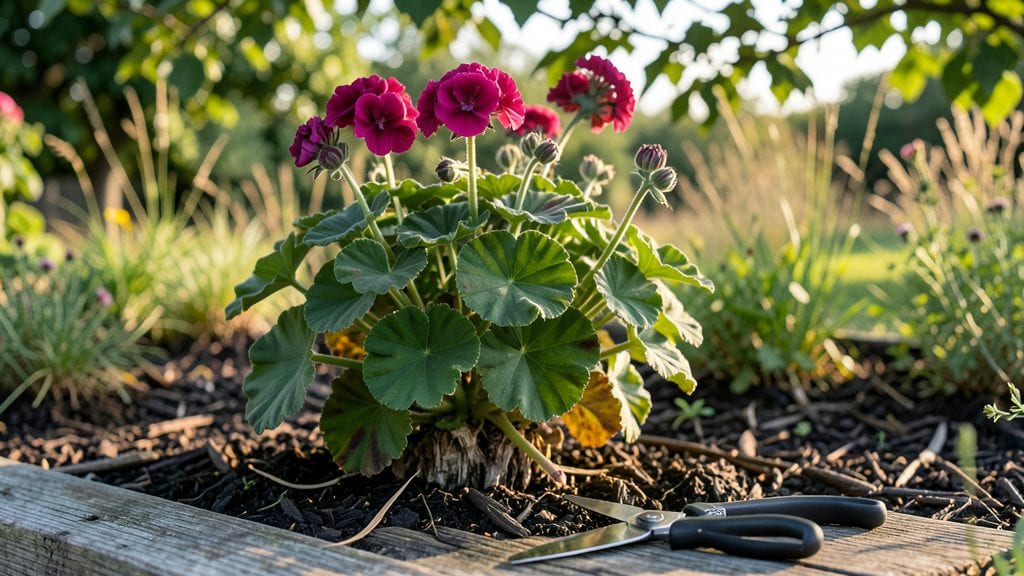
Pruning geranium plants three times a year turns leggy stems into a bushy, blooming powerhouse. 🌿 Last spring, my geraniums went from sad and scraggly to covered in flowers by summer—just by following this simple routine.
The key isn’t cutting everything back, but strategic trims that encourage new growth while keeping the plant healthy.
You’ll need just three tools: sharp pruning shears, rubbing alcohol (to sterilize between cuts), and a pair of gloves. Timing matters most—prune in early spring, mid-summer after blooms fade, and again in late summer to prep for winter.
Each trim takes about 10 minutes per plant, and the results are worth it: more flowers, fuller foliage, and plants that last for years.
After pruning, your geraniums will look like they’ve been hit by a storm—until new shoots appear within 2-3 weeks. The secret is cutting just above a leaf node at a 45-degree angle, which encourages bushier growth.
Pinch off any dead or diseased stems first, then shape the plant by removing up to one-third of the leggiest growth at a time.
This method works for both indoor and outdoor geraniums, including trailing varieties. The only rule? Never prune in fall—let the plant rest. With these three seasonal trims, you’ll have geraniums that bloom from May until frost, and neighbors asking for cuttings.
📚 In This Guide
- What you need
- Instructions
- Tips and common mistakes
- Wrapping up and next steps
What you need
- ● Pruning shears: Bypass pruners (sharp, clean blades, 5–7 inches long) for clean cuts. Quantity: 1 pair.
- ● Hand pruners: Small, ergonomic for delicate stems (great for indoor geraniums). Quantity: 1 pair.
- ● Gloves: Garden gloves (nitrile or leather) to protect hands from thorns and dirt. Quantity: 1 pair.
- ● Disinfectant: Rubbing alcohol (70%+) or hydrogen peroxide (3%) to sterilize tools between cuts. Quantity: Small bottle.
- ○ Pruning saw (optional): For thick, woody stems (rare for geraniums but useful for mature plants). Quantity: 1.
- ● Sharpener: Pruner sharpening tool or sandpaper to maintain blade sharpness.
- ● Compost bin: For collecting pruned clippings (geraniums regrow easily from cuttings!).
- ● Plant food: Balanced liquid fertilizer (10-10-10) to revive plants post-prune.
- ● Twine or plant ties: To support leggy stems if needed after trimming.
How to prune geraniums for nonstop colorful blooms
Three simple cuts a year keep your geraniums lush, flowering, and thriving—no fancy tools required.
✂️ Step 1: First Trim After Spring's Last Frost
Wait until after all danger of frost has passed—usually when nighttime temps stay above 50°F consistently. Look for fresh new growth at the base of stems; that's your signal. Using clean, sharp pruners, cut back each stem by about one-third, just above a leaf node where new buds form.
Real talk: If your geraniums look ragged from winter, don't panic—this is the moment to transform them. You'll see fresh green leaves emerge within 2-3 weeks as the plant focuses energy on new growth. I always snip off any dead or brown stems first—they only slow down the plant.
✂️ Step 2: Mid-Season Deadheading for Continuous Flowers
When you notice spent blooms with brown, papery petals, it's time to deadhead. Pinch off the entire flower cluster down to the next set of leaves—this prevents seed formation and redirects energy to new buds. Work your way through the plant, checking every stem for faded blooms.
Here's the thing—geraniums bloom best when they're encouraged to focus on flowers, not seeds. I do this every 2-3 weeks during peak bloom season (late spring through summer). You'll see new flower buds forming within 10-14 days of each deadheading session.
✂️ Step 3: Late Summer Renewal Cut for Fall Growth
Around mid-to-late August, give your geraniums another haircut. This time, cut back all stems by half their height, again just above a leaf node. You're essentially resetting the plant for a second flush of blooms in fall. The key is timing—do this too early, and you'll miss summer flowers; too late, and fall blooms won't develop properly.
After this cut, you might see a temporary lull in flowering, but don't worry. With proper care, you'll get another 4-6 weeks of blooms before frost. I always fertilize lightly after this trim to support the new growth spurt—just a sprinkle of balanced fertilizer around the base.
✂️ Step 4: Winter Prep for Next Year's Growth
As temperatures drop below 40°F at night, stop all pruning. Instead, focus on cleanup. Remove any remaining dead or diseased stems, and cut back any leggy growth by one-quarter. This keeps the plant tidy and prevents pests from overwintering in dead foliage.
I know it seems counterintuitive to cut back in winter, but this actually helps the plant store energy for next spring. If you're growing in containers, bring them indoors to a cool, bright spot (like a garage or unheated sunroom) where temps stay between 35-50°F
Tips & tricks for perfect pruning geraniums
These simple tricks will help you keep your geraniums blooming beautifully all year—no green thumb required.
Timing is Everything: The 50°F nighttime temperature threshold in Step 1 is your green light to prune. I check my local weather forecast for the last frost date, then wait an extra week to be safe. Geraniums are tough, but cold snaps can still damage new growth. If you're unsure, wait until you see fresh leaves pushing through at the base—those are your signal to start cutting.
Tool Tip: Don't have pruners? Use clean, sharp scissors or even your fingers for deadheading—just make sure your tools are sterilized with rubbing alcohol first. I keep a small bottle of alcohol in my gardening toolbox specifically for this. The key is making clean cuts just above leaf nodes to encourage new growth.
Visual Cues Matter: When you're deadheading in Step 2, look for those telltale brown, papery petals on spent blooms. The entire flower cluster should come off down to the next set of leaves—this redirects energy to new buds. I always work my way through the plant systematically, checking every stem. You'll notice new flower buds forming within 10-14 days of each deadheading session, which is incredibly satisfying!
Fertilizer Strategy: After that late summer renewal cut in Step 3, I sprinkle a light layer of balanced fertilizer around the base. You don't need much—just enough to support the new growth spurt. I've found that geraniums respond better to frequent light feedings than heavy doses. This is also a great time to water deeply to help the plant recover from the dramatic cutback.
Pro Tips for Pruning Geranium Plants
- These simple tricks will help you keep your geraniums blooming beautifully all year—no green thumb required.
- Timing is Everything: The 50°F nighttime temperature threshold in Step 1 is your green light to prune.
- Tool Tip: Don't have pruners?
Frequently asked questions
Got questions about keeping your geraniums lush and blooming? Here are some of the most common concerns—and their simple solutions!
When is the best time to prune geraniums for maximum blooms?
Prune geraniums three times a year: in early spring (to remove dead growth), mid-summer (to encourage fall blooms), and late summer/early fall (to prep for winter). Avoid heavy pruning in late fall—this can stress the plant before dormancy. Light trims are fine, but wait until spring for major cuts!
How much should I cut back geraniums during each pruning?
Follow the 1/3 rule: Never remove more than one-third of the plant’s height in a single session. For example, if your geranium is 12 inches tall, trim back to 8 inches max. Focus on cutting just above a leaf node (where new growth emerges) to encourage bushiness. Pro tip: Use clean, sharp shears to avoid tearing stems!
What if my geraniums look leggy or sparse after pruning?
Leggy growth happens when plants don’t get enough light or are over-pruned. To fix it:
- Move your geranium to a sunnier spot (6+ hours of light daily).
- Fertilize lightly with a balanced, water-soluble fertilizer (10-10-10) after pruning.
- Pinch back new growth tips weekly to promote bushier growth.
Can I prune geraniums in winter, or should I wait?
Winter pruning is optional but only for mild climates (zones 9-11). In colder areas, wait until spring (after the last frost) to prune. If you must trim in winter, do a light cleanup—remove only dead or diseased stems. Avoid heavy cuts, as geraniums are semi-dormant and need energy to survive.
Will pruning geraniums make them bloom more, or is it just for looks?
Pruning is a game-changer for blooms! By removing spent flowers and leggy stems, you redirect the plant’s energy into new growth and buds. Regular pruning can double (or even triple!) your geranium’s flowering season. Plus, it keeps the plant compact and prevents flopping. Think of it as a spa day for your geraniums—blooms will thank you!
What’s the difference between pruning and pinching geraniums?
Both encourage bushier growth, but they’re not the same!
- Pruning: Uses shears to cut back stems (typically 1/3 of the plant) to shape and promote blooms. Best for larger trims.
- Pinching: Uses fingers to remove the top few inches of new growth (just above a leaf node) to encourage branching. Ideal for young plants or maintenance.
Wrapping up and next steps
Pruning your geraniums isn’t just about keeping them tidy—it’s the secret to vibrant, long-lasting blooms all year round! 🌸 With just three seasonal trims, you’ll encourage bushier growth, prevent legginess, and enjoy a nonstop floral show.
Now that you’re armed with the right tools, timing, and techniques, there’s no better time to roll up your sleeves and transform your geraniums into thriving, picture-perfect plants.
Ready to take the next step? Pick a sunny day, grab your shears, and start pruning! Your garden (and future blooms) will thank you. 🌿✨