
Pruning
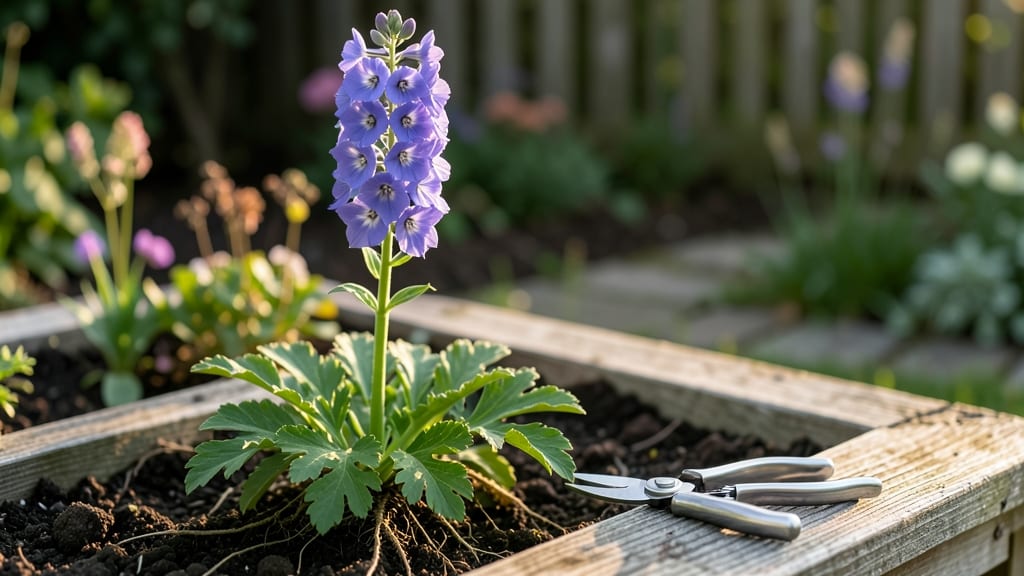
Pruning delphinium plants isn’t just about keeping them tidy—it’s the secret to those 6-foot-tall spikes of blue and purple blooms that steal the show every summer. 🌿 I’ve learned the hard way that skipping this step means fewer flowers and leggy stems that flop over by midsummer.
The right cuts at the right time transform delphiniums from gangly weeds into garden showstoppers.
Timing matters most: deadhead spent blooms in early summer to encourage more flowers, but wait until late fall to cut back the entire plant—never in spring, or you’ll sacrifice next year’s blooms. You’ll need sharp pruners (sterilized with rubbing alcohol first!) and a steady hand, since delphinium stems are brittle.
Think of it like giving your plants a haircut—the goal is to shape without shocking them.
After pruning, give your delphiniums a drink to help them recover, then hold off on heavy fertilizer until new growth appears. Within weeks, you’ll see fresh shoots pushing upward, and by next summer, your plants will be bursting with blooms instead of sprawling awkwardly.
The key is patience—delphiniums reward careful pruning with years of dramatic height and color.
This method works for both cultivated varieties and wild types, though dwarf delphiniums need lighter cuts. Avoid pruning into woody stems (they won’t regrow), and never remove more than one-third of the plant at once.
With practice, you’ll have delphiniums that look like they belong in a botanical garden—not just your backyard.
📚 In This Guide
- What you need
- Instructions
- Tips and common mistakes
- Wrapping up and next steps
What you need
- ● Pruning shears or bypass pruners – Sharp, clean, and sterilized (avoid dull blades that crush stems).
- ● Garden gloves – Thick, cut-resistant gloves (delphiniums can have thorns!).
- ● Disinfectant (70% isopropyl alcohol or bleach solution) – 1 part bleach to 9 parts water for sterilizing tools between cuts.
- ○ Garden twine or plant ties – For supporting tall, leggy stems after pruning (optional but helpful).
- ● Compost bin or bag – For disposing of deadheaded flowers (or repurpose them as mulch).
- ● Watering can or hose – To hydrate plants before and after pruning (especially in hot weather).
- ● Handheld mirror – For checking hard-to-reach spots (like the base of tall stems).
- ● Ruler or measuring tape – To mark ideal pruning heights (e.g., 6–12 inches from the base).
- ● Plant food or fertilizer – Balanced 10-10-10 or phosphorus-rich formula to encourage regrowth.
- ● Stake or trellis – For reinforcing stems if your delphiniums are top-heavy post-prune.
Step-by-Step guide to pruning delphinium for long-stemmed blooms
Delphiniums thrive when you prune with precision—here's how to keep them flowering tall and strong.
✂️ Step 1: Remove Spent Blooms Immediately After Fading
Use sharp, clean pruners to snip off faded flower spikes at the first joint below the bloom. This technique, called deadheading, redirects the plant's energy into producing new stems rather than setting seed. I always prune on a dry morning when the stems are firm—wet stems tear easily and invite rot.
Look for flower stalks where the blooms have fully opened and begun to droop. Cut just above a set of healthy leaves or a side bud to encourage branching. If you leave even one seed pod, the plant will divert resources toward seed production instead of new growth. For delphiniums, timing matters—waiting too long weakens the plant's ability to rebloom.
✂️ Step 2: Thin Overcrowded Stems for Better Airflow
After the first flush of blooms, assess the plant's structure. Delphiniums naturally produce multiple stems from the base, but too many compete for nutrients. Remove the thinnest, weakest stems at the base, cutting them back to the ground. This opens up the plant's center, allowing better airflow and reducing fungal diseases like powdery mildew.
Focus on stems that are pale, leggy, or growing at odd angles. These are energy vampires, sapping resources from stronger stems. Leave 3-5 of the healthiest, most upright stems per plant—this ensures each remaining stem develops strong, long-lasting blooms. I prune these stems in early summer, just as the first flowers begin to fade.
✂️ Step 3: Lightly Trim Foliage to Encourage New Growth
Once you've removed spent blooms and thinned stems, give the foliage a light trim. Cut back any yellowed or damaged leaves to the nearest healthy growth point. This isn't about drastic pruning—delphiniums store energy in their roots, and aggressive cuts can stress the plant. Instead, think of this as a tidying-up step to improve the plant's overall health.
Pay special attention to the lower leaves, which can become shaded and prone to disease. Remove only what's necessary to open up the plant's structure. Avoid cutting into woody stems—delphiniums are perennial and need their structural framework intact. After trimming, water deeply to help the plant recover and stimulate new growth.
✂️ Step 4: Prepare for Fall with Strategic Pruning
As temperatures drop and blooming slows, focus on cleaning up the plant for winter. Cut back all remaining flower stalks to within 6 inches of the ground. This removes potential disease sites and prevents seed heads from spreading. However, leave the basal foliage intact—it protects the crown and insulates the plant through winter.
Delphiniums are hardy perennials, but they benefit from a light mulch after pruning. Apply a 2-inch layer of organic mulch around the base to retain moisture and regulate soil temperature. Avoid piling mulch against the stems, as this can trap moisture and encourage rot. In early spring, remove any dead or damaged foliage before new growth emerges.
⏰ Step 5: Monitor and Adjust Through the Growing Season
Delphiniums respond well to ongoing attention. Throughout the growing season, keep an eye out for any stems that become leggy or overcrowded. Prune these promptly to maintain the plant's shape and flowering potential. Regular deadheading encourages continuous blooming, especially in warm climates where delphiniums can rebloom.
If your delphiniums produce fewer blooms than expected, consider whether they need more sunlight or nutrients. These plants thrive in full sun and well-draining soil. A balanced fertilizer applied in early spring can also boost flowering. With consistent pruning and care, your delphiniums will reward you with towering spikes of color year after year.
Tips & tricks for pruning delphinium plants
Precision pruning transforms your delphiniums from average to showstopping—here's how to avoid the pitfalls that ruin their dramatic height.
Timing is Everything: In Step 1, don't wait until blooms are completely wilted—act when they've fully opened but just begun to droop. I've learned the hard way that waiting too long diverts energy to seed production instead of new growth. For maximum height, prune in the cool morning hours when stems are firm and less prone to tearing. If you must prune later in the day, work with the stems' natural flexibility rather than forcing cuts.
Tool Selection Matters: Never use dull or dirty pruners for Step 1 or Step 2. A sharp, clean pair of bypass pruners creates clean cuts that heal faster and reduces disease risk. I keep a dedicated pair for delphiniums and disinfect them between plants with rubbing alcohol. For the 6-inch fall cut in Step 4, consider using loppers for thicker stems—your wrists will thank you after pruning multiple plants.
Seasonal Strategy: The 6-inch fall cut in Step 4 is your secret weapon for next year's blooms. This height preserves the crown while removing disease vectors. I mark my calendar for late October in colder climates or November in warmer zones, timing the cut just before the first hard frost. For the 2-inch mulch application, use straw rather than wood chips—it breaks down more slowly and won't compact against the stems.
Visual Cues for Perfect Pruning: In Step 3, look for leaves that are yellowing at the edges or have brown spots before you trim. Healthy leaves should be deep green with a slight waxy sheen. For the 3-5 stem selection in Step 2, choose stems that are upright and have the thickest diameter at the base. These visual cues help you make quick decisions even when you're pruning multiple plants in a garden bed.
Pro Tips for Pruning Delphinium Plants
- Precision pruning transforms your delphiniums from average to showstopping—here's how to avoid the pitfalls that ruin their dramatic height.
- Timing is Everything: In Step 1, don't wait until blooms are completely wilted—act when they've fully opened but just begun to droop.
- Tool Selection Matters: Never use dull or dirty pruners for Step 1 or Step 2.
Frequently asked questions
Got questions about keeping your delphiniums thriving after pruning? Here are some common concerns—and their answers—to help you master the art of deadheading and pruning these stunning plants.
When is the best time to prune delphiniums?
Prune delphiniums after they finish blooming in early summer (June–July) to encourage a second flush of flowers. For perennials, cut back 1/3 of the plant height in late fall or early spring to promote new growth. Annuals can be pruned lightly throughout the season to maintain shape.
How do I prune delphiniums without harming them?
Use clean, sharp pruners to avoid crushing stems. Cut just above a set of leaves or a bud (never at a bare stem) to encourage regrowth. Never remove more than 1/3 of the plant at once—delphiniums are delicate! For tall varieties, support stems with stakes before pruning to prevent flopping.
Will pruning delphiniums make them bloom more?
Yes! Regular deadheading (removing spent blooms) redirects energy from seed production to new flowers. Pruning after the first flush also stimulates a second round of blooms in late summer. Just avoid heavy pruning too late in the season—it can stunt fall growth.
What if my delphiniums look leggy after pruning?
Leggy growth happens if you prune too late or too aggressively. To fix it, pinch back tips in early summer to encourage bushier growth. Fertilize lightly with a balanced 10-10-10 mix and ensure they get full sun (6+ hours daily). Mulch around the base to retain moisture.
Can I prune delphiniums in containers?
Container-grown delphiniums need more frequent pruning since space is limited. Deadhead weekly and trim back by 1/4 after the first bloom cycle. Use a well-draining potting mix and repot every 2–3 years to prevent root bound issues.
Wrapping up and next steps
Pruning your delphiniums doesn’t have to be intimidating—it’s all about timing, technique, and a little patience!
By mastering deadheading and strategic cuts, you’ll encourage those stunning, towering blooms to thrive year after year. 🌸 Now that you’re armed with the know-how, grab those shears and give your delphiniums the TLC they deserve.
Ready to take it further? Experiment with different pruning schedules or try growing delphiniums in containers for a portable pop of color. Happy gardening!