
Pruning
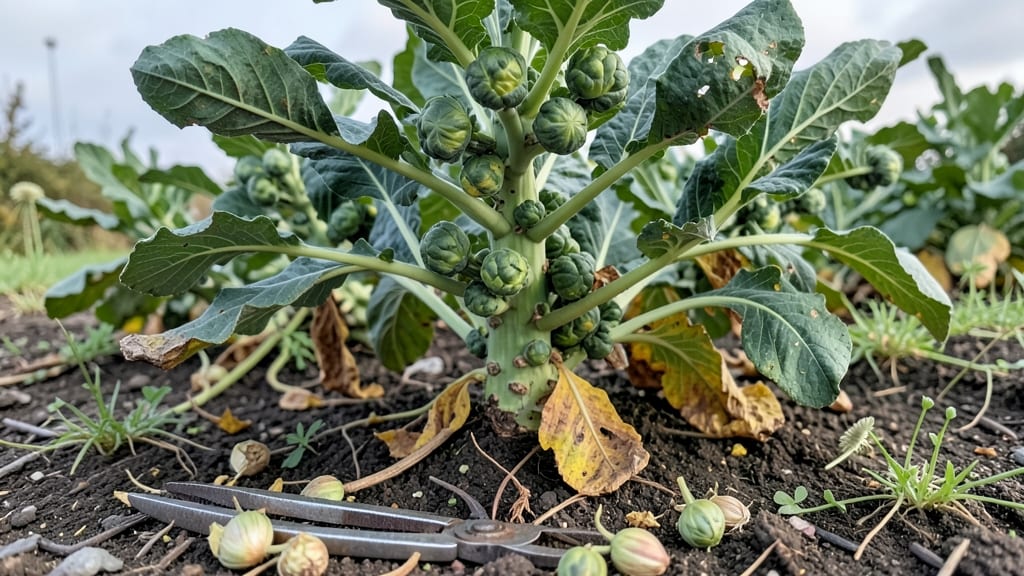
Pruning Brussel sprout plants isn't just about trimming—it's the secret to turning a single harvest into a year-round bounty of tender, flavorful sprouts. I learned this the hard way after letting my first plant bolt too early, leaving me with just a handful of undersized sprouts.
The right cuts at the right time transform a scraggly stem into a bushier, more productive powerhouse that keeps giving well into winter.
You'll need sharp pruning shears, a clean knife, and about 20 minutes of focused work every few weeks. The key is timing: start when sprouts reach 1-2 inches in diameter, then keep harvesting the largest ones while leaving smaller ones to grow.
This method works because it encourages the plant to focus energy on producing more sprouts lower down the stem, not just one big harvest at the top.
By following this approach, you'll end up with larger, more uniform sprouts and a plant that keeps producing until frost. The first harvest is always the biggest, but with proper pruning, you'll enjoy fresh sprouts for 8-10 weeks—far longer than most gardeners expect.
The secret lies in the cuts: always trim above a leaf or side shoot to encourage new growth.
This technique works in most climates, though cooler regions get the longest harvest season. Even in warmer areas, you can extend production by choosing early-maturing varieties and providing afternoon shade.
The payoff? A plant that gives back three times what you'd get from traditional harvesting methods. Ready to turn your Brussels into a harvest machine?
📚 In This Guide
- What you need
- Instructions
- Tips and common mistakes
- Wrapping up and next steps
What you need
- ● Sharp pruning shears – Bypass pruners (for clean cuts) or anvil pruners (for thicker stems). Size: 6-8 inches, with stainless steel blades for durability.
- ● Garden gloves – Heavy-duty, cut-resistant (e.g., mechanized or leather) to protect hands from thorns and rough stems.
- ● Disinfectant (70% isopropyl alcohol or bleach solution) – 1 part bleach to 9 parts water to sterilize tools and prevent disease spread.
- ○ Pruning saw – Optional but helpful for thick, woody stems (e.g., 7-inch curved blade for precision).
- ● Compost bin or bag – For removing pruned debris (avoid leaving it near the plant to prevent pests/disease).
- ● Watering can or hose – To hydrate plants post-pruning (especially after heavy trimming).
- ● Timing – Prune on a dry, overcast day to reduce stress on the plant. Avoid pruning when Brussels sprouts are frosted or waterlogged.
- ● Plant maturity – Start pruning when plants are 6-8 weeks old (for early shaping) and continue through the growing season.
- ● Weather check – Ensure no rain is forecasted for 24 hours post-pruning to allow cuts to heal.
- ○ Safety gear (optional) – Sunglasses (if working in bright sun) and long sleeves to protect from stems.
Instructions for pruning brussel sprout plants
Mastering the art of pruning transforms your brussel sprout harvest from modest to bountiful. Here’s how to maintain vigorous growth and maximize yield throughout the season.
Identify and Remove Damaged or Diseased Foliage
Start by inspecting your brussel sprout plants for any yellowed, wilted, or spotted leaves—these are the first to go. Diseased or damaged foliage not only robs the plant of energy but can also spread pathogens to healthy leaves. Use clean, sharp pruning shears to make cuts just above a healthy leaf node or bud. This ensures the plant can quickly seal the wound and redirect nutrients to where they’re needed most.
I always begin pruning from the bottom of the plant and work my way up. This allows me to spot hidden issues like aphid infestations or fungal spores that might be lurking beneath the larger leaves. Remove any leaves that are touching the soil to prevent rot and pests from taking hold. Think of this as a deep clean—your plant will thank you with stronger, healthier growth.
Thin Out Overcrowded Branches for Better Airflow
Brussel sprouts thrive when they receive ample airflow, which prevents humidity-related diseases like downy mildew. Look for branches that are growing too close together or crossing over one another. These crowded stems trap moisture and block sunlight, creating the perfect conditions for fungal growth. Use your pruning shears to trim back any branches that are rubbing against others, focusing on the ones closest to the main stem.
This step is especially critical during the warmer months when humidity naturally increases. Aim to space branches at least 3-4 inches apart to allow air to circulate freely. You’ll know you’ve done it right when you can see sunlight reaching the inner leaves and stems without obstruction. Over time, this practice will result in larger, firmer sprouts and fewer issues with mold or mildew.
Harvest Sprouts Strategically to Encourage Continuous Growth
The key to a year-round harvest lies in timing and technique. Start harvesting when the sprouts are about 1-1.5 inches in diameter—this is when they’re at their peak flavor and texture. Use your fingers or a small knife to twist or cut the sprout off just above the leaf it’s attached to. Avoid pulling too hard, as this can damage the stem and stunt future growth. I like to harvest from the bottom up, which encourages the plant to produce more sprouts higher up the stem.
After harvesting, inspect the stem for any remaining small sprouts that are ready to pick. Leaving them too long will cause them to become tough and bitter. If you notice the plant slowing down after a few harvests, it’s time to give it a break. Let a few more sprouts mature fully before resuming regular harvesting. This balance ensures your plant remains productive without burning out.
Prune Side Shoots to Direct Energy to Main Stem Growth
Brussel sprout plants often produce side shoots that compete with the main stem for nutrients. These smaller shoots divert energy away from the primary stem, where the majority of your harvest will come from. Use your pruning shears to trim back any side shoots that are growing larger than 1 inch in diameter. Focus on the ones closest to the base of the plant, as these have the most significant impact on overall growth.
This step is particularly important in the early stages of growth, when the plant is still establishing its main structure. By removing these competitive shoots, you’re ensuring that the plant puts its energy into developing a strong, robust stem capable of supporting a heavy harvest. You’ll notice the main stem thickening and the leaves becoming darker and healthier within a few weeks of consistent pruning.
Prepare for Winter Pruning to Protect the Plant
As temperatures drop and the growing season winds down, it’s time to shift your focus to winterization. Begin by trimming back any remaining foliage that has turned yellow or brown. This reduces the plant’s workload and helps it conserve energy for the dormant season. Cut back the stems to about 12-18 inches above the ground, leaving enough height to protect the crown from frost.
After pruning, apply a 2-3 inch layer of mulch around the base of the plant to insulate the roots and retain moisture. This is especially important in colder climates where frost can penetrate deep into the soil. By spring, your plant will emerge stronger and more resilient, ready to produce another round of sprouts. Think of this as tucking your plant in for the winter—it sets the stage for a more productive growing season ahead.
Tips & tricks for perfect pruning of brussel sprout plants
These strategic approaches will help you maximize your harvest while keeping your plants healthy and productive throughout the growing season.
Precision Cuts in Step 1: When removing damaged foliage in Step 1, always cut just above a healthy leaf node or bud, never at a joint where multiple branches meet. This ensures the plant can quickly heal and redirect nutrients efficiently. I've seen plants struggle when cuts are made too close to the stem, leading to slow recovery and potential entry points for pests. Sterilize your pruning shears with rubbing alcohol between cuts to prevent spreading disease from one leaf to another.
Airflow Optimization in Step 2: The 3-4 inch spacing recommendation in Step 2 isn't just about aesthetics—it's about creating microclimates that prevent fungal growth. During humid summer months, I've found that adding a small fan on low setting near the plants for 10-15 minutes daily can dramatically improve airflow without stressing the plants. This mimics natural wind conditions that brussel sprouts thrive in, particularly when combined with the strategic pruning of crowded branches.
Harvest Timing in Step 3: The 1-1.5 inch diameter range for harvesting in Step 3 is crucial for flavor and texture. I've developed a simple test: when you can easily snap a sprout cleanly with your fingers (without tearing the stem), it's ready. Harvesting at this size ensures maximum sweetness while maintaining the plant's energy reserves for continued production. Remember that sprouts continue to grow after reaching this size, so timing is everything for that perfect balance of tenderness and flavor.
Winter Preparation in Step 5: The 12-18 inch height recommendation for winter pruning in Step 5 serves a dual purpose: protecting the crown from frost while allowing enough foliage to photosynthesize during mild winter days. In colder climates, I've found that adding a layer of straw mulch (4-6 inches) over the 2-3 inch base mulch provides additional insulation. This extra layer can make the difference between a plant that survives winter and one that thrives come spring.
Pro Tips for Pruning Brussel Sprout Plants
- These strategic approaches will help you maximize your harvest while keeping your plants healthy and productive throughout the growing season.
- Precision Cuts in Step 1: When removing damaged foliage in Step 1, always cut just above a healthy leaf node or bud, never at a joint where multiple branches meet.
- Airflow Optimization in Step 2: The 3-4 inch spacing recommendation in Step 2 isn't just about aesthetics—it's about creating microclimates that prevent fungal growth.
Frequently asked questions
Got questions about pruning Brussels sprouts?
You’re not alone! Here are answers to the most common queries to help you master the art of strategic trimming and keep your harvest thriving all season.
When is the best time to start pruning Brussels sprouts?
Begin pruning when plants reach 12–18 inches tall and continue every 2–3 weeks until frost. Early pruning encourages bushier growth and larger sprouts. Stop trimming 6–8 weeks before your first hard frost to allow remaining sprouts to mature fully.
How often should I prune my Brussels sprout plants?
Prune regularly—about every 2–3 weeks—to promote continuous harvest. Focus on removing lower leaves and yellowing sprouts first. Avoid over-pruning; leave 6–8 inches of stem at the top to support new growth. Consistency is key!
Can I prune Brussels sprouts too much?
Yes! Over-pruning stresses plants and reduces yield. Never remove more than 1/3 of the plant’s foliage at once. Stop trimming 8 weeks before frost to let remaining sprouts bulk up. If you prune too late, you risk stunted or bitter sprouts.
What should I do with the pruned leaves and stems?
Don’t toss them! Pruned leaves and small sprouts are edible—blanch and sauté them like greens. Use stems for broth or compost. Avoid piling prunings near the base, as they can harbor pests or rot. Keep your garden tidy and productive!
My Brussels sprouts aren’t forming well after pruning. What’s wrong?
Check these fixes:
- Light: Ensure plants get 6+ hours of sunlight daily—shady spots weaken growth.
- Water: Keep soil consistently moist but not waterlogged.
- Fertilizer: Use a balanced 10-10-10 or high-nitrogen feed early in the season.
- Pests: Inspect for cabbage worms or aphids—spray with neem oil if needed.
Wrapping up and next steps
Pruning your Brussels sprout plants is the secret to a bountiful, year-round harvest—and you’ve got all the tools to make it happen! 🌱 By mastering the art of strategic trimming, you’re not just shaping your plants; you’re boosting flavor, yield, and even winter hardiness.
Whether you’re a seasoned gardener or just starting, every snip brings you closer to a kitchen packed with homegrown goodness.
Ready to take the next step? Start small: Pick one plant this week, grab your pruners, and practice the techniques you’ve learned. Before you know it, you’ll be enjoying Brussels sprouts straight from your garden—fresh, crisp, and full of pride! 🍽️