Pruning
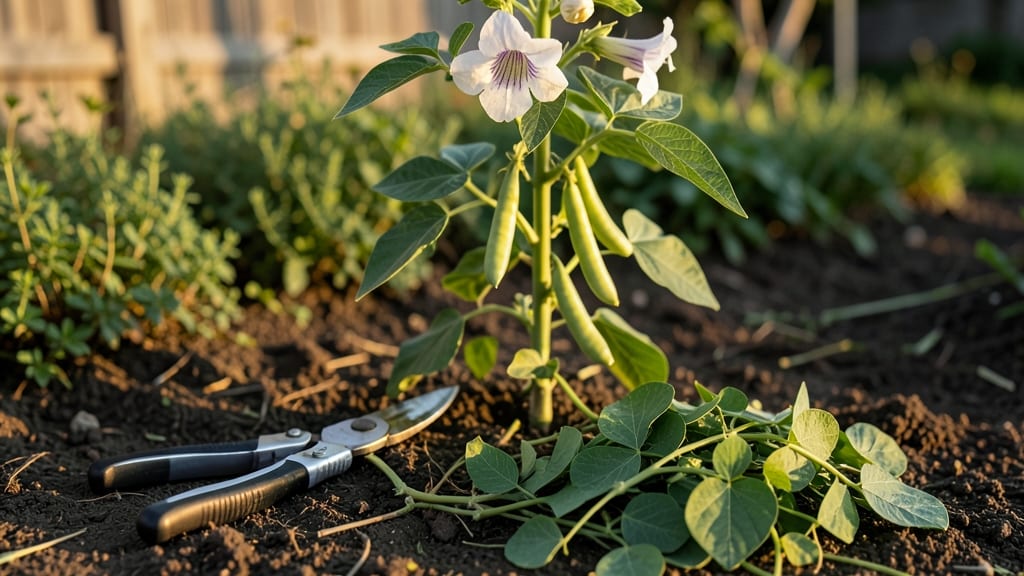
Pruning bean plants isn't just about trimming—it's how you unlock year-round vigorous growth that keeps producing until frost. 🌱 I learned the hard way when my pole beans grew wild and leggy, producing fewer pods than I wanted.
The right cuts at the right times can double your harvest, and it's simpler than you think.
You only need three tools: clean pruning shears, a small hand saw for thicker stems, and a pair of gloves to protect your hands. Pole beans need more aggressive pruning—pinching back the main stem and side shoots—while bush beans just need a light tidy-up to improve airflow.
The key is timing: start when plants are 6-8 inches tall, then again when flowers appear, and finally after harvest to encourage new shoots.
What you'll end up with is plants that stay compact, produce more flowers, and keep yielding longer. The pods stay plump and sweet, and you avoid the tangled mess that makes harvesting a chore. Even my black thumb can't mess this up once you get the rhythm.
Works for both backyard gardens and container growing, and the same principles apply whether you're growing heirloom varieties or store-bought seeds. Let's get those beans thriving all season long.
📚 In This Guide
- What you need
- Instructions
- Tips and common mistakes
- Wrapping up and next steps
What you need
- ● Pruning shears or scissors: Sharp, clean, and sterilized (bypass pruners work best for precision).
- ● Gloves: Garden or nitrile gloves (to protect from thorns and dirt).
- ○ Disinfectant (optional but recommended): Rubbing alcohol (70%+), hydrogen peroxide (3%), or a commercial pruning sealant (to prevent disease spread).
- ○ Garden twine or plant ties (optional): For supporting vines post-pruning (if needed for climbing varieties).
- ● Trash bag or bucket: For collecting pruned debris (keep your workspace tidy!).
- ● Healthy, established bean plants (avoid pruning seedlings or stressed plants).
- ● Clear, dry weather (prune in the morning to allow wounds to dry before evening).
- ● Knowledge of your bean variety (bush vs. pole beans—pruning needs vary!).
- ● Patience! Prune gradually to avoid shocking the plant.
How to prune bean plants for maximum yield and health
Healthy bean plants need just three strategic trims to produce more pods and stay strong.
✂️ Step 1: Remove Damaged or Diseased Foliage Early
Start by inspecting your plants for any leaves or stems showing signs of disease, yellowing, or pest damage. Use clean, sharp pruning shears to snip away affected areas ½ inch above the next healthy leaf node. This prevents the spread of illness and redirects the plant's energy toward new growth.
I always prune in the morning when the foliage is dry—wet leaves can harbor bacteria and make cuts heal slower. Focus on the lower stems first, as this improves airflow and reduces humidity near the soil, where fungal issues often start.
✂️ Step 2: Pinch Back Overly Long Vines for Bushier Growth
When your bean plants reach about 12 inches tall, pinch off the growing tips just above a set of leaves. This encourages lateral branching, which translates to more flowering sites and ultimately more pods. For bush beans, I do this once early in the season, while pole beans may need a second pinch if they get leggy.
Watch for new side shoots forming within 7-10 days—that's your signal the plant is responding well. Avoid over-pruning; never remove more than ⅓ of the plant's foliage at once, or you'll stress the roots and reduce pod production.
✂️ Step 3: Harvest and Prune Regularly to Stimulate Production
When pods appear, harvest them every 2-3 days to encourage continuous flowering. After harvesting, look for any spent flowers or pods that haven't developed properly—these should be trimmed off at the base. This practice tricks the plant into focusing its energy on new growth rather than maintaining old pods.
For pole beans, I also remove any side shoots that grow below the main stem's first set of leaves. These low branches rarely produce well and can compete with the main plant for nutrients. Always use clean tools after each cut to prevent disease transmission between plants.
⏰ Step 4: Light Post-Season Pruning for Winter or Dormancy
In cooler months or before dormancy, give your plants a final trim by cutting back any remaining foliage to 6 inches above the ground. This helps the plant conserve energy and prevents pests from overwintering in dead growth. For perennial beans, this step also makes next year's growth stronger.
After pruning, apply a light layer of mulch to protect the roots from temperature swings. I like to do this in late fall when the first frost is forecasted—it gives the plant time to recover before winter sets in.
Tips & tricks for pruning bean plants like a pro
Pruning bean plants isn't just about cutting—it's about directing energy for bigger harvests. Here's what I've learned after years of trial and error in my garden.
Tool Prep Matters: Before you even touch your plants, sterilize your pruning shears with rubbing alcohol. I do this between every 3-4 plants to prevent spreading any hidden diseases. Dull blades tear stems instead of making clean cuts, which stresses the plant. Test your shears on a scrap piece of wood first to ensure they're sharp enough for clean snips.
Timing is Everything in Step 1: That ½ inch above the healthy leaf node measurement in Step 1 is crucial—it's where new growth will emerge. I've found that cutting too close can damage the growth point, while leaving too much stem creates weak attachment points. For best results, make your cuts at a 45-degree angle to increase surface area for faster healing.
Pole vs. Bush Bean Differences: When you reach Step 2, remember that bush beans and pole beans respond differently. For bush beans, that single pinch at 12 inches is usually enough, but pole beans often need a second pinch when they reach 24 inches. I've seen pole beans get leggy and produce fewer pods when they're not pinched back at both stages.
Harvest Frequency in Step 3: The 2-3 day harvest window in Step 3 is non-negotiable for continuous production. I've learned that waiting even 4 days can cause the plant to shift energy away from new flowers and toward maintaining older pods. Keep a small basket nearby and check your plants daily—you'll notice a significant increase in new flowers within just 3-4 days of consistent harvesting.
Pro Tips for Prune Bean Plants
- Pruning bean plants isn't just about cutting—it's about directing energy for bigger harvests. Here's what I've learne...
- Tool Prep Matters: Before you even touch your plants, sterilize your pruning shears with rubbing alcohol. I do this b...
- Timing is Everything in Step 1: That ½ inch above the healthy leaf node measurement in Step 1 is crucial—it's where n...
Frequently asked questions
Got questions about pruning bean plants?
Here are answers to the most common ones—so you can keep your plants thriving without the guesswork!
When is the best time to prune bean plants?
Prune bean plants during their active growing season (spring to early summer) to encourage bushier growth and better yields. Avoid heavy pruning when flowers or pods are forming—focus on shaping in early morning or late afternoon to reduce stress on the plant.
How often should I prune my bean plants?
Light pruning (removing yellow leaves or leggy stems) can happen every 2–3 weeks. For major trims (like pinching back vines), do it 1–2 times per season. Over-pruning stresses the plant, so aim for quality over quantity—think "less but more effective."
What if I prune too much? Will my beans still grow?
Pruning too aggressively can stunt growth or reduce yields, but don’t panic! If you’ve overdone it, focus on watering consistently and fertilizing lightly (with compost or a balanced 10-10-10 mix). Most bean plants bounce back—just avoid heavy cuts during flowering or podding.
Can I prune bean plants in containers or small gardens?
Container-grown beans need even more attention to airflow and light. Prune lightly to prevent overcrowding, and consider training vines along a trellis to save space. Just ensure your pot has drainage—root-bound beans = stressed beans!
Should I prune away leaves with pests or diseases?
Yes! Snip off infested or diseased leaves immediately (sterilize your pruners with rubbing alcohol between cuts). Remove affected foliage far from the plant to prevent spreading. Healthy pruning = fewer pest parties! For severe issues, repeat pruning every 5–7 days until the plant recovers.
Wrapping up and next steps
Pruning your bean plants may seem like extra work, but it’s the secret to bountiful harvests and healthier vines all year round! 🌱 By mastering the three key trims—removing yellow leaves, pinching tips, and thinning crowded stems—you’ll encourage stronger growth, better airflow, and a steady supply of fresh beans.
Whether you’re a seasoned gardener or just starting out, these simple steps make a huge difference.
Now that you’re ready to prune like a pro, grab your shears and get growing! 🌟 Start with one plant at a time, observe how it responds, and adjust your technique as needed.
Before you know it, you’ll be enjoying a thriving bean patch with minimal effort—and maybe even sharing your harvest with friends or neighbors. Happy gardening!