
Transplanting
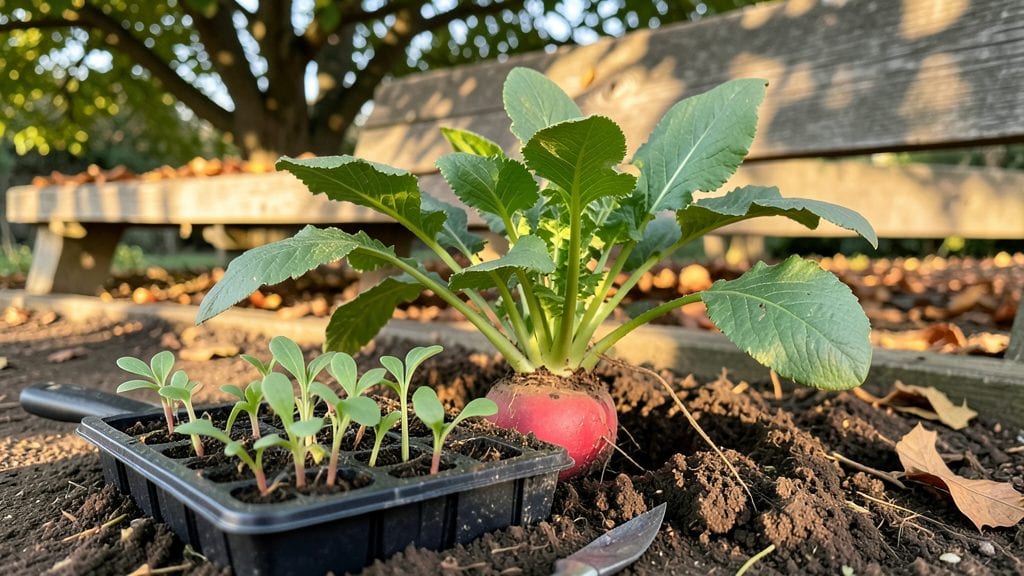
Planting radish seedlings is how you get crisp, peppery greens on your table in just 7 days—no waiting months like with other crops.
I learned the hard way that rushing the process leads to leggy, weak plants, but once I dialed in the timing and soil, my seedlings went from seedling trays to harvest-ready in record time.
The key isn’t just speed; it’s giving them the perfect start so they don’t bolt or turn bitter before you even taste them.
You’ll need loose, well-draining soil mixed with compost, a sunny spot with at least 6 hours of light, and a small trowel for planting. Radishes hate being crowded, so space them 1-2 inches apart in rows 12-18 inches apart—this keeps them from competing for nutrients.
Plant them shallow, just ½ inch deep, and water gently so you don’t disturb the roots. The goal is to mimic their natural conditions where they’d grow quickly in cool weather.
Within 3-4 days, you’ll see those first tiny leaves pushing through the soil, and by day 7, you’ll be harvesting baby radishes or snipping greens for salads. The secret to keeping them sweet and crisp?
Consistent moisture—never let the soil dry out, but don’t drown them either. Mulch lightly with straw to retain moisture and keep weeds at bay, and you’ll avoid the common pitfall of radishes turning woody or pithy.
This method works for any variety—from cherry belle to daikon—and adapts to containers or garden beds. If you’re in a hot climate, plant in late afternoon to avoid scorching, and always choose fast-maturing varieties for the quickest results.
Once you master this, you’ll never buy radishes from the store again.
📚 In This Guide
- What you need
- Instructions
- Tips and common mistakes
- Wrapping up and next steps
What you need
- ● Radish seedlings: 10–20 healthy, 2–3 week-old seedlings (check for sturdy stems and vibrant leaves).
- ● Garden bed or containers: For in-ground planting: A well-draining, loose soil bed (6–12 inches deep, 12–18 inches wide).
- ● For containers: 5–6 inch deep pots (1 seedling per pot) or a shallow raised bed (spaced 1–2 inches apart).
- ● Soil: Light, fertile soil with a pH of 6.0–7.0. Mix in 1–2 inches of compost for nutrients.
- ● Watering can or hose: With a gentle spray nozzle for even moisture.
- ● Garden trowel or transplanting tool: For digging small holes (1–1.5 inches deep).
- ○ Fertilizer (optional but helpful): A balanced, water-soluble fertilizer (5-5-5 ratio) or compost tea to boost growth.
- ● Mulch: Straw or shredded leaves to retain moisture and suppress weeds.
- ● Row cover or shade cloth: For young seedlings if your climate is hot or sunny.
- ● Plant labels: To track varieties if growing multiple types.
- ● Organic pest control: Neem oil or diatomaceous earth (prevents pests like flea beetles).
Step-by-Step instructions for planting radish seedlings
Here’s how to get your fast-growing radishes established quickly and thriving.
Prepare the Planting Site
Radishes thrive in loose, well-draining soil with a pH between 6.0 and 7.0. If your garden bed feels compacted, loosen the top 6 inches with a fork or tiller. Amend the soil with 1 inch of compost to improve fertility and drainage—radishes are sensitive to soggy roots. Work the compost into the top layer until it’s evenly distributed.
Choose a location with full sun to partial shade—at least 4-6 hours of sunlight daily. If planting in late summer, opt for a spot with afternoon shade to prevent bolting (when radishes flower prematurely). Avoid areas where brassicas like cabbage or broccoli grew recently, as they share pests and diseases.
Space and Plant the Seedlings
Radish seedlings need 1-2 inches of space between plants and 12-18 inches between rows. Use a ruler to mark even spacing—crowding leads to stunted roots and poor harvests. Dig small holes just deep enough to cover the seedlings’ root balls, but no deeper than where the first true leaves appear.
Gently remove each seedling from its container, keeping the root ball intact. Place it in the hole and firm the soil lightly around the base to eliminate air pockets. Water immediately after planting to settle the soil and encourage root contact. Avoid overwatering, as radishes are prone to rot in waterlogged conditions.
Water and Mulch for Retention
Water the seedlings deeply right after planting to encourage root growth, then maintain 1 inch of water per week. Use a drip irrigation system or water early in the morning to reduce evaporation and fungal risks. Radishes germinate quickly but need consistent moisture to prevent bitter flavors and uneven growth.
Apply 1-2 inches of straw mulch around each plant to retain soil moisture and suppress weeds. Keep the mulch 2 inches away from the stems to prevent rot. This layer also regulates soil temperature, which is critical for radishes—too much heat causes them to bolt, while cool soil promotes sweet, crisp roots.
Monitor and Thin for Optimal Growth
Check seedlings daily for signs of stress, like yellowing leaves or wilting. Radishes grow quickly, so thin them to the strongest 1-2 plants per spot within 10-14 days if overcrowding occurs. Use clean scissors to snip excess seedlings at soil level—pulling can disturb nearby roots.
Watch for pests like flea beetles, which chew small holes in leaves. If spotted, handpick adults or use row covers to protect young plants. Radishes are ready to harvest in 3-4 weeks, but taste them at 20-30 days for peak sweetness—waiting too long results in woody, pithy roots.
Tips & tricks for planting radish seedlings
Radishes are one of the fastest crops you can grow, but a few strategic moves will help you achieve that perfect harvest in just seven days. Here's how to maximize your success with these speedy greens.
Soil Preparation is Non-Negotiable: In Step 1, when you're loosening the top 6 inches of soil, take an extra moment to break up any remaining clumps. Radish roots need that loose texture to penetrate easily, and compacted soil will slow their rapid growth. I've seen seedlings struggle when planted in soil that's only partially loosened—think of it as creating a fluffy bed for their delicate roots to spread into. The 1 inch of compost you add isn't just about nutrients; it improves soil structure, which is crucial for preventing those bitter, tough roots we all want to avoid.
Precision Planting Pays Off: When spacing your seedlings in Step 2, I can't emphasize enough how important that 1-2 inch spacing between plants truly is. I've made the mistake of being too generous with space, only to watch my radishes grow into awkward, misshapen shapes trying to fill the extra room. Use a ruler or spacing tool to maintain consistency—this ensures each plant gets proper airflow and sunlight, both critical for that crisp texture we're after. The 12-18 inch row spacing gives you enough room to maneuver between plants without disturbing the soil.
Watering Wisdom for Fast Growth: The deep watering immediately after planting in Step 3 is your best friend for establishing strong roots quickly. What I've learned is that radishes actually prefer slightly drier conditions than many other vegetables, but they need that initial deep watering to get their root systems started. After that first soak, maintain that 1 inch per week measurement religiously. Morning watering is ideal because it gives the foliage time to dry before evening, reducing the risk of fungal issues that can slow down your fast-growing crop.
Thinning Strategy for Maximum Yield: When you're thinning to the strongest 1-2 plants per spot within 10-14 days, don't rush this step. I've seen gardeners thin too early, only to have the remaining plants struggle to fill the space properly. Wait until you see those first true leaves appear—this tells you the seedlings have enough energy to compete. Use those clean scissors to snip at soil level rather than pulling, which can damage nearby roots and create entry points for disease. The plants you remove can be transplanted to fill gaps elsewhere in your garden.
Pro Tips for Planting Radish Seedlings
- Radishes are one of the fastest crops you can grow, but a few strategic moves will help you achieve that perfect harvest in just seven days.
- Soil Preparation is Non-Negotiable: In Step 1, when you're loosening the top 6 inches of soil, take an extra moment to break up any remaining clumps.
- Precision Planting Pays Off: When spacing your seedlings in Step 2, I can't emphasize enough how important that 1-2 inch spacing between plants truly is.
Frequently asked questions
Got questions about planting radish seedlings?
You’re not alone! Here are answers to the most common concerns to help you grow fast, healthy greens with confidence.
When is the best time to transplant radish seedlings?
Transplant radish seedlings as soon as they have 2–3 true leaves (about 2–3 weeks after sowing). For fastest results, aim for cool weather (50–75°F). Avoid hot summers—they’ll bolt (go to seed) quickly. Early spring or fall is ideal!
How long after transplanting will radishes be ready to harvest?
Radishes mature in just 20–30 days after transplanting! Check the seed packet for your variety—some (like ‘Cherry Belle’) are ready in 25 days, while others (like ‘Daikon’) take longer. Harvest when tops are vibrant and roots are firm.
Can I plant radish seedlings too close together?
Yes! Radishes need space—crowding leads to stunted roots. Space seedlings 1–2 inches apart in rows 12–18 inches apart. Thin seedlings if needed, but don’t pull—snip at soil level to avoid disturbing roots of nearby plants.
Why are my radish seedlings turning yellow or wilting?
Yellowing leaves often mean overwatering or poor drainage. Wilting could signal heat stress or root damage from transplant shock. Fix it by:
- Watering deeply but less often (1 inch per week).
- Ensuring soil drains well (add compost if needed).
- Providing afternoon shade in hot climates.
What can I plant with radishes to improve growth?
Radishes thrive with companion plants like:
- Leafy greens (spinach, lettuce)—they share space well.
- Carrots—radishes deter carrot flies!
- Avoid planting near potatoes or cabbage (they compete for nutrients).
Rotate crops yearly to prevent soil-borne diseases.
Wrapping up and next steps
Planting radish seedlings is a rewarding way to enjoy fast, flavorful greens in just 7 days—perfect for beginners or impatient gardeners! 🌱 With the right soil, spacing, and care, you’ll soon be harvesting crisp, vibrant radishes to brighten your meals.
Whether you’re transplanting store-bought seedlings or nurturing your own, consistency is key.
Now that you’re ready to dive in, take the next step and mark your calendar for your first harvest—your taste buds (and garden) will thank you! 🌟