Transplanting
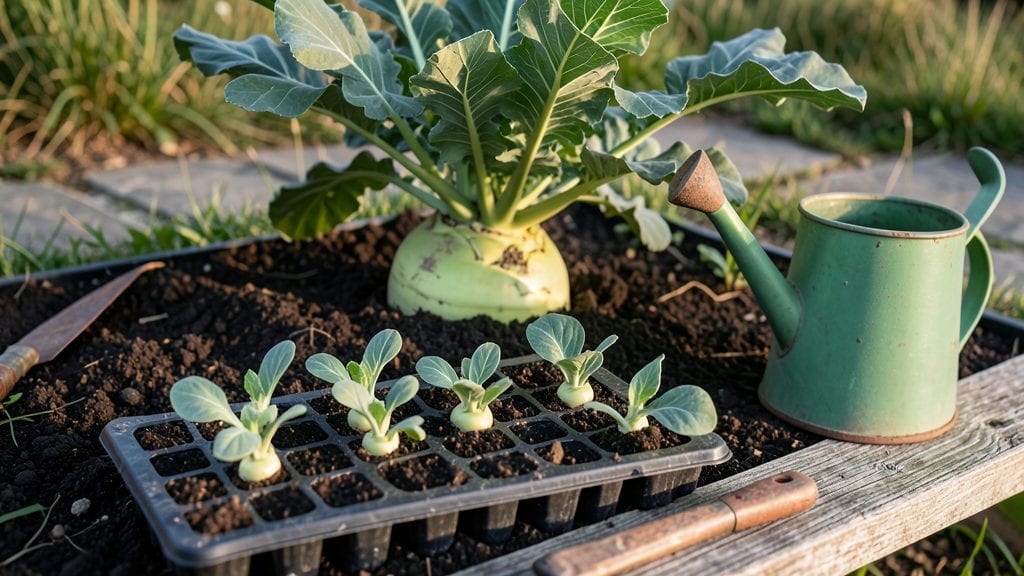
Planting kohlrabi seedlings in cool weather gives you a head start on a crisp, nutty harvest that rivals store-bought anything. 🌱 I learned the hard way—skipping soil prep and rushing the spacing led to stunted plants and bitter bulbs.
The secret is patience: these little guys need firm, fertile ground and just the right amount of sun to grow into the tender, edible stems we love.
You’ll need well-draining soil mixed with compost, a sunny spot getting at least 6 hours of light daily, and a flat, shallow planting area. Kohlrabi seedlings hate soggy roots but also can’t handle drying out, so aim for 12-18 inches between plants and ½ inch deep.
Water gently after planting to settle the soil without disturbing the delicate roots.
Within 3-4 weeks, you’ll see those signature bulbous stems swelling—just don’t let them get too big, or they turn woody. Harvest when they’re 2-3 inches wide for the sweetest flavor.
The key is consistency: keep soil moist but not waterlogged, and watch for pests like cabbage worms lurking near the leaves.
This method works best in zones 3-10 when daytime temps stay between 50-75°F, but early spring or fall plantings avoid the heat that makes them bolt. Even my first attempt produced enough for salads all summer—once I got the spacing right. Let’s make yours foolproof from day one.
📚 In This Guide
- What you need
- Instructions
- Tips and common mistakes
- Wrapping up and next steps
What you need
- ● Kohlrabi seedlings: 4–6 healthy, disease-free seedlings (check for sturdy stems and vibrant leaves).
- ● Well-draining soil: Loamy or sandy soil with a pH of 6.0–7.0. Mix in 2–3 inches of compost or aged manure for nutrients.
- ● Fertilizer: Balanced 10-10-10 or organic fertilizer (e.g., fish emulsion) to boost early growth.
- ● Watering can or hose: With a gentle spray nozzle for delicate seedlings.
- ● Garden stakes or labels: Biodegradable or wooden stakes to mark seedlings (kohlrabi can be tricky to identify later!).
- ● Trowel or transplanting spade: For digging small, precise holes (3–4 inches deep).
- ○ Gloves (optional but recommended): To protect hands from soil and thorns (some varieties have mild prickles!).
- ● Row cover or frost cloth: If planting in early spring or fall (kohlrabi thrives in 50–70°F temps).
- ● Mulch: Straw or shredded leaves to retain moisture and suppress weeds.
- ● Organic pest control: Neem oil or diatomaceous earth for aphids/cabbage worms.
- ● Grow lights (indoor start): If hardening off seedlings before transplanting.
How to plant kohlrabi seedlings for a bountiful harvest
Cool-season crops like kohlrabi thrive with the right timing and soil prep. Here’s how to get strong starts in the ground.
🌱 Step 1: Prepare the Soil for Optimal Growth
Kohlrabi loves loose, fertile soil with good drainage. Work in 2-3 inches of compost (from your list) into the top 6 inches of soil to enrich it. Kohlrabi roots spread wide but shallow, so avoid digging too deep—just loosen the top layer. Aim for a pH between 6.0 and 7.0—test your soil if unsure, as kohlrabi struggles in acidic conditions.
Rake the area smooth to create a fine seedbed. Kohlrabi seedlings hate competition, so remove any weeds or grass clumps first. If your soil feels compacted, add a thin layer of perlite (from your list) to improve aeration. The goal is soil that crumbles easily when squeezed—like a damp sponge.
🪴 Step 2: Space and Plant Seedlings Correctly
Kohlrabi bulbs swell underground, so spacing matters. Plant each seedling 12-18 inches apart in rows 18-24 inches apart (adjust for smaller gardens). Dig a hole just deep enough to cover the roots but no deeper—kohlrabi roots are sensitive to being buried too deeply. Gently tease apart crowded roots before placing them in the hole.
Water the hole before inserting the seedling to eliminate air pockets. Press soil firmly around the base but avoid compacting it. A light mulch of straw (from your list) around each plant helps retain moisture and keeps weeds down. Kohlrabi thrives in cooler weather, so plant in early spring or late summer for fall harvests.
☀️ Step 3: Provide Consistent Water and Sunlight
Keep the soil evenly moist but not soggy—kohlrabi bulbs split if they dry out or get too wet. Water deeply once a week, aiming for 1 inch of water per week, and more during dry spells. Use a soaker hose (from your list) to deliver water slowly at the base without disturbing the soil.
Kohlrabi needs full sun (6+ hours daily) for sweet, tender bulbs. If your garden gets afternoon shade, choose a spot with morning sun instead. You’ll know it’s thriving when leaves stay dark green and crisp—yellowing means too much sun or water stress.
✂️ Step 4: Monitor Growth and Harvest at Peak
Check plants weekly for pests like flea beetles or cabbage worms. Handpick larger pests or use neem oil (from your list) as a spray if needed. Kohlrabi bulbs are ready when they reach 2-3 inches in diameter, usually 50-60 days after planting. Harvest before they get woody—press a bulb gently; it should yield slightly like a ripe squash.
Cut bulbs at the base with a knife to avoid damaging the stem. Leave the leaves for a few days to keep the bulb fresh, but don’t let them wilt. Store harvested kohlrabi in the fridge for up to 2 weeks—peel and use raw in salads or roast whole for a sweet, nutty flavor.
Tips & tricks for perfectly planting kohlrabi seedlings
Here's what I learned after planting kohlrabi for years—these small details make all the difference between healthy plants and struggling ones.
Soil Prep Secret: In Step 1, don't just add compost—mix in a handful of egg shells (optional) along with your compost to boost calcium levels. Kohlrabi bulbs need calcium to prevent cracking, and this simple addition works better than commercial lime. I crush the shells into small pieces so they break down faster in the soil.
Spacing Hack: When planting in Step 2, use a simple measuring trick: hold your hand out with fingers spread wide—your thumb to pinky should span about 12 inches, your full hand span about 18 inches. This visual cue helps maintain the 12-18 inch spacing without measuring each time. For rows, use a 3-foot measuring stick to mark the 18-24 inch spacing between them.
Watering Wisdom: The once-a-week watering in Step 3 works best with a soaker hose, but if you don't have one, water in the early morning using a gentle rain nozzle attachment. This prevents soil compaction and gives water time to soak in before the heat of the day. I always check moisture by sticking my finger 2 inches into the soil—it should feel damp but not wet.
Harvest Timing Tip: In Step 4, harvest when bulbs reach 2-3 inches but before they exceed 3 inches—they get woody fast! I test readiness by pressing gently: a ripe bulb should feel firm like a ripe potato, not hard like a turnip. The leaves should still be vibrant green, not yellowing. Harvesting at this stage gives you the sweetest, most tender bulbs for eating raw or cooking.
Pro Tips for Planting Kohlrabi Seedlings
- Here's what I learned after planting kohlrabi for years—these small details make all the difference between healthy p...
- Soil Prep Secret: In Step 1, don't just add compost—mix in a handful of egg shells (optional) along with your compost...
- Spacing Hack: When planting in Step 2, use a simple measuring trick: hold your hand out with fingers spread wide—your...
Frequently asked questions
Got questions about planting kohlrabi seedlings? You’re not alone! Here are some of the most common concerns—and their solutions—to help you grow this crunchy, versatile veggie with confidence.
When is the best time to transplant kohlrabi seedlings?
Kohlrabi thrives in cool weather, so transplant seedlings 2–3 weeks before your last frost date (typically early spring or late summer for fall harvests). Avoid planting when soil temps exceed 75°F—heat stresses seedlings and causes bitter bulbs. Aim for 50–65°F for ideal growth!
How long does it take for kohlrabi seedlings to mature after transplanting?
With proper care, kohlrabi bulbs form in 50–60 days from transplanting. Harvest when bulbs are 2–3 inches wide (before they get woody). Leaves are edible too—pick them young for tender greens! Pro tip: Use a sharp knife to slice bulbs cleanly at the stem.
Can I plant kohlrabi seedlings in containers?
Kohlrabi grows well in 5–7 gallon containers with at least 6 inches of soil depth. Use a well-draining potting mix and place pots in full sun. Just ensure containers have drainage holes to prevent rot. Bonus: Containers make it easy to rotate crops and deter pests!
What pests should I watch for with kohlrabi seedlings?
Keep an eye out for cabbage worms, flea beetles, and slugs. Use row covers early to shield seedlings, or handpick pests. For slugs, set up beer traps or diatomaceous earth. Prevention tip: Rotate planting spots yearly to reduce pest buildup.
What if my kohlrabi seedlings wilt after transplanting?
Wilting is often due to transplant shock or underwatering. Water seedlings deeply at transplanting and keep soil moist (but not soggy) for the first week. Mulch around plants to retain moisture. If wilting persists, check for root damage or pests—adjust care accordingly!
Wrapping up and next steps
Planting kohlrabi seedlings is a rewarding way to grow a crisp, versatile veggie in your garden—especially when done right in cool weather! 🌱 With the right soil, spacing, and care, you’ll enjoy a bountiful harvest of tender bulbs and leaves.
Now that you’re equipped with the knowledge, there’s no better time to roll up your sleeves and get growing.
Ready to take the next step? Mark your calendar for your first planting date and gather your supplies. Before you know it, you’ll be savoring homegrown kohlrabi in salads, stir-fries, or roasted dishes—all thanks to your green-thumb efforts! 🌟