Trees
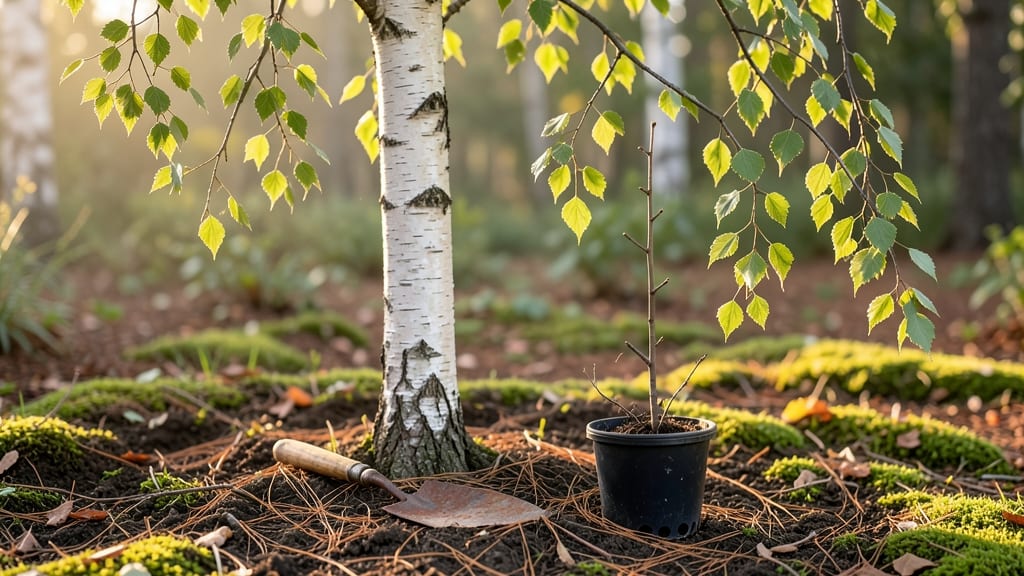
Planting birch trees is where patience meets payoff—those delicate white bark stems take time to establish, but once they do, they become the graceful centerpiece of any yard. 🌿 I’ve planted three different varieties over the years, and the key to their survival lies in mimicking their natural forest floor conditions, not treating them like your average shade tree.
The secret starts with soil: birches hate soggy roots but despise dry, compacted dirt too. Amend heavy clay with 3-4 inches of compost and mix in sand if your soil drains like a sieve.
For spacing, give them 15-20 feet between trees—crowding turns their elegant forms into tangled messes. Plant in early spring or fall, when temperatures are cool but the ground isn’t frozen.
After planting, water deeply once a week for the first year, soaking the root zone to 12 inches down. Mulch with 2-3 inches of wood chips to keep moisture in and weeds out, but never pile mulch against the trunk—birches rot easily.
Within 3-5 years, you’ll see those signature peeling bark patterns emerge, and the tree will start growing 2-3 feet per year under ideal conditions.
Here’s where most gardeners go wrong: overwatering in summer or planting too deep. Birches need well-draining soil and partial sun—full shade stunts their growth, while harsh afternoon sun scorches tender new leaves.
Stick with these basics, and your birch will reward you with decades of seasonal interest, from golden fall foliage to winter’s stark beauty.
📚 In This Guide
- What you need
- Instructions
- Tips and common mistakes
- Wrapping up and next steps
What you need
- ● Birch tree seedlings or saplings: Choose Betula papyrifera (paper birch) or Betula pendula (silver birch) from a reputable nursery. For a small yard, 1-3 saplings (3-5 ft tall) are ideal.
- ● High-quality potting soil or native soil mix: 5-10 gallons, amended with organic compost (30-50% compost by volume) for improved drainage.
- ● Mulch (wood chips or straw): 2-3 inches, organic and weed-free to retain moisture and suppress weeds.
- ● Organic fertilizer: Slow-release, balanced 10-10-10 or a tree-specific fertilizer (follow package rates).
- ● Watering can or hose with a gentle spray nozzle: For deep, consistent watering.
- ● Shovel or spade: For digging holes (12-18 inches wide and deep).
- ● Garden gloves: To protect your hands from thorns or rough soil.
- ● Measuring tape or ruler: To ensure proper spacing (15-25 ft between trees for mature growth).
- ○ Pruning shears: For trimming dead or damaged branches (optional but helpful).
- ● Sunlight: A location with full sun to partial shade (6+ hours of sunlight daily).
- ● Well-draining soil: Birches hate soggy roots! Test soil pH (ideal range: 5.0-7.0).
- ● Space: Avoid planting near sidewalks or structures (roots spread widely).
- ● Timing: Plant in early spring or fall (avoid extreme heat or frost).
- ● Tree stake and ties: For young saplings in windy areas.
- ● Soil conditioners: Perlite or sand (10-20%) to improve drainage in clay-heavy soil.
- ● Tree guard: To protect from pests or lawn equipment.
- ● Drip irrigation system: For consistent moisture in dry climates.
Step-by-Step instructions for planting birch trees
Here’s how to give your birch trees the perfect start—where sunlight, soil, and spacing work together for long-term success.
🌱 Step 1: Choose the Right Location and Prepare the Soil
Birch trees thrive in partial shade to full sun but develop their signature bark best with morning sunlight and afternoon shade. Avoid hot, exposed spots—young birches scorch easily. I dig a hole twice as wide as the root ball but only as deep as the container’s base. This prevents planting too deep, which suffocates roots.
Amend the native soil with 2 inches of compost mixed into the bottom of the hole. Birches prefer well-draining, slightly acidic soil (pH 5.0–6.5). If your soil is heavy clay, add a shovel of sand or perlite to improve aeration. Test drainage by digging a small pit nearby—if water pools after 30 minutes, you’ll need to raise the planting area with a mound.
☀️ Step 2: Handle the Root Ball and Plant with Care
Remove the birch from its container and gently loosen the root ball with your fingers. Circling roots (where roots grow in a tight ring) strangle growth—this is the #1 mistake. If you see them, make 2-3 vertical cuts with pruners to encourage outward spread. Place the tree in the hole so the top of the root ball sits 1-2 inches above ground level. Birches settle over time, so don’t bury the trunk too deeply.
Backfill with native soil, tamping lightly every 4 inches to remove air pockets. Water deeply until the soil 12 inches down is moist. I use a soaker hose for 20 minutes to avoid disturbing the soil surface. Mulch with 3 inches of wood chips, keeping it 6 inches away from the trunk to prevent rot.
💧 Step 3: Water Deeply and Establish a Care Routine
Water twice weekly for the first month, then taper to once weekly once leaves appear. Birches hate soggy feet—never let water pool at the base. You’ll know you’re doing it right when the soil 4 inches down stays consistently moist but not waterlogged. Overwatering causes root rot, which birches are particularly sensitive to.
Fertilize lightly in early spring with a balanced 10-10-10 formula, but skip it the first year. Birches are slow growers and don’t need heavy feeding. Instead, focus on protecting young trunks from lawnmower damage with a 2-inch-high ring of gravel around the base.
✂️ Step 4: Prune for Structure and Health
Wait until late winter (just before buds swell) to prune. Remove dead, crossing, or rubbing branches first—they compete for energy and invite disease. For young birches, I prune no more than 25% of the canopy in any year. Use clean, sharp pruners and make cuts just outside the branch collar (the swollen area where the branch meets the trunk).
Never top birch trees—it triggers suckering (sprouting from the stump) and weakens the main trunk. Instead, focus on thinning the crown to improve airflow. You’ll see healthier bark and fewer pests when the tree matures.
Tips & tricks for perfect birch tree planting
Between us, I’ve seen birch trees struggle when people skip these key details—so here’s what nobody tells you about getting it right the first time.
The Drainage Test: That 30-minute water test in Step 1 is non-negotiable. If water still pools after 30 minutes, you’ve got two options: either raise the planting area with a mound of soil or create a swale (a shallow trench) to redirect water away. Birches will outlive you if they’re planted right, but they’ll rot in soggy soil.
Root Ball Rescue: In Step 2, when you see those circling roots, don’t just cut them—make 2-3 vertical cuts radiating outward. This mimics natural root growth patterns. I’ve seen birches planted with uncut circling roots struggle for years, while properly pruned roots establish within months. Think of it as giving your tree’s roots a fresh start.
Watering Wisdom: The 20-minute soaker hose rule in Step 2 isn’t just about duration—it’s about technique. Place the hose at the drip line (edge of the root system), not at the trunk. This encourages roots to spread outward rather than stay shallow. And that 4-inch soil moisture check? Use a screwdriver to poke down—if it comes out clean, you’re golden.
Pruning Precision: When you’re ready to prune in Step 4, mark your cuts first with a piece of chalk. This prevents over-cutting when you’re in the zone. And here’s the secret: birch trees don’t need much pruning at all. Focus on removing only the branches that are dead, crossing, or rubbing—everything else is just stealing energy from your tree’s growth.
Pro Tips for Planting Birch Trees
- Between us, I’ve seen birch trees struggle when people skip these key details—so here’s what nobody tells you about getting it right the first time.
- The Drainage Test: That 30-minute water test in Step 1 is non-negotiable.
- Root Ball Rescue: In Step 2, when you see those circling roots, don’t just cut them—make 2-3 vertical cuts radiating outward.
Frequently asked questions
Got questions about planting birch trees? You’re not alone! Here are some of the most common queries—plus straightforward answers to help you grow a thriving birch with confidence.
When is the best time to plant birch trees?
Plant birch trees in early spring (as soon as the ground thaws) or early fall (4–6 weeks before frost). Avoid planting in extreme heat or cold—birch trees are sensitive to stress during transplanting. If you must plant in summer, water deeply and mulch to retain moisture.
Why are my birch tree leaves turning yellow?
Yellowing leaves (chlorosis) usually signal nutrient deficiencies (like iron or magnesium) or poor drainage. Test your soil and amend with compost or a balanced fertilizer. If roots are waterlogged, improve drainage by adding sand or organic matter. Overwatering can also cause yellowing—ensure soil stays moist but not soggy!
Can I plant birch trees in containers?
Yes, but only small varieties like dwarf birch (Betula pendula ‘Fastigiata’). Use a large container (at least 15 gallons) with drainage holes, well-draining soil, and regular watering. Containers limit root growth, so expect slower growth and shorter lifespan compared to ground planting. Repot every 2–3 years if needed.
What’s the best soil mix for birch trees?
Birch trees thrive in moist, well-draining, slightly acidic soil (pH 4.5–6.0). Mix equal parts topsoil, compost, and perlite or sand for optimal results. Avoid heavy clay—amend with organic matter to prevent root rot. Mulch with wood chips (2–3 inches) to retain moisture and regulate temperature.
Are birch trees prone to pests or diseases?
Birches are generally hardy, but watch for bronze birch borers (a beetle that tunnels into bark) and powdery mildew (white fungal spots). Prevent borers by keeping trees healthy and watered; treat mildew with neem oil or fungicide. Prune infected branches promptly and avoid wounding bark during planting.
Wrapping up and next steps
Planting birch trees is a rewarding journey that blends patience with nature’s beauty—whether you’re restoring a landscape, enhancing curb appeal, or simply enjoying the rustic charm of their peeling bark. 🌿 With the right sunlight exposure, soil prep, and careful spacing, your birch saplings will thrive into majestic, long-lived trees.
Now that you’re equipped with the secrets to success, there’s only one step left: roll up your sleeves and get planting!
Start small—even a single birch can make a statement. Pro tip: Document your progress with photos to track growth over the years. Happy planting! 🌱