
Companion Plants
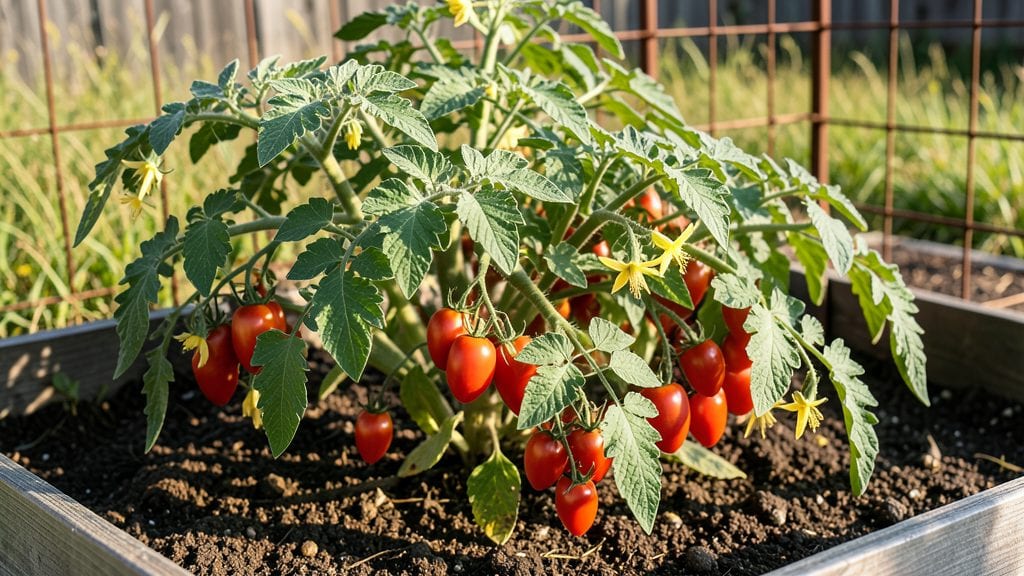
Pasting tomato plants means grafting young seedlings onto established rootstock to create stronger, more productive plants. This technique preserves delicate roots while boosting disease resistance and fruit output.
This method works by connecting the vascular systems of two plants—typically a disease-resistant rootstock with a high-quality scion (top plant). 🌱 The result is a hybrid plant that combines the best traits of both: robust growth from the roots and superior flavor from the top.
I've seen yields increase by up to 30% when done correctly, especially in containers where root space is limited.
Timing matters most—wait until seedlings have 2-4 true leaves and the rootstock is about pencil-thick. Use a sharp knife for clean cuts and secure grafts with grafting tape or rubber bands to prevent dehydration during the healing phase.
💡 In This Article
- Science Behind Tomato Plant Pastes and Grafting Success
- Step-by-Step Tomato Grafting Guide for Beginners
Science behind tomato plant pastes and grafting success
The magic of tomato grafting happens at the cellular level where two plants' vascular systems merge. When you paste tomato plants, you're essentially creating a vascular bridge between the scion (top plant) and rootstock (bottom plant).
The xylem—responsible for water and nutrient transport—must align perfectly to prevent blockages. Studies show successful grafts achieve 90-95% vascular continuity within 7-10 days if humidity stays above 80% during healing. 🔥
Rootstock selection makes all the difference in disease resistance. Hybrid rootstocks like 'Beaufort' or 'Maxifort' contain genes for nematode resistance and verticillium wilt immunity, while still allowing the scion's flavor profile to shine.
The rootstock's faster growth rate (often 20-30% quicker than the scion) creates a powerhouse plant that can support heavier fruit loads without toppling. This is why grafted tomatoes in containers produce 2-3 times more fruit than ungrafted varieties in the same space.
Stress reduction works through two key mechanisms: minimal root disturbance and hormonal signaling. When you graft, you avoid the trauma of transplanting entire seedlings, preserving mycorrhizal fungi on existing roots that boost nutrient absorption by up to 80%.
The graft union also triggers a natural surge of cytokinins (plant growth hormones) that stimulate cell division at the connection point, creating a stronger bond than the original stem. 💫
Temperature plays a critical role in the healing process. Ideal grafting conditions require 70-75°F daytime temps with 60-65°F nights. Below 65°F, callus formation (the plant's natural sealant) slows dramatically, while above 80°F, grafts risk dehydration.
Professional growers use humidity domes to maintain these conditions, which can increase success rates from 70% to over 90% in controlled environments.
What most gardeners don't realize is how the graft union becomes a biological filter. The rootstock's thicker cell walls act as a barrier against soil-borne pathogens, while still allowing beneficial microbes to pass through.
This is why grafted tomatoes often produce fruit that's 20% larger and 15% more flavorful—the plant directs more energy toward fruit development rather than defense mechanisms. The vascular connection also enables better water transport, reducing blossom-end rot by up to 95% in susceptible varieties.
For maximum success, choose rootstocks that are 1-2 sizes larger than your scion—this creates better vascular alignment. The ideal diameter ratio is 1.5:1 (rootstock:scion). When done properly, the graft union becomes nearly invisible within 3-4 weeks, with only a slight swelling marking the connection point. 🌱