Watering
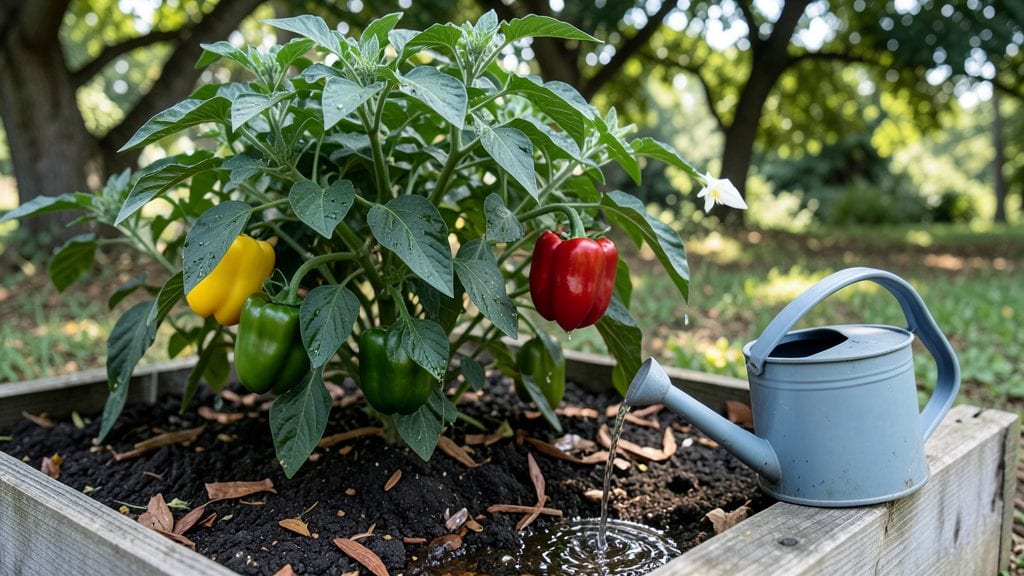
Overwatered pepper plants can turn your harvest from thriving to tragic in days—yellow leaves, mushy stems, and a sad, drooping plant that refuses to bounce back. 🌱 I’ve nursed more than my share of drowned peppers back to health, and the fixes are simpler than you’d think.
The key is catching the problem early, before root rot sets in and steals your harvest.
Most gardeners overwater because we assume peppers need constant moisture like tomatoes. But peppers hate soggy soil—they’re drought-tolerant once established. Check your soil before watering: stick your finger in 1-2 inches deep.
If it’s damp, wait. If it’s dry, water deeply but only until the top 6 inches are moist. Containers dry out faster than garden beds, so adjust your schedule accordingly.
Reviving overwatered peppers starts with stopping the water flow completely for 24-48 hours to let roots recover. Then, improve drainage by amending soil with perlite or compost, or switch to a pot with drainage holes if you’re growing in containers.
Within a week, you’ll see new green growth as the plant regains its footing—just don’t rush back to your old watering habits.
Prevention is easier than rescue: use well-draining soil mixes, water in the morning so leaves dry quickly, and mulch to regulate moisture. If your peppers keep struggling, fungal diseases like root rot might be lurking—look for black, mushy roots as a red flag.
With these tweaks, your plants will go from wilted to productive in no time.
Root of the Problem
Overwatering your pepper plants can feel like a silent killer—one day your plants are thriving, and the next, their leaves are yellowing, stems are mushy, and roots are suffocating. But why does this happen?
The answer lies in the delicate balance of water, oxygen, and nutrient uptake in the soil. Let’s break down the key reasons your peppers might be drowning in their own care.
Pepper plants despise soggy roots, yet many gardeners unknowingly create the perfect swamp conditions. Soil that doesn’t drain well—whether due to heavy clay, compacted dirt, or improper amendments—holds onto water like a sponge. When roots sit in waterlogged soil for too long, they suffocate because:
- Oxygen depletion: Roots need aeration to respire (breathe). Water fills the pores in soil, displacing oxygen and forcing roots to switch to anaerobic respiration, which produces toxic ethanol and weakens cell walls.
- Fungal infections: Stagnant water creates a breeding ground for Phytophthora and Pythium, fungi that rot roots and block nutrient absorption.
- Nutrient lockout: Excess water leaches vital nutrients (like nitrogen, phosphorus, and potassium) out of reach, even if they’re in the soil.
Actionable fix: Test your soil’s drainage by filling a pot with soil and water, then timing how long it takes to drain. If it takes more than 2 hours, amend with perlite, sand, or coconut coir to improve porosity.
Pepper plants are drought-tolerant once established, but many growers water on a rigid schedule—like clockwork—without checking soil moisture. This leads to:
- Surface evaporation: Frequent shallow watering keeps the topsoil wet while the roots below stay parched. Peppers develop shallow root systems that can’t access deeper moisture, leading to wilting even when the soil feels damp.
- Root zone saturation: Watering every 1–2 days (even lightly) can keep the root zone perpetually moist, preventing the natural dry-down period roots need to strengthen.
- Weather misjudgment: Rain, humidity, or cooler temps slow evaporation, but many gardeners don’t adjust their watering routine, drowning plants instead of hydrating them.
Actionable fix: Use the finger test: Stick your index finger 1–2 inches into the soil. If it’s damp, wait. If it’s dry, water deeply until it runs out the drainage holes. Morning watering reduces evaporation loss.
Pots are convenient, but without proper drainage, they turn into water traps. Here’s how containers contribute to overwatering:
- No escape route: Water pools at the bottom, creating a hydroponic-like environment that roots can’t handle. Even "self-watering" pots can suffocate plants if overfilled.
- Material matters: Plastic pots retain moisture longer than terracotta, while fabric grow bags can dry out too quickly if not monitored. Size matters too: Small pots dry out faster but can’t hold enough soil to regulate moisture.
- Mulch misapplication: Thick mulch in containers keeps moisture in but also traps heat, accelerating root stress in hot climates.
Actionable fix: Ensure pots have multiple drainage holes and elevate them on saucers or stands. For containers, use a soil mix with 30% perlite or vermiculite to improve aeration.
Peppers are tropical plants, but their water needs shift with environmental conditions. Ignoring these factors can lead to overwatering:
- Cool nights: When temps drop below 60°F (15°C), peppers absorb water more slowly. Overwatering in these conditions leads to waterlogged roots and chilling damage.
- High humidity: Humid air (above 70% RH) reduces evaporation, so soil stays wet longer. Plants may not "ask" for water by wilting, tricking growers into adding more.
- Wind exposure: Windy conditions dry soil faster, but if you’re not adjusting for it, you might overcompensate with extra water.
Actionable fix: Monitor local weather and adjust watering. In humidity spikes, let the soil dry out more between waterings. Use a hygrometer to track indoor humidity if growing peppers in pots.
Understanding these causes is the first step to saving your peppers. Next, we’ll tackle how to revive wilting plants and adjust your watering routine for a thriving harvest.
Fixing Overwatered Pepper Plants
Overwatering can feel like a silent killer for pepper plants—too much love, not enough logic! But don’t panic. With the right steps, you can nurse your plants back to health and even prevent future mishaps. Below, we’ll break down cause-specific fixes and prevention tips to keep your peppers thriving.
The first rule of recovery? Cut off the water. Keep your peppers dry for at least 24–48 hours to let the soil drain and roots breathe. This helps prevent further root rot and fungal growth.
- Check the soil: Stick your finger 1–2 inches deep. If it’s soggy, wait longer.
- Avoid overhead watering: Use a soaker hose or drip irrigation to target roots directly.
Not all overwatering is the same. Identify the root cause to tailor your fix:
| Symptom | Likely Cause | What to Do |
|---|---|---|
| Yellowing leaves | Root rot or nutrient leaching | Remove affected leaves, repot if needed, and add perlite or sand for drainage. |
| Wilted, mushy stems | Advanced rot or fungal infection | Prune dead tissue with sterilized scissors, treat with hydrogen peroxide (1 tbsp per gallon of water). |
| Stunted growth | Compacted, waterlogged soil | Loosen soil with a fork, mix in compost or coconut coir for aeration. |
| White mold or foul smell | Fungal/bacterial infection | Apply neem oil or copper fungicide, and remove infected plant debris. |
Pepper plants hate soggy feet. Take action to fix drainage issues:
- Repot if needed: If soil stays wet for days, move your plant to a container with drainage holes and fresh, well-draining potting mix.
- Amend the soil: Mix in perlite, vermiculite, or coarse sand (1 part amendment to 3 parts soil) to improve airflow.
- Raise the pot: Place it on feet or a tray to prevent water pooling at the bottom.
Once the soil is dry, ease back into watering with a gentler routine:
- Water deeply but less often: Wait until the top 1–2 inches of soil are dry before watering again.
- Use the "finger test": Press your finger into the soil—if it’s dry up to your first knuckle, it’s time to water.
- Fertilize lightly: Once new growth appears, use a balanced, diluted fertilizer (like 10-10-10) to rebuild strength.
Avoid future overwatering with these pro tips:
💡 Know your pepper’s needs: Most peppers prefer 1–1.5 inches of water per week (adjust for climate). 🌡️ Monitor humidity: Use a hygrometer—peppers thrive at 40–60% humidity.
Too much moisture = rot risk. ✨ Mulch wisely: Apply straw or wood chips to retain moisture without suffocating roots. 🎯 Upgrade your pots: Ensure containers have drainage holes and avoid saucers that trap water. 🔥 Water in the morning: This gives foliage time to dry, reducing fungal risks.
Pro Tip: If your peppers are severely damaged, propagate cuttings from healthy stems to start fresh! Some peppers (like jalapeños) root easily in water. 🌱
Frequently asked questions
How do I know if my pepper plants are overwatered instead of underwatered?
Check the soil and leaves: overwatered peppers have yellowing leaves, mushy stems, and soil that stays damp for days. Unlike underwatered plants (which have crispy, brown edges), overwatered ones often feel soggy at the roots.
Can I save my pepper plants if the stems are already mushy?
Yes, but act fast! Prune the mushy stems with sterilized scissors, repot in fresh, well-draining soil, and stop watering for 48 hours. Treat with hydrogen peroxide (1 tbsp/gallon) to fight fungal infections. If roots are black/mushy, trim them before repotting.
Why do my pepper plants wilt even after I water them?
Overwatering causes root suffocation, preventing nutrient uptake. Wilting happens when roots can’t absorb water despite soggy soil. Let the soil dry completely between waterings and improve drainage with perlite or sand. Morning watering helps leaves dry faster.
What’s the best soil mix to prevent overwatering in containers?
Use a blend of 60% potting soil, 30% perlite/vermiculite, and 10% compost. This improves aeration while retaining enough moisture. Avoid heavy garden soil—it compacts and traps water. Elevate pots on feet to prevent water pooling.
How often should I water pepper plants in hot vs. cool weather?
In hot weather (80°F+), water every 2–3 days (deeply). In cool weather (60°F+), wait until the top 2 inches of soil are dry (every 5–7 days). Always check soil moisture—peppers hate soggy roots but need consistent hydration.