
Watering
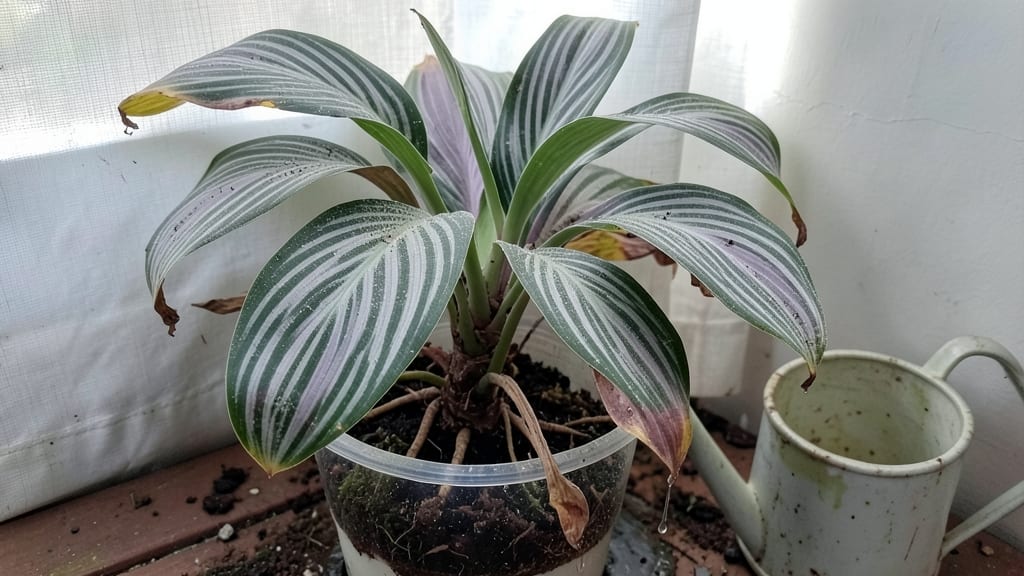
Your zebra plant’s striped leaves are turning sad and mushy—classic overwatering, and the good news is it’s fixable. I’ve nursed more than a few back from the brink by cutting back on water and giving roots room to breathe, and the results are always shockingly fast.
The key is acting before the roots turn to mush, which means checking the soil before you water again. Most people overdo it because they think zebra plants love moisture, but these tropicals actually hate soggy feet.
Start by letting the top 2-3 inches of soil dry out completely between waterings—that’s usually every 7-10 days in typical indoor conditions.
If your plant’s pot lacks drainage holes, repotting into one with them is step one; if it’s already well-drained, hold off on water until the soil feels light and crumbly when you poke it.
Yellowing leaves and droopy stems are your first warning signs, but if the roots smell rotten, you’ll need to trim away the bad parts before repotting in fresh, airy mix.
Within 2-3 weeks, you’ll see new growth pushing through, and those signature striped leaves will perk up again—just give it time and consistent care.
The real secret is adjusting your watering routine to match your home’s humidity; in dry winter air, you might water less often than in a steamy bathroom. Once the plant recovers, keep a finger in the soil to avoid repeating the same mistake.
This fix works whether your zebra plant lives on a sunny windowsill or under grow lights, and the same principles apply to other moisture-sensitive houseplants like pothos or philodendrons.
The difference between a thriving plant and a sad one often comes down to how quickly you respond—so don’t wait until the leaves turn to mush before acting.
Common Causes Of Excess Moisture
Your zebra plant (Aphelandra squarrosa) may be drowning in water—not just from your watering can. Let’s break down the science behind why this happens and how to fix it.
Zebra plants are succulent-leaved perennials, meaning they’ve evolved to store water in their thick, fleshy leaves. Unlike moisture-loving tropical plants, they thrive in well-draining soil and dry spells between waterings. When you water too frequently—or give them too much at once—roots suffocate.
Why it happens:
- Poor soil aeration: Compacted or heavy clay soil traps water around roots, cutting off oxygen. Roots need 20-30% air space to breathe—without it, they rot.
- Ignoring the "soak-and-dry" rule: Zebra plants prefer soil to dry out 70-80% between waterings. Sticking your finger 1-2 inches deep and feeling dryness is key.
- No drainage holes: Pots without holes act like bathtubs, pooling water at the bottom. Even "self-watering" pots can drown roots if not monitored.
Actionable fix: Switch to a cactus/succulent mix with perlite or pumice (30-40% by volume) and water only when the top 1-2 inches of soil are bone-dry. Test your soil’s moisture retention with this simple method.
Zebra plants are native to humid Brazilian rainforests, but their leaves are adapted to high light and dry air—not the cozy, steamy air of your living room. Humidity above 60% (common in bathrooms or kitchens) tricks the plant into thinking it’s always wet, slowing evaporation and encouraging rot.
Why it happens:
- Transpiration slowdown: High humidity reduces the plant’s ability to release water vapor through stomata (tiny leaf pores). Without this cooling mechanism, roots stay soggy.
- Fungal growth: Damp leaves + poor airflow = Botrytis blight or root rot. Zebra plants are especially vulnerable because their thick leaves trap moisture.
- Misting backfires: While zebra plants love humidity, mist isn’t the answer. It creates a temporary water blanket on leaves, blocking sunlight and promoting fungal spores.
Actionable fix:
- Place a dehumidifier near the plant (aim for 40-50% humidity).
- Use a pebble tray with water (but keep leaves above the tray to avoid direct contact).
- Wipe leaves with a damp cloth weekly to mimic natural rain rinsing.
Even if you water correctly, bad drainage is the silent killer of zebra plants. Without proper outflow, excess water lingers, leading to anaerobic conditions (no oxygen) in the soil—roots can’t respire, and harmful bacteria thrive.
Why it happens:
- Clogged drainage holes: Mineral buildup, old soil, or root growth can block holes over time. A pot with holes but no airflow is worse than none at all.
- Trapped water at the bottom: Some pots (like terracotta) wick moisture upward, while others (like plastic) hold it like a sponge. Even "breathable" materials fail if the soil mix is too dense.
- No saucer strategy: Using a decorative saucer without emptying it creates a waterlogged base. Roots at the bottom absorb this stagnant water, accelerating rot.
Actionable fix:
- Upgrade your pot: Choose terracotta or ceramic (porous) with multiple drainage holes. Avoid plastic unless it’s a well-ventilated type.
- Layer your pot: Add a 1-inch layer of coarse gravel or lava rock at the bottom before soil to create an air pocket.
- Flush the soil: Every 3 months, run water through the pot until it drains clean to remove salt buildup.
Zebra plants despise retentive soil. Garden soil, potting mix, or even "all-purpose" blends are usually too rich in organic matter, which breaks down into a water-holding gel—think of it like a swamp for roots.
Why it happens:
- High organic content: Peat moss or compost retains 10x more water than inorganic amendments like perlite. Roots in such soil stay waterlogged for days.
- No grit or sand: A mix without 20-30% coarse particles (like pumice or horticultural sand) compacts easily, reducing oxygen flow.
- Acidic pH: Zebra plants prefer slightly acidic to neutral soil (pH 6.0-7.0). Overly acidic mixes (common in peat-heavy soils) disrupt nutrient uptake, weakening the plant’s drought tolerance.
Actionable fix: Repot using a custom mix of:
- 40% cactus/succulent soil
- 30% perlite or pumice (for aeration)
- 20% coarse sand or grit (for drainage)
- 10% worm castings or coconut coir (for minimal nutrients)
Test your soil’s pH with a simple kit—aim for 6.0-6.5.
Quick Fixes for Drowning Striped Leaves
Reviving an overwatered zebra plant (Aphelandra squarrosa) starts with identifying the root of the problem—literally. Yellowing leaves, mushy stems, and a soggy soil base are clear signs your plant is drowning in its own overzealous care. But don’t panic!
With the right steps, you can nurse it back to health and prevent future waterlogging woes. Below, we break down cause-specific solutions to get your zebra plant thriving again, plus long-term prevention tips to keep those striking striped leaves vibrant.
Cause: Compacted, waterlogged soil suffocates roots, cutting off oxygen and leading to rot.
Fix It:
- 🔥 Remove the Plant Gently Carefully lift the zebra plant from its pot to assess the roots. If the soil is heavy and clumps together when squeezed, it’s time for a refresh. Pro Tip: If the roots smell foul or look dark and mushy, trim the affected areas with sterilized scissors (dip in rubbing alcohol) to prevent further spread of rot.
- 🍳 Drain and Refresh the Soil - Empty the old soil into a tray and let it dry out completely (or compost it if heavily diseased). - Rinse the roots gently under lukewarm water to remove excess salts or debris. - Repot the plant in a well-draining mix: Combine 40% peat or coco coir, 30% perlite/pumice, and 30% orchid bark or sand.
This blend mimics the airy, slightly acidic conditions of its native habitat.
- ⏰ Let It Dry Between Waterings After repotting, skip watering for 3–5 days to allow roots to recover. Then, water only when the top 1–2 inches of soil feel dry—stick your finger in to test!
Cause: Frequent watering (especially with poor drainage) or using tap water with high chlorine/fluoride content stresses the plant.
Fix It:
- 💧 Water Less, But Deeply Zebra plants prefer moderate moisture but hate soggy conditions. Water once every 7–10 days (adjust based on humidity/temperature). Use the "soak-and-dry" method:
- Water thoroughly until it drains from the bottom.
- Empty the saucer after 10 minutes to avoid root rot.
- 🔥 Use Filtered or Rainwater Tap water can build up salts over time, damaging roots. If filtered water isn’t an option, let tap water sit 24 hours before using to reduce chlorine.
- 🎯 Monitor Humidity Levels Zebra plants thrive in 60–70% humidity. If your home is dry (common with central heating), place the pot on a pebble tray with water or use a humidifier nearby.
Cause: Poor airflow or low light weakens the plant, making it more susceptible to overwatering issues.
Fix It:
- ☀️ Move to Bright, Indirect Light Zebra plants love bright, filtered light (east or north-facing windows are ideal). If leaves lose their stripes or droop, it’s a sign of insufficient light. A grow light (12–14 hours/day) works in dim spaces.
- 🌬️ Improve Air Circulation Stagnant air encourages fungal growth. Place a small fan (on low) near the plant for 1–2 hours daily, or gently brush leaves weekly to remove dust.
- 🪴 Choose the Right Pot Ensure the pot has drainage holes—this is non-negotiable! If repotting, opt for terracotta (breathable) over plastic, which traps moisture.
- 💡 Test Your Soil Use a moisture meter or the finger test to avoid guesswork. If soil stays damp for more than 2 days, cut back on water.
- 🌡️ Adjust for Seasons
- Winter: Reduce watering to every 10–14 days (growth slows).
- Summer: Increase to every 5–7 days if in a warm, dry climate.
- 🍃 Fertilize Lightly Over-fertilizing encourages weak growth, making plants more prone to rot. Use a balanced liquid fertilizer (10-10-10) once every 2 months during spring/summer.
- 🔄 Prune Damaged Leaves Trim yellow or mushy leaves with clean scissors to redirect energy to healthy growth. Wipe leaves with a damp cloth monthly to prevent pests.
Final Note: Patience is key! It may take 4–6 weeks for your zebra plant to bounce back, but with these adjustments, those bold stripes will return—and stay—stunning. 🌟
Frequently asked questions
Why are my zebra plant's leaves turning yellow and mushy?
Yellow, mushy leaves are classic signs of root rot from overwatering. The excess moisture suffocates roots, preventing them from absorbing nutrients. Check the soil—if it stays wet for more than 2 days, you're watering too often. Let the top 2-3 inches dry completely before watering again.
How often should I water my zebra plant?
Zebra plants prefer 7-10 days between waterings when soil is dry. Stick your finger 1-2 inches deep—if it feels dry, water thoroughly until it drains from the bottom. In winter, space waterings to every 10-14 days since growth slows. Always use pots with drainage holes!
Can I save my zebra plant if the roots smell rotten?
Yes, but act fast! Trim away any black, mushy roots with sterilized scissors, then repot in fresh, well-draining mix (40% cactus soil, 30% perlite, 30% coarse sand). Skip watering for 3-5 days to let roots recover. If most roots are healthy, new growth should appear in 2-3 weeks.
Why does my zebra plant droop even when the soil is dry?
Drooping can signal underwatering or root stress from overwatering damage. Check the roots—if they're brown/mushy, it's overwatering. If soil is bone-dry, the plant may need deep watering and better drainage. Move to brighter light (but avoid direct sun) and reduce humidity if your home feels too damp.
Is my zebra plant overwatered or underwatered?
Compare symptoms: Overwatered = yellow leaves, mushy stems, foul-smelling soil. Underwatered = crispy brown edges, dry soil pulling away from pot. The finger test helps—if soil feels damp 1-2 inches down, you're overwatering. If it's completely dry, it's underwatered. Adjust your routine accordingly!