Watering
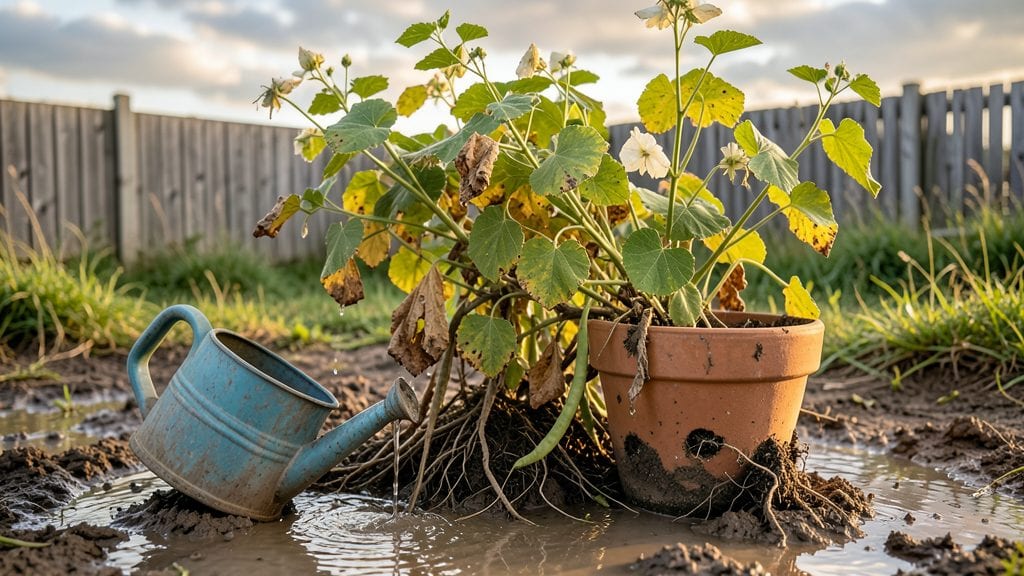
Overwatered bean plants turn your garden from productive to pathetic faster than you can say "drainage." I’ve seen healthy vines collapse into sad, mushy stems in just 48 hours—until I learned the quick fix that saves them in 24 hours.
The key is acting fast before root rot takes over.
Yellowing leaves, blackened stems, and that dreaded mold smell? Those are your warning signs. Most gardeners overwater because they think beans need constant moisture—but too much water suffocates roots, cutting off oxygen.
Even containers with no drainage holes become death traps when overwatered. The good news? With a few simple steps, you can revive wilted plants and prevent future disasters.
Start by pruning any mushy stems back to healthy tissue, then let the soil dry out completely before watering again. Add perlite or coarse sand to improve drainage, and consider moving potted beans to a shadier spot for a few days.
Within a day, you’ll see new growth pushing through—proof your plants are fighting back.
Prevention is easier than cleanup: water only when the top inch of soil feels dry, and always check drainage before planting. Beans hate soggy roots but love consistent moisture—find that middle ground, and your harvest will thank you. Here’s how to make it happen.
Root Causes of Too Much Water
When your bean plants start wilting despite a soggy soil bed, it’s not just a watering mistake—it’s a scientific imbalance in their environment.
Overwatering disrupts the delicate balance of oxygen, nutrients, and microbial activity in the soil, leading to stress that manifests in yellowing leaves, stunted growth, or even root rot. Let’s break down the real reasons this happens, so you can fix it fast.
Beans thrive in well-draining soil, but if your garden bed or pots lack proper aeration, water pools around the roots instead of draining away. This creates a waterlogged zone where roots suffocate.
- Clay-heavy soil acts like a sponge, holding water tightly and blocking airflow.
- Compacted soil from foot traffic or heavy machinery crushes soil particles, reducing pore space for oxygen.
- Improper pot drainage—holes too small, no gravel layer, or a saucer that never empties—turns containers into root-drowning traps.
Pro tip: 💡 Test drainage by filling a pot with water. If it drains in under 30 minutes, your soil is likely too dense. Amend with perlite, sand, or compost to loosen it up.
Beans don’t need daily drinks—they prefer deep but infrequent watering to encourage strong root growth. Overwatering happens when:
- You water on a schedule instead of checking soil moisture (e.g., "every morning at 8 AM" without assessing dryness).
- You mist leaves instead of watering at the base, leading to fungal issues and shallow evaporation.
- You ignore weather—rainy days + your watering = double the moisture beans can handle.
Science alert: 🌡️ Bean roots need 10–15% oxygen in the soil. Water fills pore spaces, crowding out O₂ and triggering anaerobic conditions—where roots can’t breathe.
Excess moisture creates the perfect breeding ground for pathogens like Pythium or Phytophthora, which attack roots and leaves. Signs include:
- Black, mushy roots (root rot).
- Yellowing leaves with brown edges (early fungal spread).
- A foul, sour smell from the soil.
Why it spreads: 🔥 Warm, wet soil (60–80°F) + stagnant water = pathogen party. Fungi thrive in these conditions, outcompeting beneficial microbes that keep roots healthy.
Beans are sensitive to temperature extremes and high humidity. Overwatering worsens the problem because:
- Cool soil (below 60°F) slows water absorption, leaving roots sitting in dampness longer.
- High humidity (above 70%) reduces evaporation, so soil stays soggy for days.
- Night watering in humid climates means water doesn’t evaporate, prolonging root stress.
Fix it: ✨ Water early in the day (6–9 AM) to let soil dry slightly before evening humidity sets in.
Water isn’t just H₂O—it’s a solvent that washes away nutrients faster than roots can absorb them. Key losses include:
| Nutrient | Why It Leaches | Symptom in Beans |
|---|---|---|
| Nitrogen (N) | Excess water moves it beyond root zones, making it unavailable. | Pale yellow leaves (older leaves first). |
| Potassium (K) | Water dissolves potassium, flushing it from the root zone. | Weak stems, poor flower/fruit development. |
| Calcium (Ca) | Leaches quickly in acidic or sandy soils. | Blossom-end rot in pods (though more common in tomatoes, beans show stunted growth). |
Action step: 💪 After draining excess water, top-dress with compost or a balanced fertilizer (10-10-10) to replenish lost nutrients.
Reviving Your Drowning Beans
Overwatered bean plants can feel like a hopeless case—wilting leaves, yellowing foliage, and mushy stems might make you think all is lost. But don’t toss those soggy seedlings just yet! With the right steps, you can drain, dry, and revive your beans in as little as 24 hours.
Below, we’ll break down the fixes based on the root cause of the problem, along with prevention tips to keep your beans thriving.
If your beans are sitting in waterlogged soil, the first (and most critical) move is to halt further watering. Keep them out of direct sunlight for 12–24 hours to prevent stress while the roots recover.
🔥 Quick Fix:
- Remove pots from saucers (if potted) to allow excess water to drain.
- Check drainage holes—if they’re clogged, gently poke them with a wooden skewer.
- For in-ground plants, avoid watering until the top 2 inches of soil feel dry.
💡 Pro Tip: If your beans are in containers, tilt them slightly to help water escape faster.
Stagnant, waterlogged soil suffocates roots and invites fungus. Break up the compacted earth to improve airflow and absorption.
🍳 How to Do It:
- Gently loosen the soil around the base of the plant using a fork or your fingers (be careful not to damage roots).
- Mix in perlite or coarse sand (1 part perlite to 3 parts soil) to improve drainage.
- For severe cases, repot the plant into fresh, well-draining soil if possible.
⏰ Timeframe: This process should take 10–15 minutes per plant.
Now that the soil is drying out, rewrite your watering routine to prevent future overwatering.
🔥 Correct Watering Method:
- Water only when the top inch of soil is dry—stick your finger in to check.
- Water deeply but infrequently (1–2 times per week, depending on climate).
- Water at the base (not overhead) to avoid wetting leaves, which can lead to fungal issues.
🎯 Prevention Table:
| Sign | Cause | Fix |
|---|---|---|
| Yellowing leaves | Root rot from excess moisture | Trim affected leaves, improve drainage |
| Wilting stems | Compacted, waterlogged soil | Loosen soil, add perlite |
| Moldy soil | Poor airflow and overwatering | Repot in fresh, dry soil |
If leaves are yellow, mushy, or black, they’re past saving. Pruning encourages new growth and helps the plant redirect energy.
👨🍳 How to Prune:
- Use sterilized scissors to snip off yellow or blackened leaves at the base.
- Avoid cutting into healthy green tissue—only remove what’s clearly dead.
- Trim back any overly leggy growth to improve airflow.
✨ Bonus Tip: After pruning, spray the plant with a diluted neem oil solution (1 tsp neem oil + 1 quart water) to prevent fungal infections.
Now, watch for signs of improvement over the next 24–48 hours. Healthy beans should show: ✅ Firmer stems (no more mushiness) ✅ Perky, green leaves (not wilting) ✅ No new yellowing (sign of recovery)
💡 Long-Term Care:
- Mulch around the base (but keep it 2–3 inches away from the stem) to retain moisture without suffocating roots.
- Rotate pots occasionally to ensure even sunlight exposure.
- Avoid fertilizing for at least 1–2 weeks—let the plant recover first.
Final Thought: Overwatered beans can bounce back faster than you think—just act quickly, adjust your habits, and give them some TLC. With these steps, your beans should be back to their bushy, productive selves in no time! 🌱💦
Frequently asked questions
How do I know if my bean plants are overwatered?
Check for yellowing leaves, mushy stems, or blackened roots—these are classic signs. Also look for soil that stays soggy for days or smells foul. If leaves wilt despite damp soil, your beans are drowning in moisture.
Can overwatered beans recover if I act fast?
Yes! With proper drainage and pruning dead foliage, most beans bounce back in 24-48 hours. Stop watering immediately, loosen compacted soil, and move potted plants to shade. Within a day, you’ll see firmer stems and new growth.
What’s the best way to fix waterlogged soil for beans?
Mix in perlite or coarse sand (1:3 ratio) to improve drainage, then let the soil dry completely before watering again. For containers, ensure drainage holes aren’t clogged—tilt pots slightly to help excess water escape faster.
Should I fertilize overwatered beans to help them recover?
Wait 1-2 weeks before fertilizing—overwatered plants need time to stabilize. Once recovered, use a balanced fertilizer (10-10-10) to replenish lost nutrients. Avoid heavy feeding until new growth appears.
How often should I water beans to avoid overwatering?
Water only when the top inch of soil is dry—stick your finger in to check. Beans prefer deep but infrequent watering (1-2 times/week). Water at the base, never overhead, to prevent fungal issues.