
Pruning
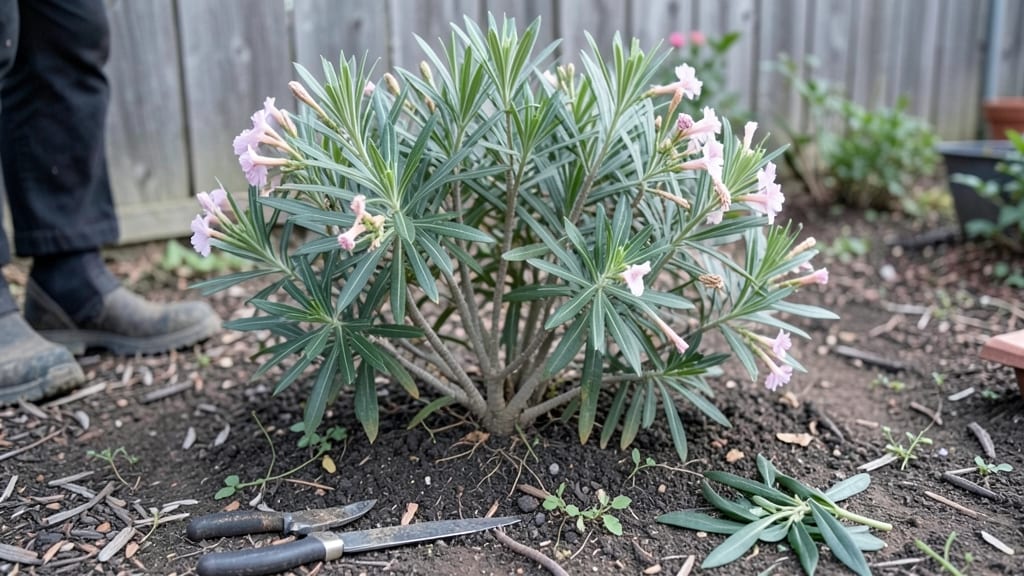
Pruning oleander plants transforms them from scraggly to showstopping in just three strategic cuts a year. I’ve pruned mine for over a decade, and the difference between a neglected bush and a lush, blooming powerhouse comes down to timing, technique, and knowing where to cut.
The key isn’t just snipping branches—it’s understanding how oleander responds to each season’s demands, from winter’s dormancy to summer’s rapid growth.
You’ll need sharp pruners, thick gloves (oleander sap is toxic), and a clear plan for each season’s goals. Light pruning in early spring cleans up winter damage, while mid-summer shaping encourages dense growth and more blooms.
That final cut in late summer sets the stage for next year’s health. The tools are simple, but the approach matters—improper cuts can stress the plant or invite disease.
After pruning, you’ll see new growth within weeks, with flowers appearing thicker and more vibrant. The plant’s natural shape emerges, and you avoid the leggy, sparse look that plagues neglected oleanders.
Just remember: never cut more than a third of the plant at once, and always make clean cuts just above a leaf node. The results? A bush that stays compact, blooms reliably, and thrives year after year.
This method works for both young plants and mature bushes, whether you’re shaping a hedge or keeping a single specimen tidy. The same principles apply whether you’re in a hot, dry climate or a milder zone—just adjust timing slightly for your local frost dates.
Let’s get those shears ready and turn your oleander into the standout it’s meant to be.
📚 In This Guide
- What you need
- Instructions
- Tips and common mistakes
- Wrapping up and next steps
What you need
- ● Pruning shears – Bypass pruners (sharp, 5-7 inch blades) for clean cuts on small stems. 1 pair recommended.
- ● Loppers – Long-handled (20-24 inch) for thicker branches (½ inch or larger). 1 pair for heavy-duty cuts.
- ○ Pruning saw – Curved blade for stubborn, woody stems (if your oleander grows large). 1 saw (optional but handy).
- ● Gloves – Heavy-duty, chemical-resistant (oleander sap can irritate skin!). 1 pair (nitrile or leather).
- ● Disinfectant – 70% isopropyl alcohol or bleach solution (1 part bleach to 9 parts water) to sterilize tools between cuts. Small spray bottle or rag.
- ● Trash bags or bucket – For collecting pruned debris. 1-2 bags (oleander leaves are toxic—do not compost!).
- ● Ladder (if needed) – Sturdy, extendable for tall oleanders (6+ feet). 1 ladder (only if reaching high branches).
- ● Hand pruners – For fine-tuning small stems (great for shaping).
- ● Rubbing alcohol wipes – Quick cleanup for sticky sap.
- ● Marking twine or flags – To tag branches for future reference (e.g., "keep" vs. "remove").
- ● Safety goggles – Protects eyes from debris (especially when using a saw).
Instructions for pruning oleander plants seasonally
Keep your oleander looking lush and healthy with these three strategic cuts throughout the year.
Light Pruning After Flowering in Early Summer
Once the oleander blooms fade in late spring or early summer, it's time for your first cut. Use clean, sharp pruning shears to remove any spent flower clusters and any branches that look leggy or overgrown. This encourages new growth and keeps the plant fuller. I like to trim back about one-third of the current season's growth—this is enough to shape the plant without stressing it.
Look for branches that are growing inward or crossing over others. These compete for sunlight and air circulation, which can lead to disease. Cut these back to an outward-facing bud or branch. Avoid cutting into old, woody stems—focus on the newer growth that appears after flowering. You'll see fresh, vibrant shoots emerging within a few weeks, signaling that the plant is responding well.
Structural Pruning in Late Summer or Early Fall
This is the time to shape your oleander for the coming year. In late summer or early fall, when the plant has finished its main growth spurt, take a step back and assess its overall form. Prune any branches that are dead, diseased, or damaged. Cut these back to healthy wood, making your cuts just above a leaf node or bud. This ensures the plant can heal and grow from that point.
If your oleander has become too tall or leggy, you can also do some selective thinning. Remove branches that are growing too close together or that are rubbing against each other. This improves airflow and reduces the risk of fungal issues. For larger branches, use loppers instead of shears to make clean cuts. After pruning, you'll notice the plant looks more balanced and open, with better light penetration to the inner foliage.
Minimal Winter Pruning Before Dormancy
As winter approaches, oleanders enter a period of dormancy, especially in colder climates. In late fall or early winter, give your plant a final, light trim to remove any remaining dead or weak growth. This is a gentle pruning—just enough to tidy up the plant and prepare it for the dormant season. Avoid heavy pruning now, as the plant needs its energy reserves to survive the colder months.
Focus on cleaning up any branches that look tired or have lost most of their leaves. You can also trim back any new growth that appeared late in the season but didn't have time to harden off. After this final cut, give the plant a light application of compost or mulch around the base to protect the roots. In warmer climates, oleanders may stay active year-round, so you can skip this step or do it very lightly.
Post-Pruning Care for Year-Round Health
After each pruning session, it’s important to give your oleander the care it needs to recover and thrive. Water the plant deeply right after pruning to help it recover from the stress of cutting. Avoid fertilizing immediately after pruning—wait until new growth appears, usually within 2-4 weeks. This gives the plant time to heal and establish before putting energy into new leaves and flowers.
Keep an eye on the pruned areas over the next few weeks. If you see any signs of stress, like wilting or yellowing leaves, it’s usually a sign of over-pruning or environmental factors like too much sun or wind. Adjust care as needed, and you’ll see your oleander bounce back stronger than ever. With these seasonal cuts, your plant will stay healthy, full, and beautiful all year long.
Tips & tricks for perfect oleander plant pruning
Pruning oleanders might seem intimidating, but these key strategies will help you maintain a thriving plant year after year without overstressing it.
The Timing Factor: In Step 1, when you trim back about one-third of the current season's growth after flowering, focus on removing only the leggy or overgrown branches. This precise amount prevents over-pruning while encouraging fuller growth. I've learned that cutting too much at once can shock the plant, especially in hot summer months, so stick to this one-third guideline.
Branch Selection Matters: During Step 2's structural pruning, prioritize removing branches that are crossing or growing inward—they create ideal conditions for fungal diseases. Always cut back to an outward-facing bud or branch to promote healthy growth. I've made the mistake of cutting into old, woody stems, which can leave unsightly stubs and stress the plant unnecessarily.
Seasonal Considerations: The winter pruning in Step 3 should be minimal, especially in colder climates. This is when oleanders store energy for next year's growth, so avoid heavy cuts. In warmer regions, you can skip this step entirely if your plant remains active year-round. I've seen oleanders in Florida thrive with just the summer and fall pruning sessions.
Post-Pruning Recovery: After each pruning session, the deep watering in Step 4 is crucial for recovery. I've noticed that plants watered immediately after pruning show new growth within 2-4 weeks, while those not watered properly may take longer to bounce back. Avoid fertilizing right away—wait until you see fresh shoots emerging to give the plant time to heal.
Pro Tips for Oleander Plant Pruning
- Pruning oleanders might seem intimidating, but these key strategies will help you maintain a thriving plant year after year without overstressing it.
- The Timing Factor: In Step 1, when you trim back about one-third of the current season's growth after flowering, focus on removing only the leggy or overgrown branches.
- Branch Selection Matters: During Step 2's structural pruning, prioritize removing branches that are crossing or growing inward—they create ideal conditions for fungal diseases.
Frequently asked questions
Got questions about oleander pruning? You’re not alone! Here are some of the most common concerns—and their straightforward answers—to keep your plant thriving year-round.
When is the best time to prune oleander?
Prune oleander three times a year: spring (late winter/early spring) to shape and encourage growth, summer (after flowering) to maintain size, and fall (early autumn) for light cleanup. Avoid heavy pruning in winter—oleander is semi-dormant and may struggle to recover.
How much can I cut back my oleander?
You can safely prune up to one-third of the plant’s height or volume in a single session, but avoid over-pruning. Oleander is resilient but may produce fewer flowers if cut back too aggressively. For mature plants, spread cuts over multiple seasons to avoid stress.
Why is my oleander not flowering after pruning?
Oleander flowers on new growth, so prune in late winter/early spring to stimulate blooms. If you prune too late (after summer), you may miss the flowering cycle. Also, ensure your plant gets full sun (6+ hours/day) and well-draining soil—poor conditions can reduce blooms.
Can I prune oleander in hot or cold weather?
Avoid pruning during heatwaves (above 90°F/32°C) or freezing temperatures (below 30°F/-1°C). Hot weather stresses the plant, while cold can delay recovery. Early morning or late afternoon pruning in mild weather is ideal.
What if my oleander looks leggy after pruning?
Leggy growth often means too little light or over-pruning. Move your plant to a sunnier spot and prune lightly in summer to encourage bushier growth. Fertilize with a balanced, phosphorus-rich formula (like 10-10-10) to promote foliage density.
Wrapping up and next steps
Pruning your oleander plant isn’t just about keeping it tidy—it’s a year-round ritual to boost its health, shape, and even its stunning blooms! 🌿 With the right tools, timing, and techniques, you’ll unlock a thriving, vibrant plant that rewards you with beauty and resilience.
The key is consistency: spring for growth, summer for maintenance, and fall/winter for cleanup.
Ready to roll up your sleeves? Start with one seasonal cut this week—whether it’s trimming back leggy branches or shaping those lush fronds—and watch your oleander flourish! 🌸 For extra confidence, revisit the FAQs or grab your pruners and dive in. Your plant (and future garden pride) will thank you!