Companion Plants
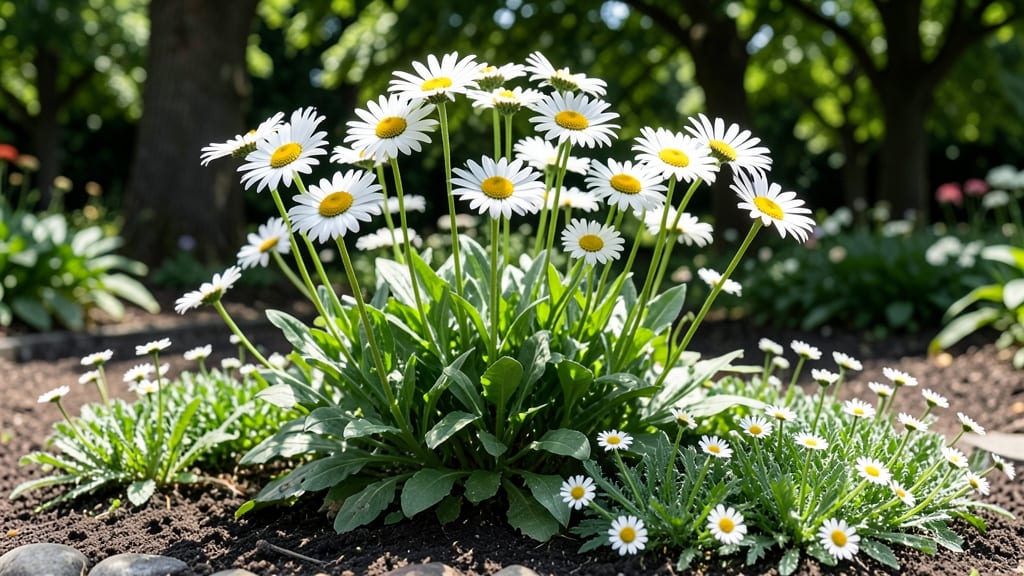
These hardy marguerite daisy plants transform my sunniest border into a cloud of cheerful white-and-yellow blooms—drought-resistant and impossible to kill once established. 🌿 The secret lies in their Mediterranean roots: they crave hot, dry conditions and reward. you with flowers from early summer until frost.
Unlike fussy annuals, these shrubby perennials (in warmer zones) or tender perennials (in cooler areas) bounce back after neglect, making them the ultimate low-maintenance star.
You’ll need well-draining soil—sandy loam or amended clay with 30% perlite or grit—and a spot where they get 6+ hours of direct sun daily. Most garden centers sell them as 4-inch pots, but planting from seed (if you’re patient) gives you more variety.
The key move? Water deeply once a week after establishment—these daisies store moisture in their stems like little succulents. Overwatering is their only real enemy, so skip the mulch unless your soil drains poorly.
By midsummer, you’ll have a bushy plant covered in 3-inch blooms that attract bees and butterflies while repelling deer (a rare win-win). Prune spent flowers to encourage more blooms, and give them a light haircut in early spring to shape them up.
Pair them with lavender, salvia, or ornamental grasses for a Mediterranean-inspired border that thrives on neglect. The best part? They self-seed minimally, so you’ll get free plants for years.
In colder zones (below USDA Zone 8), treat them as annuals—they’ll die back in frost but often resprout from the roots if you mulch lightly. For a foolproof display, plant them in groups of three or five; they look stunning in containers too.
Once they’re happy, they’ll outperform any annual daisy you’ve tried before—no deadheading, no fuss, just blooms.
📚 In This Guide
- What you need
- Instructions
- Tips and common mistakes
- Wrapping up and next steps
What you need
- ● Marguerite Daisy Plants: Choose between seedlings (for quick blooms) or seeds (for budget-friendly options). Aim for 3–5 plants per 4–6 ft. of garden space for a full, lush look.
- ● Well-Draining Soil: A mix of garden soil + compost (ratio: 3:1) or potting mix for containers. Marguerite daisies hate soggy roots!
- ● Sunny Spot: A location with 6+ hours of direct sunlight daily (they thrive in full sun!).
- ● Watering Can or Hose: With a gentle spray nozzle to avoid disturbing soil.
- ● Garden Trowel or Transplant Spade (for digging holes 2x wider than the root ball).
- ○ Gloves (optional but helpful for messy soil or thorny stems).
- ○ Mulch (Optional): 1–2 inches of straw, pine needles, or shredded bark to retain moisture and suppress weeds.
- ○ Fertilizer (Optional): Balanced 10-10-10 fertilizer at planting time (follow label rates).
- ● Slow-release rose or flower fertilizer mid-season for extra blooms.
- ● 🌡️ Heat Tolerance: Marguerite daisies love hot, dry conditions—perfect for drought-prone areas! Water deeply but infrequently (once a week in dry spells).
- ● ✨ Deadheading: Snip spent blooms with clean pruners to encourage non-stop flowers all season.
Step-by-step guide to planting and maintaining marguerite daisy plants
Here's how to cultivate these cheerful, sun-loving perennials with minimal fuss.
🌱 Step 1: Prepare the Planting Site
Marguerite daisies demand full sun—at least 6-8 hours daily—so choose a location with unobstructed southern or western exposure. They tolerate poor soil but thrive best in well-draining, slightly alkaline conditions (pH 6.0-7.5). If your soil is heavy clay, amend it with 2-3 inches of compost mixed into the top 6 inches of soil.
Dig a hole twice as wide as the root ball but only as deep as the container's base. Gently loosen the roots if they're circling the pot—this encourages outward growth. Place the plant so the top of the root ball sits level with the surrounding soil, never buried deeper. Marguerite daisies resent soggy roots, so avoid planting in low-lying areas where water pools.
💧 Step 2: Water and Mulch for Establishment
Water deeply immediately after planting to settle the soil around roots, then maintain 1 inch of water per week—more during extreme heat. You'll know they're properly hydrated when the top 2 inches of soil feel dry to the touch. Overwatering is their biggest enemy, so resist the urge to water on a schedule; instead, check soil moisture every 3-4 days in summer.
Apply 2-3 inches of organic mulch (like shredded bark or straw) around the base, keeping it 2 inches away from the stem. This conserves moisture, regulates soil temperature, and suppresses weeds. Refresh the mulch layer annually in early spring. Marguerite daisies are drought-tolerant once established, but young plants need consistent moisture for the first 30-45 days to develop strong root systems.
☀️ Step 3: Prune for Continuous Blooms
Deadhead spent blooms weekly by snipping stems ½ inch above the nearest leaf node. This redirects energy to new flowers instead of seed production. You'll notice a surge in fresh buds within 7-10 days of regular deadheading. For a bushier plant, trim back one-third of the oldest stems in early spring before new growth begins—this rejuvenates the plant and prevents legginess.
Avoid heavy pruning after mid-summer. Marguerite daisies set flower buds for next year's blooms in late summer, so cutting back too late can reduce next season's display. If you're growing them as annuals, you can cut them back by half their height in late summer to encourage a second flush of blooms before frost.
✂️ Step 4: Divide and Propagate Every 3-4 Years
Dig up the entire plant in early spring or fall when it's dormant. Use a sharp spade to slice through the root ball into 3-4 inch sections, ensuring each piece has 3-5 shoots. Replant divisions immediately in prepared soil, spacing them 18-24 inches apart. Water thoroughly after transplanting to reduce shock. You'll see new growth within 2-3 weeks—a sign the roots have taken.
Dividing prevents overcrowding, which leads to fewer blooms and weaker stems. It's also the easiest way to propagate your plants. Share divisions with neighbors or replant them to create a fuller, more vigorous garden display. Marguerite daisies respond well to division, often producing more blooms in their second year after being split.
Tips & tricks for perfect marguerite daisy cultivation
A few key strategies will ensure your marguerite daisies thrive and reward you with continuous blooms all season long.
Sunlight Strategy: While the instructions emphasize 6-8 hours of full sun daily, I've found that morning sun paired with afternoon shade in extremely hot climates (above 95°F) actually extends the blooming season by preventing heat stress. Marguerite daisies can handle this partial shade adjustment—just monitor for any signs of leaf scorch on the edges, which would indicate they're getting too much midday intensity.
Soil Preparation Insight: The recommended 2-3 inches of compost mixed into the top 6 inches of soil is perfect, but here's what nobody tells you—add a handful of perlite or coarse sand to that mix if your soil is naturally dense. This creates tiny air pockets that improve drainage without altering the slightly alkaline pH range (6.0-7.5). I've seen plants in heavy clay soil double their bloom production after this simple amendment.
Watering Wisdom: The 1 inch of water per week guideline works beautifully, but I've developed a visual trick to avoid overwatering: press your finger 2 inches deep into the soil. If it feels dry, water; if it's still slightly moist, wait another day. This method has saved me from drowning plants during our unpredictable spring rains. Remember, marguerite daisies are drought-tolerant once established, but those first 30-45 days are critical for root development.
Pruning Pro Tip: When deadheading those spent blooms weekly, use clean, sharp pruners and make your cuts at a 45-degree angle just above a leaf node. This angled cut prevents water from pooling on the stem, which reduces rot risk. For the one-third stem trim in early spring, focus on the oldest, leggiest stems first—they're the ones that have already produced flowers and are now competing with new growth for nutrients.
Pro Tips for Marguerite Daisy Plants
- A few key strategies will ensure your marguerite daisies thrive and reward you with continuous blooms all season long.
- Sunlight Strategy: While the instructions emphasize 6-8 hours of full sun daily, I've found that morning sun paired w...
- Soil Preparation Insight: The recommended 2-3 inches of compost mixed into the top 6 inches of soil is perfect, but h...
Frequently asked questions
Got questions about growing marguerite daisy plants? You’re not alone—these cheerful bloomers are easy to love but sometimes tricky to master! Here are the most common queries with simple, no-fuss answers to keep your garden thriving.
How often should I water marguerite daisies?
Once established, marguerite daisies are seriously drought-tolerant! Water deeply once a week during dry spells, but avoid soggy soil—these plants hate "wet feet." Newly planted daisies may need watering every 2–3 days until roots take hold (about 4–6 weeks). Pro tip: Mulch around the base to lock in moisture and keep weeds at bay!
Do marguerite daisies need full sun all day?
While they love full sun (6+ hours daily), they can tolerate partial shade (4–6 hours) in hot climates. In cooler regions, morning sun + afternoon shade works too. Just expect fewer blooms if they don’t get plenty of light. Watch for: Wilting or pale leaves = more sun needed!
When and how should I prune marguerite daisies?
Prune after flowering (late summer/early fall) to encourage bushier growth. Cut back dead blooms regularly to prompt more flowers. For a tidy look, trim 1/3 of the plant in early spring. Skip pruning in winter—let the foliage protect the roots! Bonus: Deadheading spent blooms extends the blooming season!
What pests or diseases should I watch for?
Marguerite daisies are tough, but aphids and powdery mildew can be nuisances. Prevent pests: Spray plants with water to dislodge aphids or use neem oil. For mildew, improve airflow and avoid overhead watering. Yellow leaves? Could signal overwatering or nutrient deficiency—try a balanced fertilizer!
Can I grow marguerite daisies in containers?
Choose a large pot (12"+ diameter) with drainage holes and well-draining soil. Use a sun-loving potting mix and fertilize lightly every 4–6 weeks. Container-grown daisies may need more frequent watering than in-ground plants. Hot tip: Pair them with lavender or sedum for a drought-resistant combo!
Wrapping up and next steps
Marguerite daisies are the perfect low-maintenance, sun-loving companions for any garden—drought-resistant, cheerful, and effortlessly beautiful! Whether you’re a beginner or a seasoned gardener, these blooms bring joy and resilience to your outdoor space with minimal fuss.
Ready to transform your garden? Start by choosing your favorite variety and plant a few this weekend—your future summer blooms will thank you!
Pro tip: 💡 Pair them with lavender or Russian sage for a stunning, pollinator-friendly display!