
How To
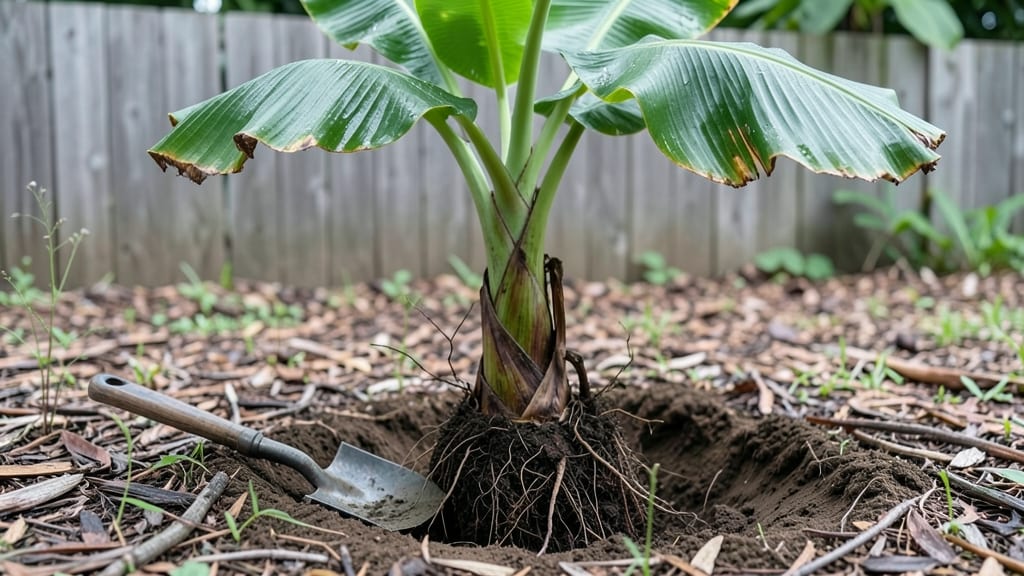
Transplanting banana plants at the right time can double your harvest next season. I learned this after struggling with stunted growth from my first attempt—until I mastered the timing, soil prep, and gentle handling that keeps roots happy.
The key is moving them after fruiting or during dormancy, when they’re least stressed and most adaptable.
Start by digging a hole twice as wide as the root ball but only slightly deeper, then mix in compost for nutrients. Gently tease out any circling roots and place the plant so the crown sits just above soil level.
Water deeply afterward, and you’ll see new fronds emerge within weeks, signaling successful transplanting. Even in cooler climates, this method works with proper mulching to protect roots.
📚 In This Guide
- What you need
- Instructions
- Tips and common mistakes
- Wrapping up and next steps
What you need
- ● Banana plants: Healthy, mature plants with at least 3–4 pseudostems (trunks) and visible roots (1–3 plants per transplant, depending on space).
- ● Shovel or digging fork: A sharp, sturdy garden shovel (18–24 inches wide) or a digging fork for delicate root extraction.
- ● Pruning shears or knife: Sterilized shears or a pruning knife to trim excess foliage or roots.
- ● Garden gloves: Heavy-duty, cut-resistant gloves (1 pair) to protect your hands from thorns and rough edges.
- ● Wheelbarrow or bucket: A 5-gallon bucket or wheelbarrow for transporting plants and soil.
- ● Well-draining soil mix: 60% topsoil (rich in organic matter).
- ● 30% compost or aged manure (for nutrients).
- ● 10% perlite or coarse sand (to improve drainage).
- ● Organic mulch: Straw, wood chips, or pine bark (2–3 inches thick) to retain moisture and regulate temperature.
- ● Watering can or hose: A 5-gallon watering can with a rose nozzle or a soaker hose for gentle hydration.
- ● Fertilizer: Balanced organic fertilizer (e.g., 10-10-10 or compost tea) or banana-specific fertilizer (follow package rates).
- ○ Support stakes or trellis: Bamboo stakes (4–6 feet tall) or a trellis system for windy areas (optional but recommended for dwarf varieties).
- ● Root stimulator: Mycorrhizal fungi or seaweed extract to encourage root growth.
- ● Epsom salt: Magnesium sulfate (1 tablespoon per gallon of water) for nutrient boost.
- ● Plant shield or frost cloth: Temporary protection for young transplants in cold climates.
- ● Soil pH tester: To ensure your soil is slightly acidic (pH 6.0–7.5)—bananas prefer this range!
- ● Pruning paste: To seal large cuts on the pseudostem and prevent disease.
Step-by-step instructions for transplanting banana plants
Here’s my foolproof approach to moving banana plants without shocking them.
Choose the Right Time and Location
Transplant banana plants during their active growing season—spring or early summer when temperatures stay above 60°F. Avoid moving them during cold snaps or when fruit is ripening, as this stresses the plant unnecessarily. Pick a spot with full sun (at least 6-8 hours daily) and protection from strong winds, which can damage the large leaves.
Bananas thrive in well-draining soil with a slightly acidic to neutral pH (5.5-7.0). If your soil is heavy clay, amend it with 2-3 inches of compost mixed into the top 12 inches of soil. This improves drainage and provides nutrients for robust growth. Test the soil moisture before transplanting—it should feel damp but not soggy, like a wrung-out sponge.
Prepare the New Planting Hole
Dig a hole twice as wide as the banana plant’s root ball but only as deep as the container it’s currently in. This prevents burying the crown too deeply, which can cause rot. If your banana is in a pot, gently loosen the roots around the edges to encourage them to spread into the new soil.
Add a 5-10 pound handful of balanced fertilizer (10-10-10) to the bottom of the hole to give the plant an immediate nutrient boost. Mix it lightly with the native soil so it doesn’t concentrate in one spot. Water the hole thoroughly 24 hours before transplanting to help the roots settle more easily when moved.
Carefully Remove and Transfer the Plant
Water the banana plant deeply the day before transplanting to reduce root shock. Lift it from the ground or pot by tilting the container slightly and sliding it out—never pull by the stem. If the roots are tightly bound, use your hands to gently tease them apart without breaking them. Hold the plant by its base (not the leaves) to avoid damaging the fragile pseudostem.
Place the banana into the prepared hole, ensuring the crown sits at ground level—neither buried nor exposed. Fill the hole with soil, pressing lightly around the edges to remove air pockets. Leave a 2-inch deep basin around the base to help water pool during irrigation. Mulch the area with 2-3 inches of organic mulch (like straw or wood chips) to retain moisture and regulate soil temperature.
Water and Monitor for Recovery
Give the transplanted banana a deep watering immediately after planting, soaking the soil until water runs out of the basin you created. Avoid wetting the leaves to prevent fungal diseases. For the first 2-3 weeks, water every 2-3 days (or when the top 2 inches of soil feel dry), keeping the soil consistently moist but never waterlogged.
Watch for signs of stress: yellowing leaves or wilting indicate either overwatering or underwatering. If the plant droops slightly, it’s normal—bananas often recover within 5-7 days once they’ve adjusted. Shield the plant from direct sun for the first week to reduce stress, then gradually reintroduce full sunlight over 7-10 days. Fertilize lightly with a balanced liquid fertilizer after 4 weeks to support new growth.
Tips & tricks for transplanting banana plants
A few simple tricks will help your banana plants thrive after transplanting—these are the lessons I learned from watching my first few attempts struggle.
Timing is Everything: The 60°F minimum temperature is non-negotiable for banana plants. I’ve seen them struggle when moved during cooler weather, even if the forecast promises warmth. Check your local 10-day forecast before transplanting—aim for a stretch of consistently warm days above 60°F. This gives your plant time to establish roots without temperature stress. If you're in doubt, wait until you're certain the weather will cooperate.
Root Care During Removal: When you're ready to lift your banana plant in Step 3, be extra gentle with those roots. I learned the hard way that even a few broken roots can set back recovery by weeks. If the roots are tightly bound in a pot, don't force them—gently work them loose with your fingers. For potted plants, tilt the container and let gravity help you slide the plant out rather than pulling it. This preserves the root structure and minimizes shock.
Soil Preparation Matters: The 24-hour pre-watering of the new hole is crucial for success. I've seen many gardeners skip this step, thinking it's not necessary. But that pre-watering helps the roots slide into place more easily and prevents air pockets that can cause rot. Think of it like giving your banana plant a head start in its new home. Also, if your soil is particularly dense, consider adding a handful of perlite or coarse sand to improve drainage around the roots.
Post-Transplant Recovery Watch: Those first 2-3 weeks after transplanting are critical. I've found that creating a small basin around the base helps maintain consistent moisture without overwatering. Check soil moisture by sticking your finger 2 inches down—if it feels dry, that's your cue to water. The goal is to keep the soil consistently moist, not soggy. Yellowing leaves often indicate overwatering, while wilting suggests underwatering—both are common mistakes when monitoring recovery.
Pro Tips for Transplant Banana Plants
- A few simple tricks will help your banana plants thrive after transplanting—these are the lessons I learned from watching my first few attempts struggle.
- Timing is Everything: The 60°F minimum temperature is non-negotiable for banana plants.
- Root Care During Removal: When you're ready to lift your banana plant in Step 3, be extra gentle with those roots.
Frequently asked questions
Got questions about transplanting banana plants? You’re not alone! Here are some of the most common concerns—plus straightforward answers to keep your banana trees happy and healthy.
When is the best time to transplant banana plants?
The ideal window is during the early spring or late winter, when the plant is still dormant but temperatures are warming up. Avoid transplanting in extreme heat or cold—banana plants are tropical and stress easily outside their comfort zone. If you’re in a warm climate, aim for the monsoon season when humidity is high.
How do I know if my banana plant is ready for transplanting?
Look for these signs: the plant has 3-4 mature leaves, a thick pseudostem (at least 2-3 inches in diameter), and visible roots growing from the bottom of the pot. If the roots are circling or the plant is top-heavy (leaning), it’s time to move it. Avoid transplanting if the plant is flowering—this stresses it unnecessarily.
Can I transplant banana plants in full sun or shade?
Banana plants love full sun (6+ hours daily), but they can tolerate partial shade (4-6 hours) in hotter climates to prevent leaf scorch. If transplanting to a shady spot, choose a well-draining location and monitor for slower growth. Avoid deep shade—this can lead to weak stems and fewer fruits.
What should I do if my banana plant wilts after transplanting?
Wilting is normal for the first 1-2 weeks as the plant adjusts. Don’t panic! Keep the soil consistently moist (not soggy) and provide light shade for a few days. If wilting persists beyond 2 weeks, check for root rot (smelly, mushy roots) or pests. Trim damaged roots and repot if needed.
Can I transplant banana plants from the ground into pots (or vice versa)?
Yes, but it requires extra care. For ground-to-pot, dig a large enough hole (2-3x the root ball), loosen roots gently, and pot with well-draining soil. For pot-to-ground, harden off the plant first (acclimate to outdoor conditions for 7-10 days). Water thoroughly after transplanting, and mulch to retain moisture.
Still unsure? Drop your question in the comments—we’re happy to help your banana plant thrive!
Wrapping up and next steps
Transplanting banana plants doesn’t have to be stressful—with the right timing, tools, and care, you’ll give your plant the best chance to thrive! 🌱 Remember to prepare the new location, handle the plant gently, and monitor its progress for a smooth transition.
Your effort will soon reward you with lush foliage and sweet, homegrown bananas.
Now that you’re equipped with these tips, take the next step: mark your calendar for the ideal transplanting season and gather your supplies. Happy gardening—your banana plant is counting on you! 🍌✨