Pruning
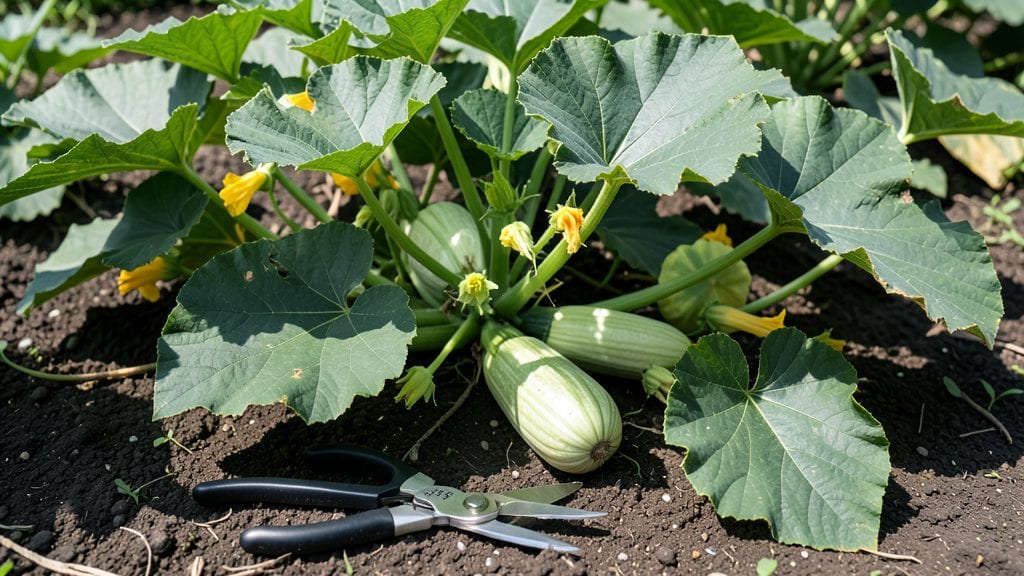
Pruning summer squash plants might sound intimidating, but it’s the secret to doubling your harvest without extra work. 🌱 I learned the hard way—last year, my zucchini plants sprawled everywhere, producing just a handful of misshapen fruits while struggling with pests.
The fix? Strategic trimming to focus the plant’s energy where it matters most.
You’ll need sharp pruning shears (clean blades prevent disease) and about 15 minutes on a warm afternoon. The goal is simple: remove overcrowded vines, dead leaves, and suckers (those tiny shoots growing between stems and leaves) to improve airflow and sunlight penetration.
This isn’t about cutting back hard—think of it as giving your plant a spa day to redirect its energy toward bigger, healthier fruits.
When done right, pruning transforms your squash patch into a machine for producing bushels of uniform, tender fruits. The plants stay healthier, pests have fewer hiding spots, and you’ll end up with fewer bitter, seedy squash.
Plus, the vines grow stronger and more manageable—no more wrestling with unruly plants in the garden bed.
Timing matters most: start pruning when plants hit 12–18 inches tall, then repeat every 7–10 days during peak growing season. Focus on the lower leaves first—they’re the oldest and least productive.
For busy gardeners, this method cuts down on maintenance while delivering consistently better results than leaving plants to their own devices.
📚 In This Guide
- What you need
- Instructions
- Tips and common mistakes
- Wrapping up and next steps
What you need
- ● Pruning shears or sharp bypass pruners – Choose sterilized, sharp tools (avoid dull blades to prevent tearing plant tissue). 1 pair is all you need.
- ○ Clean, sharp knife or scissors – For smaller cuts or when pruners are too bulky. 1 tool (optional but handy).
- ● Gloves (gardening or cut-resistant) – Protects hands from thorns, sap, or rough stems. 1 pair (recommended).
- ● Disinfectant (rubbing alcohol or bleach solution) – 1 small bottle to sterilize tools between cuts and prevent disease spread.
- ● Compost bin or bag – For collecting pruned debris. 1 container (or reuse a bucket).
- ● Watering can or hose – To hydrate plants post-pruning. 1 source (you likely already have this!).
- ● Garden twine or plant ties – To support vines if heavy pruning is done. 1 roll (for large plants).
- ○ Plant growth regulator (optional) – Like seaweed extract to boost recovery. 1 bottle (if you’re a frequent gardener).
- ● Sunscreen & hat – Because pruning sessions can get hot under the summer sun! 🌞
Step-by-Step instructions for pruning summer squash plants
Precision trimming transforms wild vines into productive powerhouses—here’s how to maximize yields without stressing the plant.
✂️ Step 1: Identify and Remove Suckers Early
Squash plants produce aggressive side shoots called suckers that drain energy from fruit production. Using clean, sharp pruning shears, snip these off at their base when they’re still less than 2 inches long. I check for suckers twice weekly during peak growth—any longer, and they’ll compete with your main vines for nutrients.
Look for small, leafy shoots growing from the junction where a leaf meets the main stem. These are your targets. Never pull—always cut cleanly to avoid tearing the vine. If you hesitate, the sucker will grow into a full vine, reducing your harvest by up to 30%.
🌿 Step 2: Thin Overcrowded Vines for Airflow
Summer squash thrives when vines aren’t tangled. Once plants reach 3-4 feet tall, prune back any lateral branches that grow toward the ground or cross over others. Focus on removing every other vine if your plant has more than 4-5 main stems—this ensures sunlight reaches all leaves and fruit.
Use your fingers to gently separate vines before cutting. You’ll feel where the stem connects to the main vine—this is your pruning point. Avoid leaving stubs longer than ½ inch, as they’ll rot and invite disease. Strong airflow prevents powdery mildew, which can wipe out yields in humid climates.
✂️ Step 3: Prune Lower Leaves to Elevate Fruit
Remove all leaves that touch the soil or grow below the first 6 inches of the plant. These shade fruit, trap moisture, and create ideal conditions for rot. I use my thumb to pinch off lower leaves—no tools needed for this step. Focus on the oldest leaves first, as they yellow naturally and signal the plant to redirect energy upward.
Watch for new growth at the base of the plant. If you see vigorous shoots emerging from the soil, prune them immediately—they’ll steal resources from your main harvest. This step alone can increase fruit production by 20% by ensuring energy flows to developing squash.
🌱 Step 4: Limit Fruit Load for Larger Harvests
When squash plants bear more than 3-4 fruits at a time, prune the smallest or oddly shaped ones at the stem. This forces the plant to focus energy on fewer, larger squash. I harvest immature fruit first—anything under 4 inches—to encourage more blooms. Never let squash grow past 8 inches, or they’ll rob the plant of nutrients for new growth.
Use your fingers to twist small fruit off gently at the stem. For larger squash, snip with shears to avoid tearing the vine. This method ensures you get bigger, sweeter squash and prevents the plant from shutting down due to overburden. Prune in the morning to allow wounds to dry before evening moisture sets in.
⏰ Step 5: Maintain Pruning Through the Season
Continue trimming suckers and thinning fruit weekly until the first frost. Pay special attention after heavy rains—wet conditions accelerate disease, so remove any yellowing or spotted leaves immediately. I also prune any vines that grow toward the center of the plant, as they’ll block light and air.
By late summer, when days shorten, reduce pruning to every 10 days. The plant will naturally slow growth, but keeping vines open ensures any remaining fruit ripens fully. Store pruned material in a compost bin—never leave cuttings on the soil, as they’ll harbor pests and diseases.
Tips & tricks for pruning summer squash plants
Precision pruning isn't just about cutting—it's about strategic redirection of energy to maximize your harvest. Here's what I've learned after years of trial and error in the garden.
Timing Secret: The twice-weekly check for suckers in Step 1 is non-negotiable during peak growth. I've found that suckers grow fastest in warm, humid conditions—sometimes even daily checks are needed when temperatures hit 85°F or higher. Look for the telltale V-shaped junction where suckers emerge from the main stem; this is your precise cutting point.
Technique Tip: When thinning vines in Step 2, prioritize removing branches that grow toward the ground first. These create ideal conditions for rot and block sunlight from reaching lower fruit. I use my fingers to gently separate vines before cutting—this helps me identify the exact connection point where the stem meets the main vine. The ½-inch stub rule is crucial: longer stubs invite disease and pests.
Growth Strategy: The 20% production boost from Step 3 comes from redirecting energy upward. Remove the oldest, yellowing leaves first—they're already past their prime and sapping resources. I've noticed that plants with clean stems and open canopies produce fruit that's not only larger but also sweeter, likely due to better exposure to sunlight and air circulation.
Seasonal Adjustment: The shift from weekly to every-10-day pruning in late summer (Step 5) reflects the plant's natural slowdown as days shorten. This adjustment prevents over-pruning, which can stress the plant when it's already conserving energy. I've seen plants where late-season over-pruning led to stunted growth and poor fruit set.
Pro Tips for Prune Summer Squash Plants
- Precision pruning isn't just about cutting—it's about strategic redirection of energy to maximize your harvest.
- Timing Secret: The twice-weekly check for suckers in Step 1 is non-negotiable during peak growth.
- Technique Tip: When thinning vines in Step 2, prioritize removing branches that grow toward the ground first.
Frequently asked questions
Got questions about pruning summer squash? You’re not alone! Here are answers to the most common concerns—so you can prune like a pro and harvest like a champion.
Do I really need to prune summer squash plants?
Not always! Bush varieties (like ‘Straight Neck’ or ‘Zucchini’) rarely need pruning—they’re compact and productive without it. But vining types (like ‘Yellow Crookneck’ or ‘Patio Star’) thrive with pruning. It boosts airflow, reduces disease risk, and directs energy to fruit production. Skip it if you’re short on time, but pruning = bigger, healthier harvests!
When is the best time to prune summer squash?
Prune during the morning or late afternoon when the plant isn’t stressed by heat. Start early in the season (when vines are 12–18 inches tall) to shape growth, and continue throughout the growing season (every 1–2 weeks). Avoid pruning when flowers are open—wait until they’ve bloomed or faded. Pro tip: Never prune more than 1/3 of the plant at once!
What if I accidentally prune too much?
Don’t panic! Summer squash are resilient. If you’ve over-pruned, stop immediately and focus on watering deeply (1–2 inches per week) to help the plant recover. You might see a slight dip in production, but new growth should bounce back in 2–3 weeks. For severe cases, fertilize lightly with compost tea or a balanced 10-10-10 to support regrowth.
Should I prune flowers or fruit that’s already growing?
Yes—but strategically! Remove excessive flowers (especially on young plants) to prevent overloading the plant. For fruit, harvest regularly (every 2–3 days!) to encourage more production. If a squash grows larger than a tennis ball (~6 inches), snip it off—it’ll sap energy from new blooms. Save the best-looking fruit for eating (or sharing with neighbors!).
Can I prune summer squash in hot or humid weather?
Pruning in extreme heat (above 90°F) or humidity can stress the plant, inviting pests or disease. If you must prune, do it early or late in the day and avoid cutting into wet foliage. In humid climates, sterilize your shears with rubbing alcohol between cuts to prevent fungal spread. Wait for cooler temps if possible—your plant will thank you!
What’s an alternative if I don’t want to prune?
No pruning? No problem! Focus on these low-maintenance tips instead:
- Thin seedlings to 2–3 feet apart to reduce crowding.
- Mulch heavily (straw or grass clippings) to retain moisture and deter weeds.
- Harvest aggressively—removing ripe squash signals the plant to produce more!
- Rotate crops yearly to prevent soil-borne diseases.
Wrapping up and next steps
Pruning summer squash plants might feel like a delicate dance at first, but with the right tools and techniques, you’ll soon be harvesting a bountiful, healthy crop! 🌱 The key is to focus on removing excess growth, encouraging airflow, and redirecting energy to fruit production.
Now that you’re armed with these tips, grab your pruners and get ready to transform your garden into a squash paradise.
Your next step? Monitor your plants weekly—adjust pruning as needed and watch your harvests grow! 🌟 Happy gardening!