
Pruning
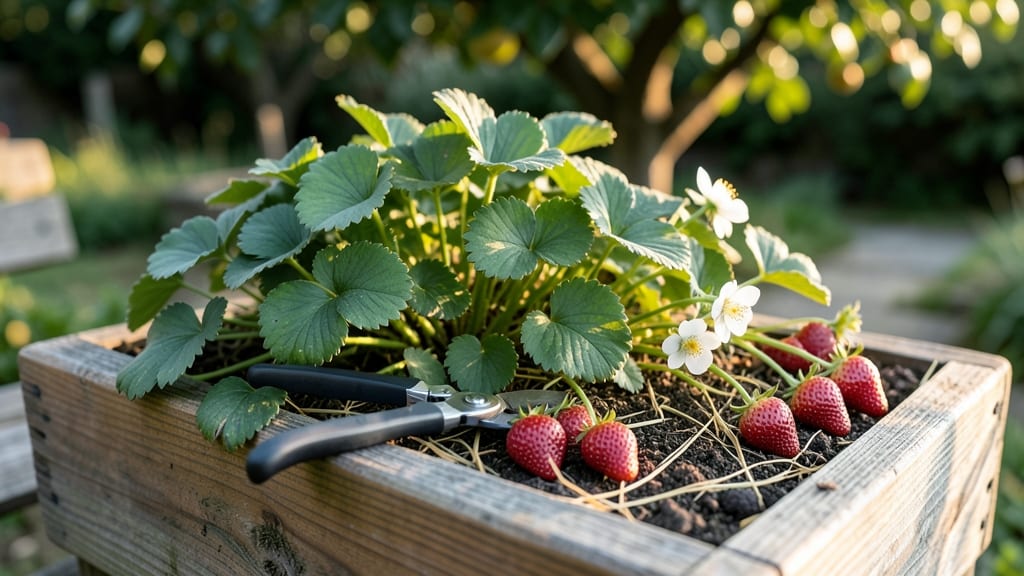
Pruning strawberry plants in spring and fall isn't just about tidying up—it's the secret to doubling your harvest next season. ✨ I learned this the hard way after skipping pruning for years and watching my berries shrink to pea-sized patties.
The right cuts at the right time mean bigger, sweeter fruit and plants that stay healthy for years.
You'll need just a few simple tools: sharp pruners, gloves, and a bucket for trimmings. The process takes about 20 minutes per 10 plants—not long, but it makes all the difference.
We're talking 30% more berries and plants that resist disease like champs. Even my black thumb can't mess this up once you know the basics.
Start in early spring by removing dead leaves and old growth, then follow up in fall to clear out spent runners. Your plants will reward you with lush, green foliage by summer and berries so big they'll make your neighbors jealous.
The key is timing—prune too early or too late, and you'll end up with fewer fruits, not more.
This works for June-bearing and everbearing varieties in backyard gardens, containers, or raised beds. Whether you're a first-timer or a seasoned grower, these steps will transform your strawberry patch. Let's get those pruners sharp and those plants thriving!
📚 In This Guide
- What you need
- Instructions
- Tips and common mistakes
- Wrapping up and next steps
What you need
- ● Pruning shears or scissors – Sharp, clean bypass pruners (4-6 inch blades) work best. Avoid dull tools to prevent tearing plant tissue.
- ● Gloves – A pair of gardening gloves (nitrile or cotton) to protect your hands from thorns and dirt.
- ○ Disinfectant (optional but recommended) – A small bottle of rubbing alcohol (70% or higher) or bleach solution (1:9 bleach-to-water ratio) to sterilize tools between cuts.
- ● Garden waste bag or bucket – For collecting pruned runners and leaves (avoid composting diseased plant parts).
- ○ Mulch (optional) – Straw, wood chips, or shredded leaves (2-3 inches thick) to retain moisture and suppress weeds post-pruning.
- ● Dry weather – Prune on a sunny, dry day to reduce disease risk and let cuts heal faster.
- ● Know your strawberry type – June-bearing and everbearing plants have different pruning needs (check your variety!).
- ● Patience – Pruning takes time, especially for large patches! Set aside 30-60 minutes for a 10x10 ft bed.
Step-by-Step guide for pruning strawberry plants
Pruning keeps your strawberry plants productive and healthy—here's how to do it right twice a year.
✂️ Step 1: Identify and Remove Old Fruit Producing Stems
Strawberries produce berries on first-year stems (called primocanes), while second-year stems (flowering stems) produce fruit the following season. In late fall, after the first frost, cut all the old flowering stems (the ones that bore fruit this year) down to the ground. These stems are brown and woody—don’t mistake them for new growth.
Use clean, sharp pruners to avoid tearing the crown. I like to work on a dry day when the soil is slightly damp but not muddy—this makes it easier to see the stems clearly. If you miss any old stems, they’ll compete with new growth for nutrients next spring.
⏰ Step 2: Prune in Early Spring for New Growth
In early spring, just as new leaves begin to emerge (usually 2-3 weeks before last frost), trim any dead or diseased leaves from last year. Look for stems that are blackened, mushy, or covered in mold—these need to go immediately. Healthy new growth will have bright green leaves and firm stems.
Don’t prune too aggressively—leave at least 3-4 healthy leaves per plant to ensure the crown has enough energy to produce new stems. If you cut back too much, the plant may struggle to recover before the growing season starts.
🌱 Step 3: Thin Crowded Stems for Better Airflow
After the first harvest, check for overcrowded stems. Strawberries thrive when they have space to breathe, so remove any weak, spindly, or crossing stems that block sunlight or air circulation. Aim to leave 4-6 of the strongest, healthiest stems per plant.
I like to do this thinning in late spring after the first flush of berries. Use your fingers to gently pinch off unwanted stems at the base—no need for pruners. This encourages the remaining stems to grow stronger and produce bigger berries.
🌿 Step 4: Maintain Through the Season
Throughout the growing season, remove any diseased or yellowing leaves as soon as you spot them. This prevents fungal infections from spreading to the rest of the plant. If you see white mold (powdery mildew) or black spots, prune those areas immediately and dispose of them in the trash—not the compost.
After the main harvest season, in mid-summer, you can also trim back any overly long or leggy stems to redirect the plant’s energy into next year’s fruit production. Just snip them back to a healthy leaf node—this keeps the plant compact and productive.
✂️ Step 5: Prepare for Winter Dormancy
In late fall, after the first hard frost, give your strawberry plants a final prune. Cut back all remaining foliage to about 1 inch above the crown. This helps prevent winter diseases and pests from hiding in dead leaves. Mulch with 2-3 inches of straw (if available) to protect the crown from freezing temperatures.
If you’re growing everbearing or day-neutral varieties, you can leave a few of the strongest stems standing for a small fall harvest—just trim them back after the berries ripen. The key is to keep the plant tidy so it can focus its energy on next year’s growth.
Tips & tricks for pruning strawberry plants
A few simple tricks will help your strawberry plants thrive and produce bigger, sweeter berries year after year.
Timing is Everything: The late fall pruning in Step 1 should happen after your first hard frost when the plants are dormant. This timing prevents any new growth that could be damaged by winter cold. In early spring (Step 2), wait until you see new leaves emerging—this usually means your last frost is about 2-3 weeks away. I've learned the hard way that pruning too early can shock the plant when cold snaps still occur.
Tool Tip: Use clean, sharp pruners for every cut—dull blades tear stems, creating entry points for diseases. I keep a small bottle of rubbing alcohol handy to wipe down my pruners between plants. For Step 3 thinning, your fingers work perfectly for pinching off weak stems without damaging the main crown. Just avoid using your fingernails, which can leave small wounds that heal slowly.
Visual Cues for Healthy Growth: When identifying old stems in Step 1, look for the classic brown, woody appearance—they'll be noticeably different from the green, flexible primocanes. In Step 2, healthy new growth has bright green leaves that feel firm to the touch. For Step 3 thinning, focus on stems that are growing outward rather than upward—they're the ones blocking sunlight and air circulation. I like to imagine I'm creating a little "air space" around each plant.
Seasonal Maintenance Strategy: Throughout the growing season (Step 4), I set aside 10 minutes every Saturday morning to check for diseased leaves. This consistent monitoring prevents small problems from becoming big ones. For mid-summer trimming, I look for stems that have grown beyond the plant's natural shape—these are the ones that need redirecting. The key is to always leave at least one healthy leaf node when you trim back leggy stems.
Pro Tips for Prune Strawberry Plants
- A few simple tricks will help your strawberry plants thrive and produce bigger, sweeter berries year after year.
- Timing is Everything: The late fall pruning in Step 1 should happen after your first hard frost when the plants are dormant.
- Tool Tip: Use clean, sharp pruners for every cut—dull blades tear stems, creating entry points for diseases.
Frequently asked questions
Got questions about pruning strawberries? You’re not alone! Here are answers to the most common concerns—so you can prune like a pro and enjoy that sweet harvest.
When is the best time to prune strawberries if I missed the spring window?
Don’t stress! If you missed spring, prune in early fall (before the first frost) to remove dead leaves and runners. Avoid heavy pruning in late summer—it can stress plants before winter. Focus on cleaning up debris to prevent disease and give your berries a fresh start next season.
Do I really need to prune strawberries every year?
Yes—but the how and when depends on your variety! June-bearing strawberries need annual pruning (spring/fall) to boost fruit production. Ever-bearing and day-neutral types benefit from lighter pruning (remove only dead leaves/runners). Skipping pruning can lead to smaller berries and crowded plants.
What if my strawberry plants look overcrowded after pruning?
Overcrowding happens when too many runners take root. Solution: Thin out excess plants, leaving only the healthiest 6–8 per hill. If your patch is dense, prune runners aggressively in spring and space plants 12–18 inches apart. Mulch with straw to reduce competition for nutrients.
Can I prune strawberries without shears? What’s the best alternative?
Use clean, sharp scissors or even sterilized pruning shears (wipe with rubbing alcohol). For small patches, your fingers work too—just pinch off runners at the base. Avoid tearing leaves; always cut cleanly ¼ inch above a leaf or runner to prevent disease.
Why do my strawberries stop producing after pruning?
This usually means over-pruning or cutting into fruit-bearing crowns. June-bearing varieties rely on last year’s leaves for next year’s berries—never trim more than ⅓ of the foliage in spring. If production drops, check for pests/disease too. A balanced prune (leaving 3–4 healthy leaves per plant) keeps them fruiting strong!
Wrapping up and next steps
Pruning your strawberry plants in spring and fall is a simple yet powerful way to boost productivity, improve plant health, and enjoy bigger, sweeter berries all season long! 🌱 With the right tools, timing, and techniques—like removing runners, dead leaves, and overcrowded foliage—you’re well on your way to a thriving patch.
Remember, consistency is key, so make pruning a habit rather than a chore.
Now that you’re equipped with the know-how, roll up your sleeves and get pruning! Start small if you’re new, and soon you’ll see the rewards in your garden. Happy harvesting—and may your strawberries be plump, juicy, and abundant! 🍓✨