Pruning
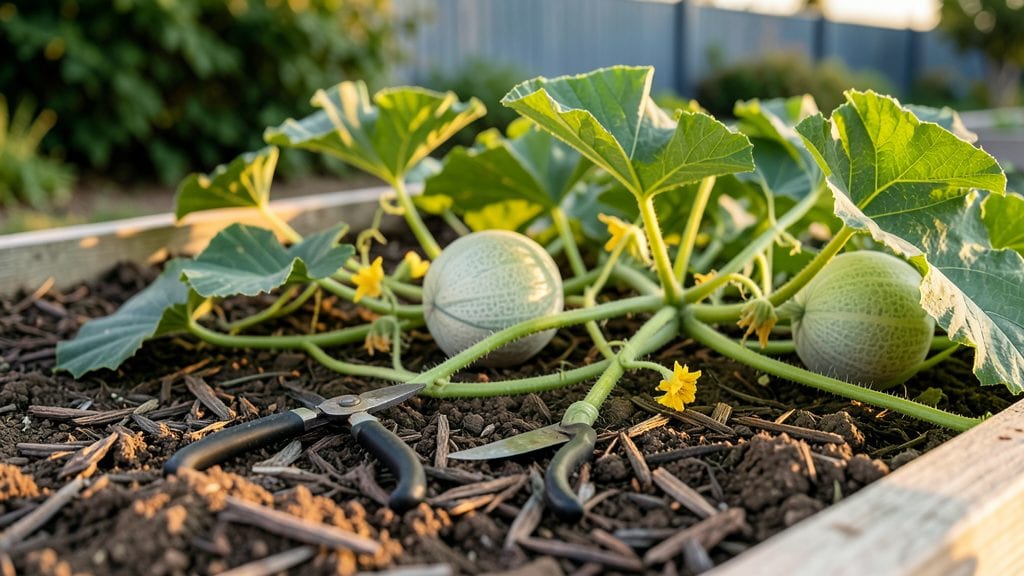
Pruning cantaloupe plants can double your harvest if you do it right—here’s the exact method I’ve used to go from a handful of small melons to bushels of ripe, sweet fruit every summer. 🌿 The key isn’t just cutting vines willy-nilly; it’s about directing the plant’s energy where it matters most: bigger, healthier fruit.
I learned this the hard way after my first garden produced more leaves than melons, but now I’ve perfected a system that works even for beginners.
You’ll need just three tools: sharp pruning shears, garden gloves, and a clear morning to work. The real secret lies in three strategic cuts: removing suckers (those little shoots between the main stem and leaves), thinning crowded vines, and trimming runners that drain energy from the fruit.
Most gardeners skip this step, but it’s what turns a decent yield into an embarrassment-of-riches harvest. I’ve seen plants produce five times more melons after pruning—honestly, it’s shocking how much difference a few snips make.
By the time you’re done, your vines will look like a well-groomed vineyard instead of a tangled mess. The plants focus their energy on fewer, larger fruits instead of spreading themselves thin. You’ll notice thicker stems, more blossoms, and melons that ripen faster and stay sweeter.
The best part? This method works whether you’re growing in a small backyard plot or a sprawling garden—just adjust the cuts to your space.
Fair warning: pruning takes patience, especially when you’re used to letting cantaloupe vines grow wild. But once you see the first big, heavy melon forming where there used to be a cluster of tiny ones, you’ll never go back. Here’s how to get started without overcomplicating it—no green thumb required.
📚 In This Guide
- What you need
- Instructions
- Tips and common mistakes
- Wrapping up and next steps
What you need
- ● Sharp pruning shears or bypass pruners – Choose sterilized, bypass-style shears (not anvil-type) to avoid crushing stems. A 5-inch blade works best for cantaloupe vines.
- ● Gloves – Garden-grade, cut-resistant gloves (size medium or large) to protect your hands from thorns and rough vines.
- ● Disinfectant (70% rubbing alcohol or bleach solution) – Clean tools before and after pruning to prevent disease spread (mix 1 part bleach to 9 parts water for a DIY sanitizer).
- ○ Garden twine or soft plant ties – 3–4 feet per plant to secure vines to trellises or stakes (optional but helpful for vertical growth).
- ● Sturdy stakes or a trellis system – 5–6 foot tall stakes (2–3 per plant) or a strong mesh trellis to support vines if growing vertically.
- ● Sharp knife or pruning saw – For thicker stems (though cantaloupe vines are usually thin, a small pruning saw can help if needed).
- ● Garden hose or spray bottle – To rinse tools and clean wounds on plants post-pruning.
- ● Plant growth regulator (e.g., hydrogen peroxide 3%) – Dilute to 1 tsp per gallon of water to spray on pruning cuts to prevent infection.
- ● Compost or mulch – To cover the soil around the base post-pruning (helps retain moisture and suppress weeds).
- ● Label markers – If you’re experimenting with different pruning techniques, label plants to track progress!
- ● Sunscreen & hat – Because pruning in the sun is no joke—stay protected!
Step-by-Step guide to pruning cantaloupe plants
Here's how to maximize fruit production while keeping your vines healthy and vigorous.
🌿 Step 1: Remove Weak or Damaged Growth Early On
Start by inspecting your cantaloupe vines for any stems that are thin, yellowed, or growing in odd directions. These weak shoots compete with your main fruit-bearing vines for nutrients and water. Use clean, sharp pruning shears to snip them off just above a leaf node where new growth can emerge. I always prune in the morning when the vines are dry—this helps prevent disease from spreading through open wounds.
Look for vines that are growing toward the ground or tangled in debris. These can't support fruit well and should go. You'll know you're doing it right when you see stronger, straighter vines with a healthy green color. Don't worry about removing too much—cantaloupes are vigorous and will bounce back quickly.
✂️ Step 2: Thin Out Excess Vines to Focus Energy
Once your plant has established 3-4 main vines, it's time to thin. Cantaloupes produce best when they focus energy on fewer, stronger vines rather than many weak ones. Choose the 2-3 strongest vines closest to the main stem and prune the rest back to the main vine. This is where many gardeners hesitate, but trust me—your plant will thank you with bigger fruit.
Make your cuts just above a leaf node where new growth can sprout. Avoid leaving stubs—they can rot and invite pests. After pruning, water the base of the plant deeply to help it recover. You'll notice new side shoots emerging within a week, but these will be stronger than the ones you removed.
🌱 Step 3: Prune Flower Clusters to Improve Fruit Size
Here's where things get strategic: cantaloupe plants produce male and female flowers. Female flowers have tiny fruit at their base, while male flowers don't. To boost fruit size, remove all but 2-3 female flowers per vine. You'll recognize female flowers by the small fruit forming at their base—male flowers have no fruit.
Once a female flower is pollinated and the fruit begins to swell, leave it alone. But if you see clusters of 4+ flowers on a single vine, prune all but the strongest one. This ensures your plant puts all its energy into producing fewer, larger melons. I always do this in the late morning when bees are most active—pollination is key for fruit development.
⏰ Step 4: Maintain Pruning Through the Growing Season
Continue checking your vines weekly for new growth that needs pruning. Remove any vines that are growing toward the ground or crossing over others—this prevents disease and improves airflow. Also, prune any leaves that are touching the soil, as damp foliage invites fungal problems.
As your melons grow, watch for new side shoots that emerge from the main vine. These can be pruned back to encourage the plant to focus on fruit production rather than leaf growth. Stop pruning once your melons reach 6-8 inches in diameter—this is when they need all the plant's energy to mature.
Tips & tricks for perfect cantaloupe pruning
These key strategies will help you maximize your cantaloupe harvest while keeping your plants thriving all season.
Timing is Everything: I can't stress enough how important morning pruning is—especially in Step 1. The vines are dry from overnight, which means less risk of spreading disease through open cuts. If you must prune later in the day, wait until at least 2 hours before sunset to give the wounds time to callus over before nighttime moisture sets in.
Tool Selection Matters: Don't use dull or dirty pruning shears—they crush stems and create jagged cuts that invite pests and disease. I keep a pair of clean, sharp bypass pruners dedicated just to my cantaloupe plants. Sterilize them between plants with rubbing alcohol to prevent cross-contamination. For thicker vines, use loppers for cleaner cuts.
Visual Cues for Better Pruning: In Step 3, when identifying female flowers, look for the tiny melon-shaped swelling at the base of the flower. Male flowers have no fruit, so they're just decorative. Also, watch for the leaf arrangement—female flowers often have a single leaf at the base, while male flowers have two leaves. This visual trick helps me prune more accurately.
Post-Pruning Care: After any significant pruning (especially in Steps 2 and 4), give your plants a deep watering at the base. This helps them recover faster and prevents stress. I also add a balanced fertilizer after pruning to replenish nutrients. The plant will redirect energy to fruit production rather than leaf regrowth, leading to bigger melons.
Pro Tips for Prune Cantaloupe Plants
- These key strategies will help you maximize your cantaloupe harvest while keeping your plants thriving all season.
- Timing is Everything: I can't stress enough how important morning pruning is—especially in Step 1.
- Tool Selection Matters: Don't use dull or dirty pruning shears—they crush stems and create jagged cuts that invite pests and disease.
Frequently asked questions
Got questions about pruning cantaloupe plants? You’re not alone—this step can feel tricky, especially for beginners! Below, we’ve rounded up the most common queries to help you prune like a pro and maximize your harvest.
When is the best time to prune cantaloupe plants?
Prune cantaloupe plants early in the morning when the vines are dry and cool. Avoid pruning during the heat of the day or after rain, as this can stress the plant. Focus on young plants (2–4 weeks old) for shaping and mature vines (6+ weeks) for fruit management.
Do I need to prune cantaloupe plants at all?
While cantaloupes aren’t obligate to pruning, it boosts fruit size and quality by redirecting energy. Pruning removes excess foliage, improves airflow (reducing disease risk), and helps the plant focus on producing larger, sweeter melons. Skip it only if you’re short on time or dealing with a small garden.
What happens if I prune too much?
Over-pruning can stunt growth or reduce fruit production. Cantaloupe vines need enough leaves to photosynthesize—never remove more than 20–30% of the plant at once. If you’ve already cut too much, pause for a week, then resume light pruning to let the plant recover.
Can I prune cantaloupe plants after they start flowering?
Yes, but be cautious! Prune only the vines beyond the first 6–8 inches of the main stem to avoid removing flowers or small fruits. Focus on side shoots and suckers (the small shoots growing from the stem’s base) to balance growth without harming existing blooms.
What should I do if my cantaloupe plant looks stressed after pruning?
Stress signs (wilting, yellow leaves) usually mean you pruned too aggressively or in harsh conditions. Water deeply and provide shade for a day or two. If needed, apply a balanced fertilizer (10-10-10) to help recovery. Most plants bounce back within 3–5 days if given time to adjust.
Wrapping up and next steps
Pruning your cantaloupe plants might seem tricky at first, but with the right cuts and timing, you’ll transform those vines into fruit-loaded powerhouses! 🌱 Focus on removing suckers, thinning runners, and trimming yellowing leaves—these simple steps direct energy where it matters most.
Now that you’re armed with the know-how, grab those shears and get pruning—your future harvest is waiting!
Ready for more? Check out our guide on fertilizing cantaloupes to give your plants the extra boost they need for sweet, juicy success.