
Pests
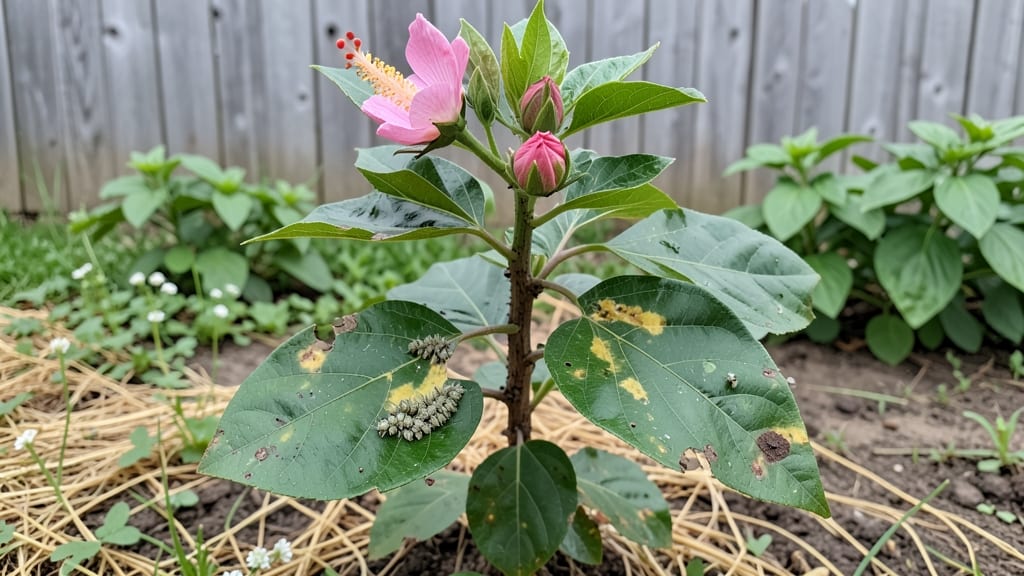
Mastering hibiscus plant pest control means knowing which organic sprays stop aphids, spider mites, or whiteflies in days—no harsh chemicals needed. ✨ I’ve battled every common hibiscus pest and learned which sprays work fastest. The key is acting early before pests spread to the leaves or flowers.
Most infestations start with tiny webs, sticky residue, or clusters of bugs on new growth. A simple mix of neem oil and water (1 tablespoon per quart) smothers soft-bodied pests like aphids and mealybugs in 24-48 hours.
For spider mites, add a drop of dish soap to break their protective webbing. Spray undersides of leaves where pests hide.
You’ll see results after just one treatment—leaves stop yellowing, webs disappear, and new buds form without damage. The best part? These sprays are safe for bees and won’t harm your plant’s roots or soil. Think of it as a quick reset for your hibiscus’ health.
Prevention is even faster: weekly inspections and mulching to deter pests before they arrive. Once you’ve used these sprays, you’ll spot early signs and act before pests become a full-blown problem. Let’s get your hibiscus thriving again.
Underlying Causes Of Hibiscus Pests
Pests don’t just randomly attack hibiscus plants—they’re drawn by specific conditions that make your tropical beauty a five-star buffet. Understanding these triggers helps you break the cycle before infestations spiral. Here’s why pests target your hibiscus and how biology, environment, and plant health collide to create the perfect storm.
🌱 Why it happens: Hibiscus thrive in well-draining soil, but when roots get cramped—due to overpotting, compacted soil, or poor spacing—they weaken. This stress signals to pests like root-knot nematodes and fungus gnats that your plant is vulnerable.
- The science: Overcrowded roots release volatile organic compounds (VOCs), which attract soil-dwelling insects seeking easy meals.
Weak roots also struggle to absorb nutrients, making the plant more susceptible to fungal infections (like root rot), which pests love to exploit. - Actionable clue: Check for yellowing leaves, stunted growth, or a foul odor near the soil surface—classic signs of root stress.
🍯 Why it happens: Hibiscus leaves and stems ooze a sugary sap when damaged (by wind, pruning, or pests). This sticky nectar is a magnet for aphids, mealybugs, and scale insects, which feed on it like ants at a picnic.
- The science: The sap’s high sucrose content triggers pests’ feeding instincts.
Once they arrive, they excrete honeydew—a sticky residue that fosters sooty mold, further stressing the plant. - Actionable clue: Look for white cottony clusters (mealybugs), blackened leaves (sooty mold), or sticky residue on lower leaves—all red flags.
🛡️ Why it happens: Hibiscus plants under nutrient deficiency, overwatering, or drought stress produce less chlorophyll and weaker cell walls, making them easy targets for pests like whiteflies and spider mites.
- The science: Stress hormones (like abscisic acid) signal to pests that the plant is “easy prey.”
For example: - Overwatering → Root rot → Attracts fungus gnats. - Underwatering → Dry, crispy leaves → Invites spider mites (which thrive in arid conditions). - Actionable clue: Yellow leaves with brown edges (overwatering) or silver webbing on undersides (mite infestation) are telltale signs.
🌡️ Why it happens: Hibiscus love tropical climates, but so do pests like thrips, aphids, and hibiscus mealybugs. High humidity (60%+) and temperatures above 75°F (24°C) accelerate pest reproduction rates.
- The science: Warmth speeds up metabolic activity in insects, allowing them to lay eggs faster and mature in days instead of weeks.
Humidity also preserves moisture on leaves, making them juicier targets. - Actionable clue: Sudden pest outbreaks after a heatwave or white, fuzzy growth on buds (mealybugs) often coincide with humidity spikes.
🐞 Why it happens: In a balanced ecosystem, ladybugs, lacewings, and parasitic wasps keep pests in check. But if your hibiscus is isolated (e.g., in a pot or greenhouse) or you’ve used broad-spectrum pesticides, these natural allies vanish—leaving pests to feast unchecked.
- The science: Aphids and mites have few predators in sterile or chemically treated environments. Without intervention, their populations explode exponentially.
- Actionable clue: No visible predators (like tiny green lacewing larvae) + rapid pest spread = a sign your plant’s defenses are missing.
Quick Fixes for Hibiscus Pests
Hibiscus plants are stunning, but pests can turn their vibrant blooms into a battle zone. The good news? Most issues have simple, organic solutions that work fast—without harsh chemicals. Below, we’ve mapped common hibiscus pests to their fixes, plus prevention tips to keep your plant thriving long-term.
Signs: Sticky residue (honeydew), curled leaves, or clusters of tiny green/black bugs on new growth.
How to Treat It: 🔥 Blast Them Off – Use a strong stream of water (early morning) to dislodge aphids from leaves and stems. 🍳 Soapy Spray Remedy – Mix 1 tsp mild liquid soap (like Castile) + 1 quart water in a spray bottle. Test on a small leaf first, then spray directly on infested areas (repeat every 3–5 days). 👨🍳 Neem Oil Defense – Combine 1 tbsp neem oil + 1 tsp soap + 1 quart water. Spray evenly on both leaf sides (especially undersides where aphids hide). Reapply after rain.
Prevention Tips: ✨ Encourage Natural Predators – Ladybugs and lacewings love aphids. Plant marigolds nearby to attract them. 🌡️ Keep Plants Healthy – Aphids target weak plants. Ensure hibiscus gets full sun (6+ hours/day) and well-draining soil. 🎯 Prune Regularly – Remove yellowing or crowded growth to reduce hiding spots.
Signs: Fine webbing on leaves, bronze/yellow speckling, or tiny moving dots (use a magnifying glass).
How to Treat It: 🔪 Wipe Down Leaves – Dampen a soft cloth with 70% isopropyl alcohol and gently rub affected areas (mites hate this!). 🥘 Oil Spray Attack – Mix 1 tbsp horticultural oil + 1 tsp soap + 1 quart water. Spray thoroughly, focusing on leaf undersides. Repeat every 5–7 days for 2–3 weeks. ⏰ Water Stress Relief – Spider mites thrive in dry conditions. Mist leaves daily (especially in hot climates) or use pebble trays for humidity.
Prevention Tips: 💡 Boost Humidity – Keep hibiscus in 50–70% humidity (use a humidifier or group plants together). 🔥 Rotate Sprays – If mites return, alternate between neem oil and soapy water to avoid resistance. 🌿 Avoid Over-Fertilizing – Too much nitrogen = soft, mite-loving leaves. Use a balanced fertilizer (10-10-10).
Signs: White, moth-like flies swarming when you shake the plant; sticky honeydew on leaves.
How to Treat It: 🕯️ Yellow Sticky Traps – Hang yellow cards coated with petroleum jelly near the plant to catch adults. 🍳 DIY Trap Solution – Fill a bottle with soapy water, cut the top at an angle, and invert it over the plant. Flies fly in but can’t escape. 👨🍳 Neem Oil Bomb – Spray neem oil mix (as above) directly on leaf undersides (where larvae hide). Repeat every 4–5 days for 3 weeks.
Prevention Tips: ✨ Inspect New Plants – Whiteflies spread fast. Quarantine new hibiscus for 2 weeks before introducing them to others. 🌡️ Prune for Airflow – Crowded plants = more hiding spots. Trim back overgrown branches for better circulation. 🎯 Use Reflective Mulch – Cover soil with silver or aluminum mulch to disorient flying pests.
Signs: White, fluffy cotton-like clusters in leaf axils or under leaves; stunted growth.
How to Treat It: 🔪 Scrape Them Off – Use a cotton swab dipped in rubbing alcohol to physically remove visible bugs. 🥘 Hydrogen Peroxide Dip – Mix 1 tbsp 3% hydrogen peroxide + 1 quart water. Spray directly on infested areas (test first—it can bleach some leaves). 👨🍳 Ladybug Release – Buy ladybugs online (they devour mealybugs). Release 2–3 times over 2 weeks.
Prevention Tips: 💡 Check Houseplants – Mealybugs hitchhike on other plants. Inspect before bringing new greenery indoors. 🔥 Avoid Overwatering – Soggy soil attracts mealybugs. Ensure pots have drainage holes. 🌿 Copper Barrier – Place copper tape around pot edges—mealybugs can’t crawl across it.
Signs: Bumpy, shell-like growths on stems/leaves; sticky residue; yellowing leaves.
How to Treat It: 🔥 Scrape with a Knife – Use a plastic spoon or dull knife to scrape off visible scales (dispose of debris immediately). 🍳 Alcohol Wipe-Down – Soak a cotton ball in rubbing alcohol and dab each scale (reapply weekly). 👨🍳 Dormant Oil Spray – Apply horticultural oil in early spring or fall (when hibiscus is dormant) to suffocate eggs.
Prevention Tips: ✨ Introduce Parasitic Wasps – Tiny beneficial wasps (like Encarsia) lay eggs inside scales. Order online for organic control. 🌡️ Keep Plants Stressed-Free – Drought or heat stress weakens hibiscus, making them scale magnets. Water deeply 1–2x/week. 🎯 Isolate Infested Plants – Scales spread slowly but surely. Keep infected hibiscus separate until fully treated.
Pro Tip: 🌿 Rotate Your Defenses – Pests build resistance! Alternate between soapy sprays, neem oil, and sticky traps to stay ahead.
With these targeted fixes, your hibiscus will bounce back faster than you think—and stay pest-free for seasons to come! 🌸
Frequently asked questions about hibiscus pest control
What are the most common hibiscus pests I should watch for?
Look for aphids (tiny green/black clusters), spider mites (fine webbing + speckled leaves), whiteflies (swarming moth-like flies), and mealybugs (white cottony patches). These four cause 90% of hibiscus infestations.
How often should I inspect my hibiscus for pests?
Check your hibiscus weekly during growing seasons (spring-fall) and bi-weekly in winter. Focus on leaf undersides and new growth—pests hide there first. Early detection means quicker fixes!
Can I use neem oil on flowering hibiscus?
Yes, but avoid spraying directly on open blooms—neem oil can discolor petals. Apply to leaves and stems only, focusing on leaf undersides where pests hide. Reapply after rain to maintain protection.
Why do my hibiscus pests keep coming back after treatment?
Pests return when you: skip reapplication (treatments need 2-4 weeks), miss hidden spots (always spray undersides), or use the same method repeatedly. Rotate between neem oil, soapy water, and sticky traps to break resistance cycles.
What's the fastest way to stop a severe mealybug infestation?
Combine physical removal (wipe bugs with alcohol-soaked cotton swabs) with hydrogen peroxide spray (1 tbsp per quart of water). Release 2-3 batches of ladybugs over two weeks—they eat mealybugs faster than any spray.