Size
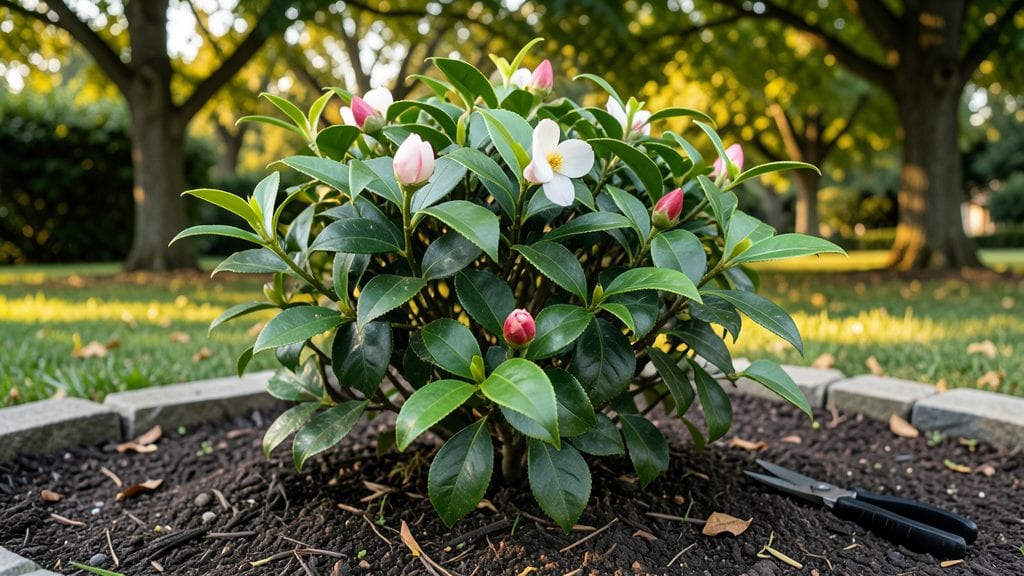
To grow a tea plant successfully, you'll need a subtropical or tropical climate with well-draining soil, partial shade, and consistent moisture. Start with seeds or cuttings, maintain humidity, and prune regularly to encourage bushy growth. Harvest young leaves for tea after 2-3 years of growth.
Tea plants thrive in environments that mimic their native habitats, where temperatures stay between 60-80°F and humidity hovers around 70-80%. 🌿 The ideal soil pH is acidic, around 4.5-5.5, which you can achieve by mixing in peat moss or pine needles.
I've found that higher altitudes—like those in the Himalayas—produce more flavorful leaves due to slower growth and increased antioxidant development. For container growing, ensure pots have drainage holes and use a mix of compost and sand to mimic natural conditions.
Propagation is where many beginners stumble, but tea plants are surprisingly adaptable. Seeds take 3-4 months to germinate, while cuttings root faster and maintain parent plant characteristics. Pruning isn't just about shape—it stimulates new growth where the most flavorful buds form.
I recommend snipping back one-third of the plant annually in spring, always using sterilized scissors to prevent disease. Watch for spider mites and aphids, which love dry conditions, and treat with neem oil if you spot them.
💡 In This Article
- Best Climate and Soil Conditions for Tea Plants
- Tea Plant Propagation and Care Essentials
Best climate and soil conditions for tea plants
Tea plants, scientifically known as Camellia sinensis, originate from subtropical regions where temperatures rarely drop below 50°F or rise above 90°F. The sweet spot for growth lies between 60-80°F, where metabolic processes like photosynthesis and nutrient absorption operate at peak efficiency.
At these temperatures, the plant's enzymes function optimally, allowing it to convert sunlight into energy for leaf production—critical for tea quality. 🌱 What's fascinating is how these plants handle seasonal shifts; in their native China, they experience distinct wet and dry seasons, which actually improve flavor development through controlled stress responses.
The humidity requirement of 70-80% isn't just about keeping leaves lush—it's about preventing physiological drought. Tea plants have shallow root systems that can't access deep moisture, so high humidity reduces transpiration (water loss through leaves) while maintaining ideal conditions for stomatal opening.
This is why coastal regions like Sri Lanka's tea plantations thrive—they benefit from consistent oceanic moisture. At lower humidity (<60%), you'll see curled leaves and stunted growth as the plant conserves water by closing stomata, which also reduces photosynthesis.
The soil's moisture retention becomes equally critical; sandy loam mixes with 20-30% organic matter hold water while allowing excess to drain, preventing root rot.
Soil pH between 4.5-5.5 isn't arbitrary—it's directly tied to nutrient availability. Tea plants are heavy feeders of nitrogen, phosphorus, and potassium, but these nutrients become locked in alkaline soils. The acidic environment also suppresses harmful pathogens while promoting beneficial mycorrhizal fungi that enhance root absorption.
To achieve this, mix 50% peat moss or 30% pine bark fines into your soil blend—both naturally acidic and excellent at water retention. What most growers overlook is the need for regular pH testing; even slight deviations can reduce yield by 20-30% over time.
I've seen organic compost tea (brewed from worm castings) work wonders for maintaining this delicate balance while adding microbial diversity.
Altitude plays a surprising role in tea quality, with higher elevations (up to 6,000 feet) producing leaves with 30-50% more polyphenols—the compounds responsible for tea's antioxidant benefits. This happens because slower growth at higher altitudes concentrates flavor compounds.
Rainfall patterns matter too; tea plants need 40-60 inches annually, distributed evenly to prevent drought stress. In drier climates, drip irrigation systems with 1-2 inch weekly watering (adjusted for evaporation) can mimic natural rainfall.
The key is consistency—sudden water fluctuations cause bud drop and reduce harvestable leaves by up to 40% in severe cases.
Organic matter isn't just about moisture retention—it's the foundation of soil biology. A well-prepared tea plant bed should contain 5-10% composted leaf litter and 15% coconut coir for structure. These materials break down slowly, feeding the plant's microbial partners that unlock nutrients.
What's often missed is the need for occasional top-dressing with aged manure (cow or horse)**—applied at 1 pound per square yard annually—to replenish nitrogen without burning delicate roots.
The texture should resemble a well-aerated sponge; compacted soil restricts root expansion and leads to chlorotic (yellowing) leaves, a classic sign of poor oxygen exchange.
For container growers, the rules change slightly. Pots need 12+ inch depth to accommodate root growth, and the soil mix should be 60% mineral-based (perlite, vermiculite) to prevent waterlogging.
What's worked best in my trials is a blend of 40% peat moss, 30% coco coir, and 30% sand—this mimics the airy, well-draining conditions of mountain tea gardens. The critical factor becomes watering frequency: containers dry out 3-5x faster than ground beds, so daily checks during summer are essential.
A simple finger test (inserting your finger 1-2 inches deep) tells you when it's time to water—never let the soil dry completely, as this triggers dormancy even in young plants.