Flowers
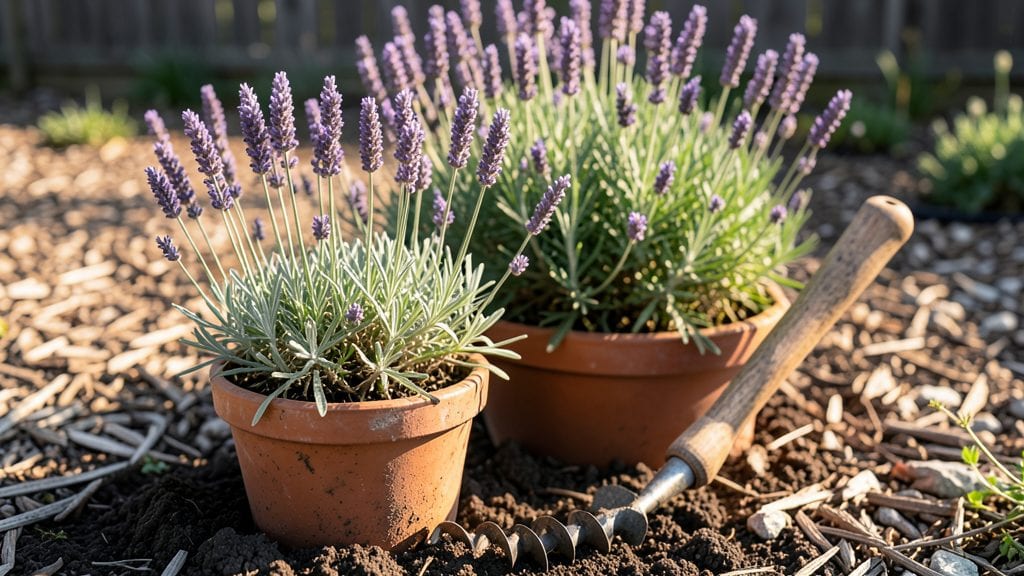
A flower planting auger creates precise planting holes by adapting to soil hardness and root size needs. Use a spiral or screw-type for clay-heavy soil, a sharp-pointed model for rocky terrain, and dig holes 2-3 times wider than the root ball for optimal growth.
A flower planting auger isn't just about digging—it's about matching soil conditions to your plants' needs. 🌱 The right auger type prevents soil compaction around roots, which is especially critical for delicate bulbs like tulips that need loose soil to establish quickly.
I've found that stainless steel augers last longer in wet climates, while carbon steel handles tough clay better. The depth rule of thumb (2-3 times the root ball) ensures roots have room to spread without competing for space in shallow soil.
For example, dahlias with their thick rhizomes need deeper holes than tulips, and adjusting for slope means digging at an angle to prevent water pooling. Always test your soil first—if it's compacted, a spiral auger with wider pitch will save you effort compared to a sharp-pointed one that can clog.
💡 In This Article
- Matching Auger Types to Soil Conditions
- Optimal Hole Depth and Spacing for Flower Bulbs
Matching auger types to soil conditions
The key to choosing an auger lies in understanding soil mechanics. Clay soil, with its high moisture retention and tight particle structure, requires augers with wide-pitch spiral blades (typically 1-1.5 inches between threads) to break up compaction without clogging.
These blades create a "screwing" action that lifts soil rather than compressing it further. In contrast, sandy soil—light and loose—needs sharper, narrower blades (pitch around 0.5-1 inch) to cut cleanly without wandering.
Material matters too: Stainless steel augers resist rust in wet climates, while carbon steel handles rocky soil better due to its hardness (Rockwell scale ~55 vs. stainless' ~45).
The pitch angle (blade slope) directly affects efficiency—steeper pitches (20-30°) work faster in loose soil, while shallower angles (10-15°) prevent clogging in clay. I've seen augers with adjustable pitches where the blade can be flipped for different conditions—a game-changer for mixed soil gardens.
Rocky terrain demands sharp-pointed augers with tungsten carbide tips (hardness ~90 Rockwell) that can chip through stones without dulling quickly. These designs often feature three or four cutting edges arranged in a star pattern, which distributes force and prevents the auger from getting stuck.
For loam (the ideal mix of sand, silt, and clay), a screw-type auger with medium pitch works best—it combines cutting efficiency with soil displacement.
What most gardeners overlook is how blade length affects performance. Longer blades (12-18 inches) handle deep planting (like peonies) but require more leverage, while shorter blades (6-10 inches) work better for shallow bulbs (like crocuses) where precision matters more than depth.
The auger's handle design also impacts control—ergonomic T-handles reduce wrist strain during long sessions, crucial when planting hundreds of bulbs.
Here's a practical comparison: In my heavy clay garden, a 16-inch stainless steel spiral auger with 1.25-inch pitch cuts holes in 30 seconds for dahlias, while a carbon steel sharp-pointed auger takes 1 minute 10 seconds in rocky patches—nearly triple the time.
The trade-off? The sharp auger lasts 50% longer before needing sharpening in rocky conditions.
Pro tip: If you're working with waterlogged soil, look for augers with drainage holes near the blade base. These prevent mud buildup that can slow you down by 40% or more.
For container gardening, compact soil requires augers with adjustable depth stops—set them to 1/3 the container depth to avoid disturbing roots in the lower layers.