Fertilization
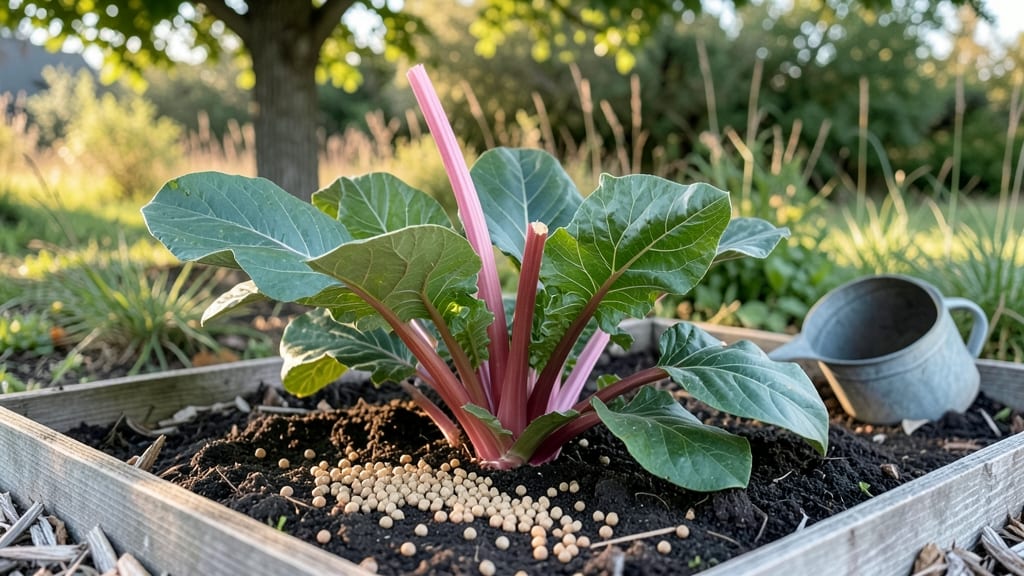
Fertilizing rhubarb plants 🍃 is the secret weapon behind those plump, ruby-red stalks you’ve been dreaming of—if you do it right.
Picture this: you’ve waited all winter for those first tender shoots, only to watch them limp along like overcooked noodles. The problem? Too little fertilizer leaves your rhubarb weak, while too much burns the roots and sends your plants into shock.
Getting the balance just right turns a ho-hum harvest into a showstopper.
Here’s the good news: rhubarb isn’t fussy, but it does need the right fuel at the right time. We’re talking soil prep, pH tweaks, and a feeding schedule that keeps your plants thriving without overdoing it.
Whether you’re a first-timer or a seasoned gardener, these tips will help you grow rhubarb that’s the envy of the neighborhood.
Below, I’ll walk you through the best fertilizers, when to apply them, and how to spot when your plants are begging for more—or less. No guesswork, just results.
Optimal soil pH and fertilizer types for rhubarb growth
Rhubarb thrives when its soil pH falls between 5.5 and 6.5—this slightly acidic range ensures your plants absorb critical nutrients like calcium and magnesium efficiently. Testing your soil before planting avoids common pitfalls like yellowing leaves or weak stalks, which often signal nutrient deficiencies.
I’ve learned the hard way that skipping this step leads to stunted growth, even with otherwise perfect care.
Organic fertilizers, like well-aged compost or manure, release nutrients gradually, mirroring nature’s timing. Synthetic options, such as balanced NPK fertilizers (e.g., 10-10-10), provide quick results but require careful dosing to avoid burning roots.
My go-to is a mix of both: compost in the fall and a light synthetic feed in spring to kickstart growth.
Micronutrients like calcium and magnesium are non-negotiable for rhubarb. A deficiency in calcium causes blossom-end rot (though less common in rhubarb than tomatoes), while magnesium shortages lead to yellowing between leaf veins.
I add crushed eggshells for calcium and Epsom salt (magnesium sulfate) sparingly—just 1 tablespoon per plant—to keep my rhubarb lush and productive.
Here’s a quick reference to set you up for success:
When choosing between organic and synthetic fertilizers, consider your garden’s long-term health. Organic options improve soil structure over time, while synthetics deliver instant results. I recommend starting with a 50/50 blend—compost for organic matter and a light synthetic feed to address immediate nutrient gaps.
For example, a 1/2 cup of 10-10-10 fertilizer per plant in early spring jumpstarts growth without overwhelming the roots.
Watch for signs of nutrient deficiencies like purple stems (phosphorus deficiency) or yellowing leaves (nitrogen shortage). In my garden, phosphorus issues appear when rhubarb struggles to produce stalks despite lush foliage.
A bone meal application (high in phosphorus) turns things around in about 4 weeks. Always pair fertilizers with a 2-inch layer of mulch to retain moisture and regulate soil temperature.
For newly planted rhubarb, focus on establishing roots before heavy feeding. The first year is about soil preparation—amend with compost and avoid synthetic fertilizers entirely. In year two, introduce a light feed in spring (e.g., 1/4 cup of 10-10-10) and monitor growth closely.
Over-fertilizing here leads to excessive leafy growth at the expense of stalks, which is the opposite of what we want.
Rhubarb’s harvest phase (late spring to early summer) demands a balanced fertilizer to sustain stalk production. I switch to a lower-nitrogen formula (like 5-10-10) to encourage flowering and fruiting, which supports stronger stalks.
Pair this with regular watering (1–2 inches per week) to prevent stress. Pro tip: Avoid fertilizing after mid-summer—this signals the plant to prepare for dormancy.
If your rhubarb’s stalks are thin or rubbery, it’s often a sign of calcium deficiency. Mix crushed eggshells into the soil around the base or apply a calcium nitrate solution (1 tablespoon per gallon of water) every 4 weeks.
For magnesium issues, dissolve 1 tablespoon of Epsom salt in a gallon of water and spray foliage lightly. Both remedies work within 2–3 weeks, but consistency is key.
Remember, rhubarb is a perennial, meaning it builds soil fertility over years. Over time, your garden’s compost amendments and mulch layers will reduce the need for synthetic inputs.
My oldest rhubarb patch (planted 5 years ago) now thrives on annual compost top-dressing alone—proof that patience and soil health pay off.
Best fertilizer schedule for rhubarb: when and how to apply
Rhubarb thrives on a carefully timed fertilizer schedule that aligns with its growth phases. Unlike many vegetables, rhubarb benefits from moderate feeding—too much nitrogen early on can weaken stalks, while insufficient nutrients later stunts harvests.
The key is balancing organic matter and targeted nutrients like potassium and phosphorus to support both foliage and edible stalks.
Timing matters most during spring awakening and harvest season. In early spring, focus on light applications to kickstart growth, while summer demands balanced feeding to sustain production. Fall and winter are dormancy periods, so fertilization pauses entirely.
This seasonal rhythm prevents nutrient waste and ensures your rhubarb plants channel energy where it counts—into bold, crisp stalks.
numbered-highlights
- Early Spring (March-April): Apply 1/4 cup 10-10-10 fertilizer or compost tea at planting to establish roots. Avoid high-nitrogen blends—stick to balanced ratios (e.g., 5-5-5) to prevent leafy growth at stalk expense.
- Active Growth (May-June): Feed every 4-6 weeks with 1/2 cup 10-10-10 or fish emulsion (diluted to 1:10 ratio). Prioritize potassium-rich amendments like wood ash to strengthen stalks.
- Harvest Peak (July-August): Reduce frequency to every 8 weeks and switch to low-nitrogen fertilizers (e.g., 0-10-10) to avoid bitter stalks. Side-dress with aged manure instead of synthetic blends.
- Fall/Winter (September-February): Skip fertilization entirely. Focus on mulching with straw to protect roots and conserve nutrients for next season.
For organic gardeners, homemade fertilizers like compost tea or manure teas work wonders. Steep well-aged cow manure in water for 24 hours, strain, and apply as a foliar spray or soil drench.
Alternatively, mix 1 part fish emulsion with 10 parts water and apply at the base—this boosts micronutrients like magnesium, which rhubarb craves for vibrant stalks.
Watch for over-fertilization signs: yellowing leaves, weak stalks, or burnt root tips. If you notice these, flush the soil with water to dilute excess salts, then switch to organic matter like leaf mold. Remember, rhubarb is a perennial—proper feeding now means decades of harvests with minimal effort.
Pro tip: Test your soil every 2-3 years using a home kit. Rhubarb prefers slightly acidic soil (pH 5.5-6.5). If your soil tests alkaline, amend with peat moss or sulfur before fertilizing. A happy pH means your rhubarb will thrive without guesswork.
By following this schedule, your rhubarb will reward you with plump, tender stalks year after year—no chemical shortcuts required. The secret? Patience and precision—just like the plant itself. 🌱