
Fertilization
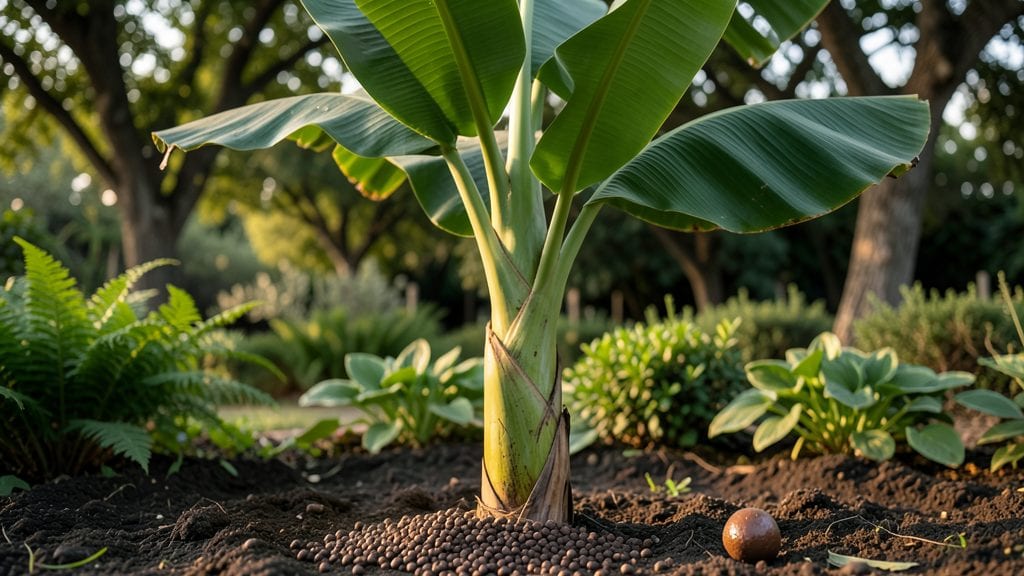
Fertilizing banana plants 🍌 is the secret to turning those towering green stalks into heavy, sweet fruit loads—if you feed them the right way.
Banana plants are hungry growers—without the right fertilizer schedule, your trees may produce fewer, smaller fruits or even fail to bloom. But timing and nutrition make all the difference, turning underperforming plants into high-yielding powerhouses.
Think of it like a three-act play: nitrogen for leafy growth, potassium for flowering, and micronutrients to keep everything balanced. Skip one, and your bananas might never reach their full potential.
In this guide, I’ll break down the best fertilizers for each growth stage, when to apply them, and how to spot when your banana is hungry—or overfed. No guesswork, just faster fruit.
Best fertilizers for banana plants by growth stage (with seasonal timing)
Banana plants thrive when fed the right nutrients at the right time. During the vegetative growth stage, they crave high-nitrogen fertilizers to fuel rapid leaf production. When they transition to flowering and fruiting, a potassium-rich blend becomes essential to develop sweet, plump bananas.
Without this tailored approach, your plants may produce small, hard fruits—or worse, fail to bloom at all.
I’ve tested organic and synthetic options over years of growing bananas in my USDA Zone 11 garden, and the key is balancing NPK ratios while adjusting timing for each growth phase.
For example, a 12-12-17 fertilizer works wonders in spring, but switching to a 5-10-10 blend in summer helps prevent leaf burn while supporting fruit development.
Here’s how to match fertilizers to your banana plant’s needs, broken down by growth stage and season:
🌱 Vegetative Stage (Spring-Summer): Focus on nitrogen (first number in NPK) to promote lush foliage. This is when your plant builds energy for future flowering. I use fish emulsion or a 10-5-5 fertilizer every 4-6 weeks during this phase, paired with compost tea for micronutrients.
🌸 Flowering Stage (Late Summer): Reduce nitrogen and increase potassium (third number) to encourage blooming. A 5-10-10 or 6-12-12 fertilizer applied every 6 weeks signals your plant it’s time to produce fruit. I also add banana peel tea (yes, really!) for extra potassium.
🍌 Fruiting Stage (Fall-Winter): Shift to a balanced or potassium-heavy fertilizer like 10-10-20 to sweeten and enlarge the bananas. During this time, I cut back to feeding every 8-10 weeks to avoid overstimulating new growth at the expense of fruit quality.
⚠️ Seasonal Adjustments: In tropical climates, fertilize year-round with lighter applications in winter. In cooler zones, pause fertilizing entirely during dormancy (if applicable). Always water deeply before applying fertilizer to prevent root burn.
🌿 Organic vs. Synthetic: Organic options like worm castings, alfalfa meal, or bone meal (for phosphorus) build soil health long-term, while synthetic blends deliver quick results. I recommend a mix: organic compost in spring + synthetic 12-12-17 in summer for flowering.
📅 When to Feed:
- Spring (March-May): Heavy nitrogen (10-5-5) to kickstart growth.
- Summer (June-August): Potassium boost (5-10-10) for flowering.
- Fall (September-November): Light feeding (10-10-20) for fruit sweetening.
- Winter (December-February): Minimal or no feeding in cooler climates.
Now, let’s dive into the fertilizer comparison table to see which options work best for each stage:
<comparison-table>| Growth Stage | Best NPK Ratio | Recommended Fertilizers | Season | Frequency |
|---|---|---|---|---|
| Vegetative Growth | 10-5-5 or 12-4-6 | Fish emulsion, blood meal, 10-5-5 synthetic | Spring-Summer | Every 4-6 weeks |
| Flowering | 5-10-10 or 6-12-12 | Banana peel tea, 5-10-10 synthetic, greensand | Late Summer | Every 6 weeks |
| Fruiting | 10-10-20 or 8-8-16 | Potassium sulfate, 10-10-20 synthetic, wood ash | Fall-Winter | Every 8-10 weeks |
| Micronutrients | N/A (Trace elements) | Epsom salt (magnesium), compost tea, seaweed extract | Year-round | Monthly foliar spray |
For organic gardeners, compost and worm castings are my go-to base fertilizers. I top-dress banana plants with 2-3 inches of compost in spring and mix in 1 cup of worm castings every 3 months.
This slow-release approach mimics natural soil conditions and reduces the risk of nutrient burn.
If you’re using synthetic fertilizers, always follow the package instructions—but remember, banana plants are heavy feeders. I’ve seen firsthand how over-fertilizing can lead to salt buildup in the soil, causing yellowing leaves and stunted growth.
Step-by-step fertilizing schedule for year-round banana growth
Banana plants thrive on a consistent nutrient supply, but their needs shift dramatically from leafy growth to flowering and fruiting. Without a tailored schedule, you risk stunted plants or poor-quality fruit.
My tropical/subtropical guide breaks down monthly feeding plans, balancing organic and synthetic options while preventing over-fertilization. Let’s start with soil prep—because even the best fertilizer fails in poor soil.
First, test your soil’s pH (6.0–7.5 ideal) and nutrient levels using a home kit or lab service. Bananas crave potassium-rich soil for fruit development, but too much nitrogen delays flowering.
Amend your soil with compost or aged manure before planting, then follow this seasonal schedule to keep your plants productive year-round. The key? Adjust frequency based on your climate—hotter regions need lighter feeding during peak summer.
For organic growers, swap synthetic fertilizers for composted chicken manure (high in nitrogen) or wood ash (potassium source). My favorite trick? Bury a banana peel near the base every 2 months—it’s packed with potassium and phosphorus.
Just avoid overdoing it; too much potassium can cause magnesium deficiency (yellowing between leaf veins).
Watch for burn signs: crispy leaf edges or wilting mean you’ve over-fertilized. Flush the soil with water to leach excess salts, then resume feeding at half-strength.
In tropical climates, fertilize year-round but reduce amounts during rainy seasons—nutrients leach away quickly. Pro tip: Foliar sprays with seaweed extract boost growth without soil buildup.
Consistency is key—stick to this schedule, and your banana plants will reward you with larger bunches and sweeter fruit. Start with soil prep, then follow the seasonal cues. Your plants will tell you what they need through their leaves—listen closely! 🌿