
Diseases
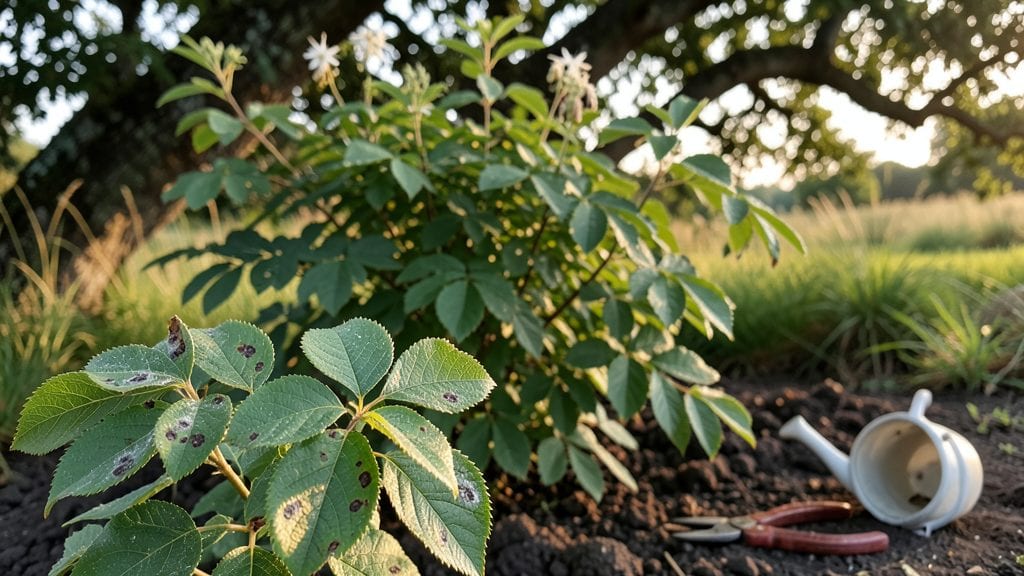
Elderberry plant diseases can turn your thriving bushes into sad, spotted shadows if you don't catch them early. 🌿 I've seen powdery mildew blanket leaves like snow, leaf spots spread faster than weeds, and cankers girdle stems like vines—all before my eyes.
The good news? Most of these problems have telltale signs and simple fixes once you know what to look for.
Start by inspecting leaves, stems, and berries regularly—especially after rain or humid spells. Powdery mildew leaves white, dusty patches, while leaf spots show up as brown or black splotches with yellow halos. Cankers appear as sunken, discolored areas on branches, often oozing sap.
The key to saving your bushes is acting fast with organic sprays (neem oil, baking soda mix) and improving airflow around plants.
📚 In This Guide
- What you need
- Instructions
- Tips and common mistakes
- Wrapping up and next steps
What you need
- ● Gloves (nitrile or rubber) – 1 pair (to protect your hands from spores and bacteria).
- ● Pruning shears or sharp bypass pruners – 1 pair (sterilized with rubbing alcohol or a 10% bleach solution).
- ● Garden trowel or small spade – 1 (for digging around infected roots or soil samples).
- ● Disposable spray bottles (8 oz or 16 oz) – 2-3 (for applying fungicides or homemade remedies).
- ● Fungicide (copper-based or sulfur-based) – 1 bottle (e.g., Copper Fungicide or Neem Oil).
- ● Baking soda (food-grade) – 1 box (for DIY fungicide solutions).
- ● Hydrogen peroxide (3%) – 1 small bottle (for cleaning tools and sterilizing cuts).
- ● Plastic bags or paper bags (for infected plant parts) – 5-10 (to dispose of or quarantine diseased material).
- ○ Magnifying glass (optional but helpful) – 1 (for closely inspecting symptoms like powdery mildew or rust spots).
- ● Soil pH test kit – To check if soil acidity (pH) might be contributing to disease susceptibility.
- ● Compost or well-rotted manure – To improve soil health and plant resilience.
- ● Plastic sheeting or tarps – For covering heavily infected areas to prevent spore spread.
- ● Camera or phone with macro mode – To document symptoms for later reference or expert advice.
- ● Labeling tags and markers – To track treated plants and monitor progress.
How to identify and treat elderberry plant diseases
Elderberries are tough, but these 10 diseases can turn your bushes into a battleground. Here's how to spot them early and fight back.
🌿 Step 1: Inspect Leaves for Early Signs of Fungal Infections
Start by examining the undersides of leaves—this is where most fungal spores hide. Look for powdery white or grayish patches (powdery mildew) or dark brown spots with yellow halos (leaf spot diseases). These are your first warning signs. I check leaves every 7-10 days during wet seasons, especially after rain.
Don't wait until leaves yellow or drop—preventative action is key. If you see even a few spots, remove and destroy (don't compost) the infected leaves immediately. This stops spores from spreading to other bushes. I use a sterilized pruner to cut out affected areas, then dip the blades in 70% rubbing alcohol between cuts.
💧 Step 2: Check for Bacterial Leaf Spot and Canker Symptoms
Bacterial infections show up as water-soaked, greasy-looking spots that turn brown or black. These often appear on younger leaves first. Run your fingers along the stems—if you feel sunken, oozing cankers, that's a bacterial stem infection. These are serious and spread quickly in humid conditions.
Here's the thing—bacteria thrive in wet foliage, so avoid overhead watering. Water at the base only, and do it early in the day so leaves dry fast. If you spot bacterial signs, prune infected branches 6 inches below the visible damage and disinfect tools between cuts. I've seen entire elderberry bushes recover when I caught bacterial canker early.
☀️ Step 3: Monitor for Powdery Mildew and Treat Preventatively
Powdery mildew loves elderberries and shows up as a white, powdery coating on leaves. It spreads fastest in shady, humid conditions with poor airflow. The best defense is proper spacing—keep bushes 6-8 feet apart so air circulates. I also prune out crossing branches that block sunlight and create damp pockets.
If mildew appears, don't use fungicides right away—start with baking soda spray (1 tbsp baking soda + 1 gallon water + a drop of dish soap). Spray both sides of leaves until damp but not dripping, focusing on the undersides. Repeat every 7-10 days until new growth appears free of powder. This works for mild cases—severe infections may need a copper fungicide.
✂️ Step 4: Prune for Airflow and Remove Infected Wood
Thinning out elderberry bushes isn't just about shape—it's about disease prevention. Remove dead, diseased, or crossing branches in late winter or early spring. I cut back 1/3 of the oldest stems each year to encourage new, healthy growth. Always sterilize pruners between cuts to avoid spreading pathogens.
Watch for dieback—when branches suddenly stop growing and turn brown. This often signals verticillium wilt, a fungal disease with no cure. If you confirm it, dig up and destroy the entire plant immediately. I've seen this wipe out entire elderberry patches, so don't ignore dieback.
🪴 Step 5: Adjust Care to Prevent Future Outbreaks
Healthy elderberries resist diseases better. Water deeply but infrequently—aim for 1-1.5 inches per week—and never let water pool at the base. Mulch with 2-3 inches of organic mulch (like wood chips) to keep soil moist but not soggy. I also rotate crops if growing near other shrubs to break disease cycles.
Finally, sanitize everything—tools, containers, even gloves. I soak pruners in 1 part bleach to 9 parts water for 10 minutes between uses. This simple step has saved my bushes from multiple outbreaks over the years. Prevention is easier than cure, especially with elderberries.
Tips & tricks for elderberry disease prevention
Elderberry bushes can become disease battlegrounds if you don't act fast—here's how to turn the tide before it's too late.
Timing is Everything: Those 7-10 day inspections in Step 1 are non-negotiable during wet seasons. I've seen powdery mildew spread from a single leaf to the entire bush in just 5 days if left unchecked. Set a reminder on your phone for every 7 days—consistency is your best defense against fungal spread. The key is catching it before you see visible damage on more than 2-3 leaves.
Tool Sanitation Secrets: The 10-minute bleach soak between cuts in Step 5 is critical, but here's what nobody tells you—rinse your pruners thoroughly with water afterward. Bleach residue can harm new cuts and attract pests. I keep a small spray bottle of rubbing alcohol handy for quick disinfection between bushes when I'm working. This extra step has saved multiple bushes from cross-contamination during pruning.
Visual Cues for Early Detection: In Step 3, when checking for powdery mildew, look for a "frosted glass" appearance on leaves. Run your finger gently over the white coating—if it leaves a powdery trail, that's confirmation. For bacterial spots in Step 2, press a healthy leaf and an infected one against your cheek. The infected leaf will feel noticeably "greasy" compared to the smooth surface of healthy leaves. This simple trick helps me confirm infections before they spread.
Watering Wisdom: The 1-1.5 inches per week guideline in Step 5 is perfect, but timing matters just as much. I water my elderberries between 8-10 AM so leaves have all day to dry completely. Wet foliage at night creates the perfect conditions for bacterial growth. Consider installing a drip irrigation system at the base of plants—it delivers water exactly where it's needed without wetting leaves at all.
Pro Tips for Elderberry Plant Diseases
- Elderberry bushes can become disease battlegrounds if you don't act fast—here's how to turn the tide before it's too late.
- Timing is Everything: Those 7-10 day inspections in Step 1 are non-negotiable during wet seasons.
- Tool Sanitation Secrets: The 10-minute bleach soak between cuts in Step 5 is critical, but here's what nobody tells you—rinse your pruners thoroughly with water afterward.
Frequently asked questions
Got questions about elderberry plant diseases?
You’re not alone! Here are answers to the most common concerns—from prevention to treatment—so your elderberry bushes stay healthy and productive.
What are the first signs of elderberry plant diseases?
Watch for yellowing or spotted leaves, black or powdery growths on stems/berries, and stunted growth. Fungal diseases like powdery mildew or bacterial leaf spot often start with small lesions that spread quickly. Act fast—remove affected parts immediately to prevent spread!
When is the best time to treat elderberry diseases?
Treat at the first sign of trouble (spring or early summer), but avoid spraying when berries are ripening (to protect pollinators and safety). For preventative care, apply copper fungicide in late winter before new growth starts. Consistency is key!
Are there natural remedies for elderberry diseases?
Yes! Try a baking soda spray (1 tbsp baking soda + 1 quart water + drop of soap) for powdery mildew, or neem oil (1% solution) for fungal/bacterial issues. For severe cases, organic copper-based fungicides (like Copper Soap) work well. Always test on a small area first!
Why do my elderberries keep getting infected even after treatment?
Persistent infections often mean poor airflow, overwatering, or old plant debris harboring spores. Prune for sunlight, space plants 4–6 feet apart, and clean up fallen leaves/berries yearly. If issues persist, test soil pH (6.0–7.0 is ideal) or consult a local extension service.
Can elderberry diseases spread to other plants in my garden?
Some diseases (like powdery mildew or anthracnose) can jump to nearby plants, especially if spores hitchhike via wind or tools. Sterilize pruners with rubbing alcohol, avoid overhead watering, and quarantine infected plants until treated. Keep elderberries 3+ feet from veggies/fruits to minimize risk.
Wrapping up and next steps
Protecting your elderberry plants from diseases doesn’t have to be overwhelming—with the right knowledge and proactive care, you can keep them thriving! 🌱 From powdery mildew to bacterial leaf scorch, early detection and treatment are key to preserving your harvest.
Stay vigilant, act quickly, and soon you’ll be enjoying healthy, bountiful elderberries year after year.
Ready to take action? Start by inspecting your plants regularly and applying the preventive measures outlined above. Your future elderberry bushes will thank you!