
Neem Oil
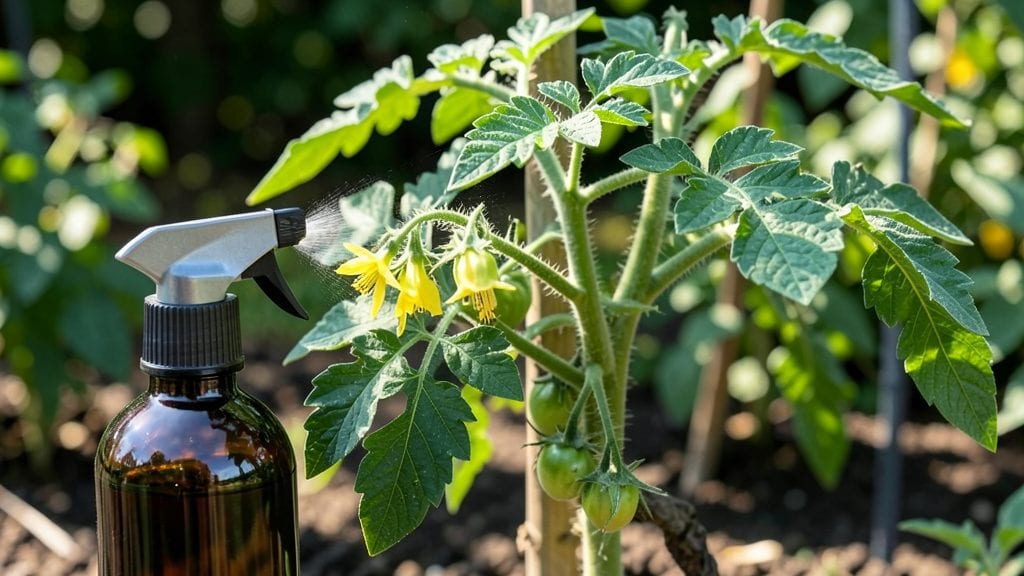
Neem oil can be used on tomato plants safely as a natural pesticide and fungicide, but only when plants are fully grown and not flowering or fruiting. Apply at dusk or dawn with a 1% dilution rate (1 tbsp per gallon of water) to avoid harming beneficial pollinators or stressing young plants.
Neem oil works wonders for tomato gardens by targeting pests like aphids and fungal threats such as early blight through its active compounds, azadirachtin and nimbin, which disrupt insect life cycles and inhibit spore growth. 🌱 The key is timing—young plants or those in bloom can’t handle its potency, and spraying during peak pollinator hours risks harming bees.
I’ve found that a 2-week interval between applications keeps the plants protected without overstressing them.
For best results, mix the oil with a mild soap (like castile) to help it stick to leaves, and always test a small area first. Avoid applying if rain is forecasted within 24 hours, as this can wash away the protective layer.
My go-to method? A simple hose-end sprayer for large gardens—it’s efficient and cuts down on prep time.
💡 In This Article
- How Neem Oil Protects Tomato Plants Naturally
- Best Practices for Applying Neem Oil on Tomatoes
How neem oil protects tomato plants naturally
The real magic of neem oil lies in its chemical complexity, particularly azadirachtin and nimbin, which act like a multi-tool defense system for tomato plants.
Azadirachtin disrupts the feeding and reproductive cycles of pests like aphids and whiteflies by mimicking insect hormones, causing sterility in adults and stunted growth in larvae.
Meanwhile, nimbin acts as a natural fungicide by inhibiting spore germination, which is crucial for stopping fungal diseases like early blight from spreading across leaves.
What makes this especially effective for tomatoes is how these compounds target specific vulnerabilities in pests and pathogens without harming the plant itself.
For example, azadirachtin binds to insect receptors that regulate molting, causing deformities in pests like the tomato hornworm, while nimbin forms a protective film on leaf surfaces that blocks fungal spores from attaching.
The oil’s fatty acids also help it cling to waxy leaf surfaces, ensuring prolonged protection—typically 2-4 weeks after application, depending on weather conditions.
Here’s what’s actually happening at a cellular level: When neem oil contacts fungal spores, the limonoids (like azadirachtin) interfere with the spores' ability to germinate by disrupting their cell membranes. This is why neem works so well against early blight, which thrives in moist conditions.
The oil’s antifungal properties create an environment where spores can’t establish themselves, giving the plant a fighting chance to recover. 🌿 Meanwhile, for pests, the oil’s bitter taste and hormonal disruption make leaves unappealing and development impossible.
One key factor is the plant’s growth stage—young tomato seedlings lack the resilience to handle neem’s potency, as their delicate tissues can absorb too much of the oil’s active compounds.
This is why applications should wait until plants are at least 6-8 inches tall and have developed a sturdy root system. The oil’s 1% dilution rate (1 tablespoon per gallon) strikes a balance between effectiveness and plant safety, ensuring the compounds do their job without causing phytotoxicity.
Tomatoes face unique threats like whiteflies and powdery mildew, which neem oil combats through different mechanisms. For whiteflies, the oil’s antifeedant properties deter adults from laying eggs, while nimbin disrupts larval development.
Against powdery mildew, the oil’s fungicidal action prevents the fungus from forming its characteristic white webs on leaves. The result? Healthier plants with fewer blemishes and stronger resistance to stress.
What most people don’t realize is that neem oil’s effectiveness hinges on proper application timing. Spraying at dawn or dusk avoids harming pollinators like bees, which are active during the day.
The oil’s volatility means it breaks down quickly in sunlight, losing potency within hours. This is why gardeners often see better results with repeated, low-concentration applications rather than one heavy dose.
The science behind neem’s safety for mature tomato plants involves its selective toxicity. The oil’s compounds target pests and fungi without disrupting the plant’s natural biochemical processes.
For example, tomatoes produce their own defense compounds when stressed, and neem oil enhances this response by stimulating the plant’s jasmonic acid pathway, which boosts resistance to future attacks. This dual-action approach—direct pest control and plant fortification—makes neem a standout natural solution for tomato growers. ✨