
Planting
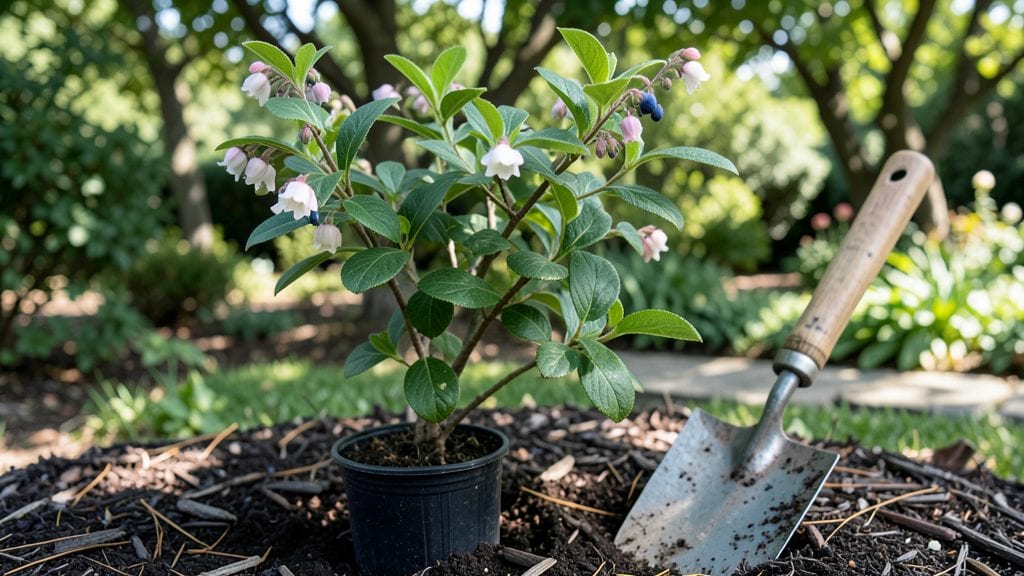
Here are some blueberry planting tips you’ll wish you’d known before your first bushes wilted—like why soil needs to be as acidic as a lemon’s tang (pH 4.5 to 5.5) or they’ll starve, no matter how much you water them. despite perfect sunlight, because the soil just wasn’t right.
The secret isn’t just adding sulfur or peat moss; it’s creating a well-draining, organic-rich bed that mimics their natural bog habitats.
Once you’ve got the soil tested and amended, dig holes twice as wide as the roots but no deeper—blueberries hate soggy feet. Space northern varieties like ‘Bluecrop’ 6 feet apart for airflow, while southern types like ‘Southern Highbush’ can squeeze in 4 feet apart.
Plant them shallow, just below the original soil line, and water deeply right after to settle the roots without drowning them.
📚 In This Guide
- What you need
- Instructions
- Tips and common mistakes
- Wrapping up and next steps
What you need
- ● Blueberry Plants: 2–4 healthy, bare-root or container-grown plants (choose varieties like Rabbiteye, Southern Highbush, or Northern Highbush based on your climate zone).
- ● Soil Amendments: Peat moss or coconut coir (5–10 gallons, acid-loving plants need this!).
- ● Sulfur (1–2 lbs per 100 sq ft, to lower soil pH if needed).
- ● Compost or well-rotted manure (5–10 gallons, for organic matter).
- ● Fertilizer: Slow-release acid-forming fertilizer (e.g., Osmocote 14-14-14, 1 lb per plant).
- ○ Iron sulfate (optional, for chlorosis-prone soils).
- ● Mulch: Pine bark fines or wood chips (3–4 inches thick, keeps soil acidic and moist).
- ● Garden trowel or spade (for digging holes).
- ● Garden gloves (to protect your hands from thorns and soil).
- ● Pruners (sharp, clean pair for trimming).
- ● pH testing kit (to monitor soil acidity, aim for 4.5–5.5).
- ● Watering can or hose with a gentle spray nozzle.
- ● Measuring tape or ruler (for spacing plants correctly).
- ○ Optional: Wheelbarrow (for mixing soil amendments).
- ● Full-sun location (6+ hours of sunlight daily).
- ● Well-draining, acidic soil (test your soil first!).
- ● Proper spacing (3–6 feet between plants, depending on variety).
- ● Access to water (blueberries need consistent moisture).
Step-by-step blueberry planting guide for healthy bushes
Here's how to plant blueberries the right way—soil prep is everything for sweet, abundant harvests.
Choose the Right Location and Prepare the Soil
Blueberries thrive in acidic soil with a pH between 4.5 and 5.5. Test your soil first—if it’s too alkaline, amend it with sulfur or peat moss before planting. Pick a spot with full sun (at least 6 hours daily) and well-draining soil. Avoid low areas where water pools, as soggy roots lead to root rot.
Dig a hole twice as wide as the root ball but only as deep as the container it came in. Loosen the soil around the edges to encourage root spread. If your soil is heavy clay, mix in 2-3 inches of compost or pine bark fines to improve drainage. Blueberries hate competition, so clear weeds and grass within 3 feet of the planting area.
Plant at the Correct Depth and Mulch Heavily
Place the blueberry plant in the hole so the top of the root ball sits just above soil level—burying too deep suffocates the plant. Gently remove any circling roots and spread them outward to encourage outward growth. Fill the hole with soil, pressing lightly to remove air pockets but not compacting too firmly.
Water deeply to settle the soil, then apply 3-4 inches of organic mulch (like pine needles, wood chips, or shredded bark) around the base. Mulch keeps roots cool, retains moisture, and slowly acidifies the soil over time. Keep mulch 2-3 inches away from the stem to prevent rot. Water again to help mulch settle.
Water Deeply and Establish a Fertilizing Routine
Blueberries need consistent moisture, especially in their first year. Water deeply once a week (or more in hot weather) until the soil is 6 inches damp. Let the top inch dry out between waterings to prevent fungal issues. Avoid wetting the leaves—water at the base to keep foliage dry.
After planting, wait 4-6 weeks before fertilizing. Use a slow-release, acidic fertilizer (like cottonseed meal or azalea-camellia mix) in early spring and again after harvest. Follow package instructions—over-fertilizing burns roots. Young bushes need less fertilizer than mature ones, so start light.
Prune for Shape and Airflow in Early Spring
Prune in late winter or early spring before new growth starts. Remove dead, diseased, or crossing branches first. Then, cut back last year’s growth by one-third to encourage bushiness. Thin out crowded stems to improve airflow, which reduces fungal diseases like mummy berry. Leave strong, outward-facing branches for future fruiting.
Never prune in fall—new cuts expose the plant to winter damage. After pruning, apply a fresh layer of mulch to protect roots from temperature swings. Watch for new growth in spring—this signals the plant is establishing well. If leaves appear yellow, your soil may still be too alkaline; test and amend as needed.
Tips & tricks for perfect blueberry planting
These insider tips will help you avoid common mistakes and give your blueberry bushes the best possible start for years of sweet harvests.
Soil pH is non-negotiable: Testing your soil's pH before planting is absolutely critical. I've seen beautiful blueberry bushes fail because someone planted in regular garden soil with a pH of 6.8. If your test shows pH above 5.5, amend with sulfur or peat moss according to package instructions. The goal is to reach that perfect 4.5-5.5 range where blueberries thrive. Remember, you can't fix pH problems after planting—this is your one chance to get it right.
Root ball preparation makes all the difference: When you remove your blueberry plant from its container, gently tease apart any circling roots with your fingers. I've seen people plant with these tight root circles, and it actually strangles the plant's ability to spread properly. Spread the roots outward in the planting hole so they can establish quickly. Also, make sure the top of the root ball sits just above soil level—burying it too deep smothers the plant and can lead to rot.
Mulching is more than just decoration: That 3-4 inches of organic mulch you're supposed to apply isn't just for looks. The right mulch (pine needles, wood chips, or shredded bark) creates a microclimate that keeps roots cool in summer and insulated in winter. It also slowly acidifies the soil over time, which is exactly what blueberries need. Keep that mulch 2-3 inches away from the stem to prevent rot—it's a common mistake that can kill your plant.
Watering routine is everything: The once-a-week deep watering is crucial, but timing matters too. Water in the morning so leaves have time to dry before evening. I've learned the hard way that watering at night creates perfect conditions for fungal diseases. Also, check that 6-inch depth of moisture—stick your finger in the soil. If it's dry at that depth, it's time to water again. Blueberries hate having wet feet but need consistent moisture to establish strong roots.
Pro Tips for Blueberry Planting Tips
- These insider tips will help you avoid common mistakes and give your blueberry bushes the best possible start for years of sweet harvests.
- Soil pH is non-negotiable: Testing your soil's pH before planting is absolutely critical.
- Root ball preparation makes all the difference: When you remove your blueberry plant from its container, gently tease apart any circling roots with your fingers.
Frequently asked questions
Got questions about growing blueberries? You’re not alone!
Here are answers to the most common queries—from timing to troubleshooting—to help you cultivate a thriving blueberry bush with confidence.
What’s the best time of year to plant blueberries?
Plant blueberries in early spring (just as buds swell) or late fall (6-8 weeks before frost). Avoid extreme heat or cold—spring gives roots time to establish before summer stress, while fall planting benefits from winter moisture. Northern climates lean toward spring; milder zones thrive with fall planting. Pro tip: Bare-root plants need immediate watering!
How long does it take for blueberry bushes to bear fruit?
Patience is key! Dwarf varieties may fruit in 1-2 years, while standard bushes take 2-3 years to produce. Soil pH (acidic, 4.5–5.5), sunlight (6+ hours/day), and proper watering accelerate fruiting. Troubleshoot: If no berries appear after 3 years, test soil pH—alkaline soil can stall production.
Can I grow blueberries in containers or small spaces?
Dwarf varieties (like ‘Top Hat’ or ‘Peach Sorbet’) thrive in 15–25 gallon pots with well-draining soil. Use peat moss or pine bark to mimic acidic conditions. Place containers in full sun, and fertilize with acid-loving plant food (like cottonseed meal). Bonus: Containers let you move bushes to optimize sunlight!
Why are my blueberry leaves turning yellow or curling?
Yellow leaves often signal nutrient deficiency (iron/chlorosis) or pH imbalance. Test soil pH—if above 6.0, amend with sulfur. Curling may mean spider mites or blueberry maggots. Fix it: Spray leaves with water to deter mites; use row covers to block pests. Overwatering can also cause yellowing—ensure pots/drainage holes prevent soggy roots.
Do blueberry bushes need cross-pollination to produce fruit?
Most blueberries are self-pollinating, but yields improve with two varieties nearby (e.g., ‘Bluecrop’ + ‘Duke’). Exception: Rabbiteye types often need cross-pollination. Plant bushes 15–25 feet apart for best results. Fun fact: Bees love blueberries—plant flowers nearby to attract pollinators!
| Quick Fixes | When to Use |
|---|---|
| Add sulfur to soil | If pH > 6.0 (test with a kit) |
| Neem oil spray | For spider mites or fungal spots |
| Mulch with pine needles | To retain acidity and moisture |
Wrapping up and next steps
You’ve got all the blueberry planting tips to grow thriving bushes—now it’s time to roll up your sleeves and get started! 🌱 Remember, the secret sauce lies in well-draining soil, the right pH balance, and a little patience.
With these 3 key soil secrets, you’re well on your way to a bountiful harvest.
Ready to see your hard work pay off? Start by prepping your soil this weekend—dig in those amendments, test that pH, and plant those berries with confidence. Happy gardening!