
Pests
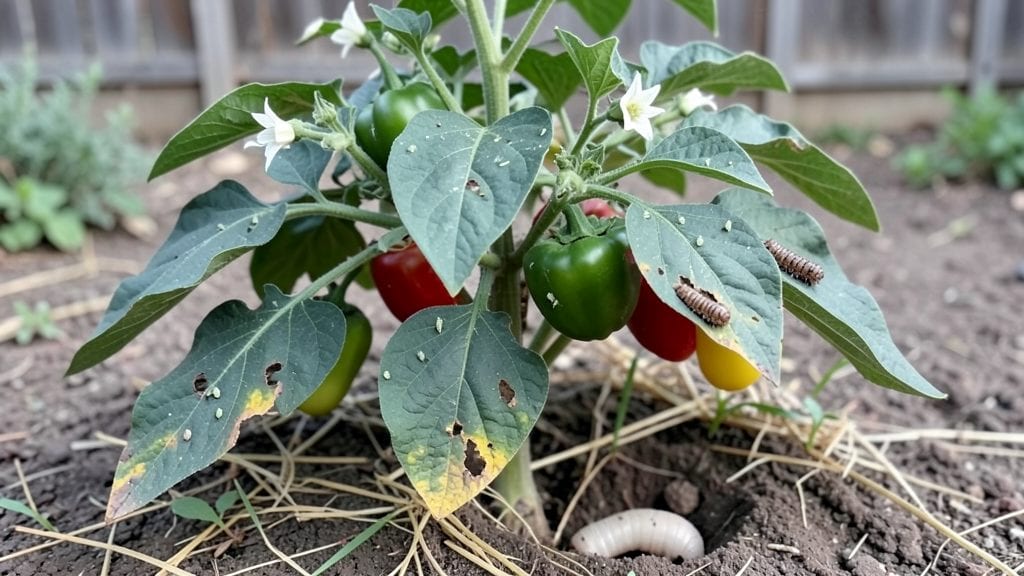
Bell pepper plant pests turn your garden from productive to problematic faster than you’d think. 🌱 I’ve watched hornworms strip entire plants bare in a single afternoon, and aphids turn glossy leaves into sticky, curled messes—until I learned the right organic defenses.
The good news? You can stop these pests before they ruin your harvest.
Most damage starts small—tiny holes in leaves, webbing between branches, or clusters of tiny bugs on new growth. Spider mites leave yellow speckles, aphids create sticky residue, and hornworms?
They’re the green monsters that disappear when you approach. The key is catching them early with simple organic sprays like neem oil or insecticidal soap.
With the right approach, your peppers stay healthy and productive all season. I’ll show you how to identify pests, use natural deterrents, and prevent future invasions—so you can enjoy that first crisp bite without worrying about hidden critters.
This works for container gardens, raised beds, or in-ground plots—no matter your setup. Let’s get those peppers thriving again.
Root Causes Behind Pepper Plant Attacks
Understanding why pests target your bell pepper plants is the first step to stopping them. These tiny invaders don’t just appear out of nowhere—they’re drawn by specific conditions in your garden. Let’s break down the key reasons your peppers might be under siege.
Pests thrive in cluttered, humid environments where peppers struggle to breathe.
When plants are too close together, airflow stalls, creating the perfect damp, shaded conditions that attract: - Aphids (they love tender new growth in low-light spots) - Whiteflies (flourish in warm, still air) - Fungal gnats (breed in moist, organic-rich soil)
Why it happens: Bell peppers need at least 18 inches of spacing between plants to circulate air and dry foliage quickly after watering. Without this, humidity lingers, and pests get an easy meal. Overcrowding also weakens plants, making them more susceptible to stress-related infestations.
Actionable fix:
- Prune lower leaves to improve airflow.
- Space plants properly and thin seedlings early.
- Avoid overhead watering (use drip irrigation instead).
Pests target stressed plants—especially those lacking key nutrients.
Bell peppers need a balanced diet, but deficiencies or excesses can signal vulnerability: - Nitrogen deficiency → Pale, yellowing leaves (aphids and spider mites love weak foliage). - Phosphorus deficiency → Stunted growth (attracts root-feeding pests like cutworms). - Over-fertilization (especially nitrogen) → Soft, succulent leaves (a buffet for chewing insects).
Why it happens: Plants deprived of nutrients can’t produce strong cell walls or natural pest-repelling compounds (like capsaicin in peppers). Meanwhile, excess fertilizer creates lush, tender growth that pests adore.
Actionable fix:
- Test soil pH (ideal: 6.0–6.8 for peppers).
- Use a balanced organic fertilizer (e.g., 5-5-5 or compost tea).
- Avoid synthetic fertilizers that burn roots and stress plants.
Pests have preferred temperature ranges, and your peppers might be sending out distress signals that invite them in:
- Cool nights (below 50°F) → Slows pepper growth, making them easier targets for cabbage loopers and hornworms.
- Hot, dry spells → Stress weakens plants, attracting thrips and spider mites (which thrive in drought conditions).
- Sudden temperature swings → Shocked plants produce weak new growth, a magnet for aphids.
Why it happens: Bell peppers are warm-season crops (65–90°F ideal). When temps dip or spike, their immune responses falter. Some pests, like whiteflies, also reproduce faster in heat, creating explosive infestations.
Actionable fix:
- Use row covers for early-season protection.
- Mulch with straw to regulate soil temps.
- Water deeply in dry spells to reduce heat stress.
A pepper plant left to its own devices with overripe fruit or fallen leaves is a pest paradise.
Why? - Overripe peppers attract fruit flies and hornworms (they lay eggs in soft, rotting fruit). - Dropped leaves/debris harbor slugs, earwigs, and fungal gnats, which then spread to healthy plants. - Volunteer plants (self-seeded peppers) provide hiding spots for pests to multiply unchecked.
Why it happens: Pests follow food sources. A neglected garden becomes a smorgasbord, and they’ll move in en masse. Some, like aphids, also excrete honeydew, which attracts ants—creating a secondary pest problem.
Actionable fix:
- Harvest regularly (don’t let peppers overripe on the vine).
- Remove fallen leaves/debris weekly.
- Pull up volunteer plants to break pest life cycles.
Once pests find a foothold, they don’t leave willingly.
Even after treating an infestation: - Eggs remain in soil or plant tissue (e.g., tomato hornworm eggs hatch in 3–5 days). - Adult pests migrate from nearby weeds or wild plants (e.g., aphids on dandelions). - Beneficial predators (like ladybugs) may not be present to keep populations in check.
Why it happens: Pests have short life cycles (some complete generations in 2–3 weeks). If you don’t address the root cause, they’ll return stronger. For example, whiteflies can develop resistance to sprays if overused.
Actionable fix:
- Rotate crops annually to disrupt pest life cycles.
- Plant companion plants (e.g., basil, marigolds, or nasturtiums) to repel pests naturally.
- Introduce beneficial insects (ladybugs, lacewings) early in the season.
Many gardeners wait until pests are visible in large numbers before acting. By then, the damage is done—and the pests have spread. Common red flags:
- Sticky leaves (honeydew from aphids/scale).
- Chewed edges (cabbage loopers, cutworms).
- Silvery webbing (spider mites).
- Wilted or curled leaves (thrips, whiteflies).
Why it happens: Pests start small. A single aphid can multiply into hundreds in a week. If you ignore early signs, you’re essentially giving them a population explosion.
Actionable fix:
- Inspect plants weekly (especially undersides of leaves).
- Isolate new plants for 2–3 days to check for hitchhikers.
- Act at the first sign—even a few pests can become a full-blown infestation.
Fixing Common Pepper Plant Problems
When pests and diseases strike your bell pepper plants, quick action is key to saving your harvest. Below are targeted solutions for the most common issues—from chewed leaves to wilting stems—along with preventive steps to keep your garden thriving. 🌱🛡️
How to Stop It
- 🔥 Handpick & Remove Pests
- Inspect plants daily, especially in the morning. Drop pests into soapy water to eliminate them instantly.
- Pro tip: Use a flashlight at night to spot slugs hiding under leaves.
- 🍳 Natural Barriers
- Diatomaceous Earth (DE): Sprinkle food-grade DE around the base of plants. It’s non-toxic but deadly to soft-bodied pests like caterpillars.
- Copper Tape: Wrap copper tape around pots or raised beds to deter slugs and snails.
- 👨🍳 Homemade Sprays
- Soap Spray: Mix 1 tbsp mild castile soap + 1 quart water. Spray directly on pests (avoid blooms).
- Garlic Pepper Spray: Blend 2 garlic cloves + 1 tsp cayenne pepper + 1 quart water. Strain and spray on affected areas.
💡 Prevention Tips
- 🌡️ Mulch with Crushed Eggshells: Discourages slugs and adds calcium to the soil.
- ✨ Plant Companion Crops: Basil, marigolds, and onions repel many leaf-eating pests.
- 🎯 Rotate Plantings: Avoid growing peppers in the same spot yearly to break pest cycles.
How to Treat It
- 🔪 Prune & Dispose of Infected Leaves
- Remove and destroy (don’t compost!) yellow or spotted leaves immediately. Fungal spores spread fast!
- 🥘 Baking Soda Spray
- Mix 1 tbsp baking soda + 1 tsp dish soap + 1 gallon water. Spray on both sides of leaves every 7–10 days.
- 🌿 Neem Oil or Copper Fungicide
- Apply neem oil (1 tsp + 1 quart water + drop of soap) or a copper-based fungicide weekly until symptoms fade.
💡 Prevention Tips
- 🌡️ Improve Airflow: Space plants 18–24 inches apart and avoid overhead watering.
- ✨ Water at the Base: Keep foliage dry to prevent spore growth.
- 🎯 Choose Resistant Varieties: Look for pepper types like ‘Aristotle’ or ‘Jupiter’ that tolerate disease better.
How to Revive Plants
- 🔥 Blast Off Pests with Water
- Use a strong spray nozzle to dislodge aphids and spider mites from stems and undersides of leaves.
- 🍳 Introduce Beneficial Insects
- Ladybugs or Lacewings: Release these predators to eat aphids naturally.
- Nematode-Resistant Soil: Mix in beneficial nematodes (Steinernema or Heterorhabditis) to combat root-knot nematodes.
- 👨🍳 Fertilize & Hydrate
- Flush soil with water to remove excess salts from synthetic fertilizers.
- Apply compost tea or a balanced organic fertilizer (like 5-5-5) to restore nutrients.
💡 Prevention Tips
- 🌡️ Solarize Soil: Cover beds with clear plastic for 4–6 weeks in hot sun to kill nematodes.
- ✨ Crop Rotation: Avoid planting peppers, tomatoes, or eggplants in the same spot for 3+ years.
- 🎯 Test Your Soil: Use a home kit to check pH (aim for 6.0–6.8) and nutrient levels before planting.
How to Protect Your Harvest
- 🔪 Bag Young Peppers
- Use lightweight breathable bags (like onion bags) over peppers when they’re small to block egg-laying pests.
- 🍳 BT (Bacillus thuringiensis) Spray
- Apply BT spray (a natural bacteria) every 7–10 days. It’s safe for humans and pets but deadly to caterpillars.
- 👨🍳 Trap Crops
- Plant a few basil or dill plants nearby to lure pests away from your peppers.
💡 Prevention Tips
- 🌡️ Harvest Early: Pick peppers when small to reduce exposure to pests.
- ✨ Row Covers: Use fine mesh netting over plants until flowers appear.
- 🎯 Plant at the Right Time: Avoid late spring/early summer plantings when fruitworms are most active.
With these organic fixes, your bell pepper plants can bounce back stronger than ever. Stay vigilant, and your garden will reward you with a bountiful, pest-free harvest! 🌿🍅
Frequently asked questions about bell pepper plant pests
What are the most destructive pests that attack bell pepper plants?
The worst offenders include tomato hornworms (green caterpillars that strip leaves overnight), aphids (tiny clusters that create sticky honeydew), and spider mites (which cause yellow speckling on leaves). Root-knot nematodes also weaken plants by feeding on roots, while thrips transmit viruses that stunt growth.
How can I tell if my pepper plants have pests before it's too late?
Watch for chewed leaf edges (hornworms), sticky residue on leaves (aphids), or silvery webbing (spider mites). Inspect undersides of leaves daily—pests hide there first. Early signs include curled leaves, yellowing, or tiny black dots (frass from caterpillars). Act at the first sign to prevent spread.
Are there organic sprays that actually work against these pests?
Yes! Neem oil (mix 1 tsp with 1 quart water + drop of soap) kills soft-bodied pests like aphids and mites on contact. For caterpillars, BT spray (Bacillus thuringiensis) is highly effective and safe for humans. Garlic pepper spray (blend 2 garlic cloves + 1 tsp cayenne + 1 quart water) also repels many pests when sprayed directly on foliage.
Will companion planting really keep pests away from my peppers?
Plant basil nearby to repel thrips and whiteflies, or marigolds to deter nematodes. Onions and garlic also ward off aphids. The key is spacing companions 12–18 inches from peppers to maximize their protective effects without competing for nutrients.
Can I save my peppers if they're already heavily infested?
It depends on the pest. For hornworms, handpick them daily and drop into soapy water. If spider mites have taken over, blast leaves with water to dislodge them, then apply neem oil. For fungal issues, prune infected leaves immediately and treat with copper fungicide. Severe cases may require removing entire plants to prevent spread to healthy crops.