
Pruning
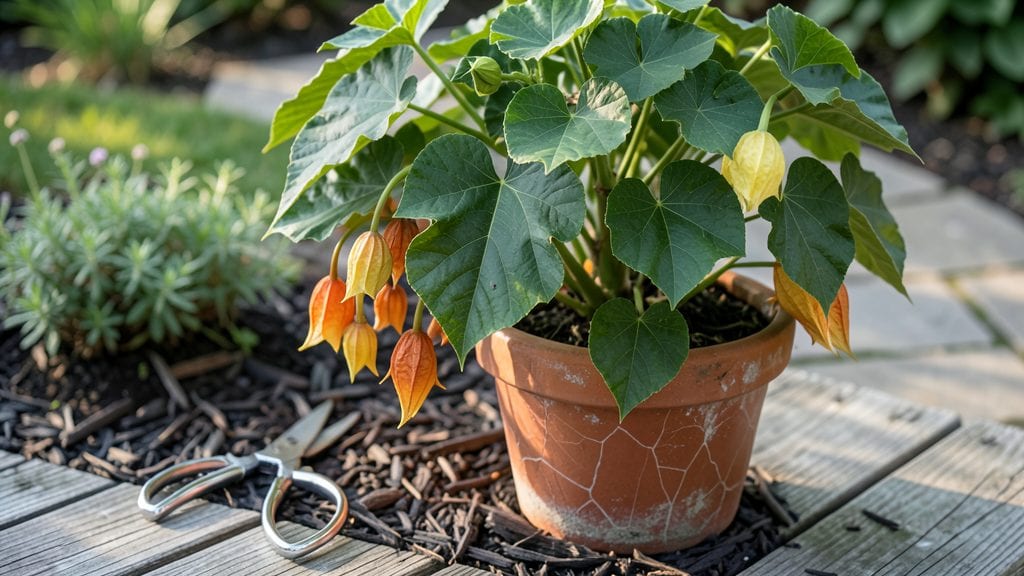
Pruning abutilon plants transforms them from occasional bloomers into nonstop flowering machines. 🌟 I’ve watched my own abutilons go from sparse, leggy shrubs to lush, vibrant bushes bursting with flowers—all thanks to three strategic cuts a year.
The key isn’t just when you prune, but how you shape the plant to encourage new growth where the blooms appear.
You’ll need sharp pruning shears, a clean cutting surface, and about 30 minutes of focused work per plant. The best time for major trims is right after flowering, when the plant naturally slows down, but light shaping can happen year-round.
Think of it like giving your abutilon a haircut—too little and it gets wild, too much and you stunt its growth. The goal is to open up the center for airflow while encouraging outward branches where the flowers thrive.
After pruning, you’ll notice fresh green shoots within 2-3 weeks, and those become the spots where new blooms form. The plant stays compact, flowers more densely, and even recovers faster from pests or weather stress.
It’s the difference between a few scattered blooms and a bush that looks like a living bouquet. The secret? Always cut just above a leaf node, never into bare wood, and never take more than one-third of the plant’s height at once.
This method works for both indoor abutilons and outdoor varieties, though outdoor plants get a head start with natural light. Even if you’ve let yours get a little unruly, a single well-timed trim can revive it—just start small and watch how quickly it responds.
Ready to turn your abutilon into a flowering powerhouse?
📚 In This Guide
- What you need
- Instructions
- Tips and common mistakes
- Wrapping up and next steps
What you need
- ● Pruning shears or bypass pruners: Sharp, sterilized blades (bypass pruners are ideal for clean cuts)
- ● Size: 4-6 inches (for small to medium stems)
- ● Quantity: 1 pair (keep a backup if working with many plants)
- ● Hand pruners or loppers (for thicker stems): Bypass or anvil type (bypass preferred for precision)
- ● Size: 6-8 inches (for stems ½ inch thick)
- ● Garden gloves: Durable, cut-resistant (e.g., nitrile-coated)
- ● Quantity: 1 pair (protects from thorns and sap)
- ● Disinfectant (70% isopropyl alcohol or bleach solution): Use to wipe blades before and after pruning (prevents disease spread)
- ○ Small pruning saw (optional but helpful for very thick stems): Fine-toothed blade for clean cuts
- ● Rubbing alcohol or hydrogen peroxide (for cleaning wounds): Apply to cut stems to prevent infection
- ● Pruning sealant (e.g., tree wound paint) – Controversial but useful for large cuts
- ● Ladder or step stool – For reaching taller abutilons (ensure it’s stable!)
- ● Notebook & pen – To map out cuts or track growth patterns
- ● Trash bag or bucket – For clippings (compost or discard)
- ● Magnifying glass – Helps spot hidden pests or diseased areas
How to prune abutilon for continuous, lush blooms
Here's the simple 3-step system I use to keep my abutilon flowering nonstop—no dead branches, no leggy growth, just vibrant color all year.
✂️ Step 1: Early Spring Cleanup Trim (Late February)
Start by removing any dead, damaged, or crossing branches first. These are easy to spot—they're brown, brittle, or growing inward. Cut them back to the nearest outward-facing bud or leaf node with clean, sharp pruners. I always sterilize my blades with rubbing alcohol between cuts to prevent disease.
Next, look for branches that grew too long last season—they'll be thin and woody at the base. Trim these back by about one-third to encourage bushier growth. You'll see new shoots emerge from the nodes within a few weeks, signaling your plant is responding well. Avoid cutting into old wood (the dark, hard stems)—focus only on the current season's growth.
✂️ Step 2: Mid-Summer Maintenance Prune (July)
This is where you shape your plant for maximum blooms. Look for branches that have stopped flowering or are growing too leggy. Cut these back by half their length to just above a leaf node. You'll see fresh, vibrant growth sprout from these cuts within 7-10 days—that's your signal you're doing it right.
Also remove any branches that are rubbing against each other. These create wounds where pests and diseases can enter. I like to step back and look at my plant from all angles—this helps me see where it needs balancing. If your abutilon is getting too wide, trim the outermost branches to encourage inward growth and a fuller shape.
✂️ Step 3: Light Fall Renewal Trim (October)
In late fall, give your abutilon a final trim to prepare for winter. Cut back all branches by about 25% to remove any weak growth from summer. This helps the plant focus its energy on root development over winter. Avoid heavy pruning now—you want to leave enough foliage to continue photosynthesizing until the first frost.
Remove any flower buds that have formed by early November. While it might seem counterintuitive, this prevents the plant from expending energy on blooms it can't support through winter. Instead, focus on keeping the remaining branches healthy. You'll be rewarded with a burst of new growth and even more flowers next spring.
⏰ Step 4: Year-Round Light Pruning (As Needed)
Between the main trims, keep an eye out for branches that have finished blooming or are growing in awkward directions. Snip these off just above a leaf node whenever you notice them. This encourages continuous flowering and maintains your plant's shape without heavy pruning.
Here's the thing—abutilon responds beautifully to regular attention. If you see a branch growing toward a window or light source, trim it back to redirect energy to the plant's center. You'll notice your plant becomes denser and more compact over time, with blooms appearing all along the branches rather than just at the tips.
Tips & tricks for pruning abutilon plants
Real talk: pruning abutilon isn't rocket science, but these little tricks make all the difference between a scraggly plant and one that bursts with blooms all year.
Tool Prep: Sterilizing your pruners between cuts is non-negotiable. I keep rubbing alcohol right next to my pruning station—wipe blades after every 3-4 cuts, especially when dealing with diseased branches. This simple step prevents fungal infections that can spread through your plant. Think of it like washing your hands before surgery for your abutilon.
The 7-10 Day Growth Window: When you do the mid-summer prune (Step 2), watch for new growth within 7-10 days—this is your plant's way of saying "thank you!" If you don't see fresh shoots within that window, you might have cut too aggressively or into old wood. I always make a note on my calendar when I prune so I can check for this growth spurt.
Seasonal Trim Percentage: Those one-third, half-length, and 25% cuts in the instructions aren't arbitrary—they're based on what abutilon responds to best. For the early spring trim, the one-third reduction opens up the plant's center to light and air. In summer, cutting branches in half redirects energy to lateral buds that will produce more flowers. The fall's 25% trim is gentle enough to maintain photosynthesis but aggressive enough to prepare for winter.
Light Source Strategy: Here's what nobody tells you—your abutilon grows toward light like a heat-seeking missile. If you notice branches stretching toward a window, trim them back to just above a leaf node. This forces the plant to put energy into developing new branches that grow more evenly. I do this regularly between my main trims and notice my plants become fuller and more compact within just a few weeks.
Pro Tips for Pruning Abutilon Plants
- Real talk: pruning abutilon isn't rocket science, but these little tricks make all the difference between a scraggly plant and one that bursts with blooms all year.
- Tool Prep: Sterilizing your pruners between cuts is non-negotiable.
- The 7-10 Day Growth Window: When you do the mid-summer prune (Step 2), watch for new growth within 7-10 days—this is your plant's way of saying "thank you!"
Frequently asked questions
Got questions about keeping your Abutilon (aka "Chinese lantern" or "signpost flower") looking its best? Here are answers to the most common concerns—no fluff, just practical tips to keep those blooms popping!
When is the best time to prune abutilon for maximum blooms?
Prune Abutilon twice a year: late winter/early spring (before new growth starts) and mid-summer (after a flush of blooms). Light trims can happen year-round to shape the plant, but avoid heavy cuts in fall—it needs time to harden off for winter. Pro tip: Pinch back tips in spring to encourage bushier growth!
How much should I cut back abutilon during pruning?
For rejuvenation pruning (late winter), cut back 1/3 to 1/2 of the plant’s height to stimulate new growth. For maintenance trims, remove only dead, leggy, or overcrowded stems—never take off more than 20% of the foliage at once. Over-pruning stresses the plant and delays blooms. Think of it like a haircut: small adjustments keep it healthy!
My abutilon isn’t blooming after pruning—what’s wrong?
Bloom issues often stem from three mistakes:
- Pruning too late: Avoid heavy cuts after mid-summer—new growth won’t have time to flower before winter.
- Not enough light: Abutilons need 6+ hours of sun daily. Move it closer to a window or supplement with grow lights.
- Over-fertilizing: Too much nitrogen = leafy growth, fewer flowers. Use a balanced bloom booster (like 10-10-10) every 4-6 weeks in spring/summer.
Can I prune abutilon indoors, or is it only for outdoor plants?
Abutilon thrives indoors or out, but pruning needs adjust slightly:
- Indoors: Prune year-round to control size (they can get leggy without enough light). Use grow lights if blooms slow down.
- Outdoors (zones 9-11): Prune lightly in winter (if no frost) to shape, but avoid heavy cuts—they’re semi-evergreen and need foliage for photosynthesis.
What should I do with the cuttings after pruning?
Don’t toss those stems! Abutilon cuttings root easily—here’s how:
- Use 4-6 inch healthy cuttings with 2-3 leaf nodes.
- Strip lower leaves, dip in rooting hormone (optional but helpful), and plant in moist perlite or water.
- Keep in bright, indirect light and mist daily. Roots form in 2-4 weeks!
Do I need to prune abutilon before winter?
Only if you’re in frost-prone zones (under 9):
- Container plants: Prune lightly to reduce stress, then move indoors before temps drop below 40°F.
- Outdoor plants (zones 9-11): Skip heavy pruning—let foliage protect the plant. Trim only dead/damaged stems.
Wrapping up and next steps
Pruning your Abutilon plants doesn’t have to be intimidating—it’s your secret weapon for year-round blooms and lush growth! With just three precision trims, you can encourage vibrant flowers, maintain shape, and keep your plant thriving.
Whether you’re a seasoned gardener or a beginner, these techniques make the process simple and rewarding.
Now that you’re armed with the when, how, and why of pruning, grab those shears and give your Abutilon the care it deserves. Watch your plant transform into a blooming beauty—one trim at a time! 🌸✂️