
Companion Plants
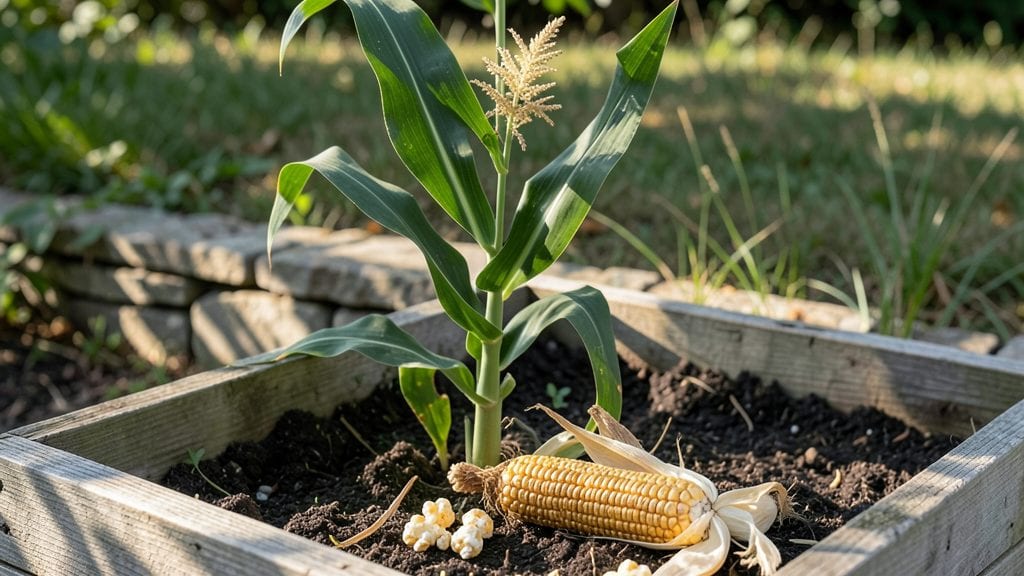
Popcorn plants pictures reveal their stunning foliage, colorful blooms, and distinctive seed pods throughout growth, from tender sprouts to fully formed ears ready for popping. Cultivars like 'Glass Gem' and 'Black Aztec' stand out with their vivid hues and textures, ideal for garden displays or container gardening.
These plants aren't just functional—they're visual showstoppers in any garden. 🌱 The 'Glass Gem' variety, for example, features rainbow-colored kernels that add a whimsical touch, while 'Black Aztec' offers deep purple-black pods that contrast beautifully with green foliage.
Whether you're photographing them for a portfolio or simply admiring their progress, each stage offers unique photographic opportunities. I always recommend capturing close-ups of the seed pods, as their intricate patterns make for stunning macro shots.
For best results, photograph during morning light when colors appear most vibrant. A simple tripod and macro lens can elevate your images, highlighting the textures of both leaves and pods.
Many gardeners also love framing shots of the plants' entire growth cycle—from delicate seedlings to mature ears—creating a dynamic visual story over time.
💡 In This Article
- Identifying Popcorn Plant Varieties by Visual Traits
- Best Photography Tips for Capturing Popcorn Plant Growth
Identifying popcorn plant varieties by visual traits
Popcorn plants reveal their identities through three key visual markers: leaf morphology, flower characteristics, and seed pod structure. Take 'Strawberry' popcorn—its broad, heart-shaped leaves with serrated edges and deep green hue distinguish it from varieties like 'Butterfly', which features narrower, lance-shaped leaves with a waxy texture.
The leaf arrangement also differs: 'Strawberry' grows in a more upright pattern while 'Butterfly' displays a bushier, more horizontal spread. 🌿
The flower tassels provide another clue. 'Glass Gem' produces delicate, lavender-blue flowers that emerge before the seed pods, while 'Black Aztec' showcases deep purple tassels that contrast sharply with its glossy foliage. Flower color isn't just decorative—it correlates with the plant's genetic makeup, influencing both kernel color and popping quality.
For instance, varieties with darker flowers often produce kernels with deeper pigmentation, like the rainbow hues of 'Glass Gem' or the charcoal tones of 'Black Aztec'.
Seed pod structure offers the most definitive identification. 'Strawberry' develops cylindrical ears about 4-6 inches long with tightly packed kernels, while 'Butterfly' produces shorter, more conical pods (3-4 inches) with a distinctive "butterfly" pattern when viewed end-on.
Heirloom varieties like 'Tom Thumb' feature miniature pods (2-3 inches) perfect for small gardens. The pod's surface texture also varies—some have smooth husks while others develop a slightly fuzzy coating that affects moisture retention.
Rare varieties push visual boundaries further. 'Rainbow' popcorn displays pods with kernels in 12+ color variations**, from pink to blue, due to anthocyanin pigment variations. The 'Purple Majesty' cultivar produces deep violet pods that maintain their color even when dried.
These visual traits aren't just aesthetic—they reflect the plant's genetic diversity, which also affects flavor profiles and popping characteristics. For example, blue kernels often have a slightly nuttier taste than white varieties.
Lighting conditions can dramatically alter how these traits appear. Morning sunlight enhances the vibrant colors of 'Glass Gem' flowers, while afternoon light brings out the glossy sheen of 'Black Aztec' pods.
The angle of light also affects how leaf textures appear—side lighting accentuates the waxy coating on 'Butterfly' leaves, while backlighting highlights the translucent quality of 'Glass Gem' kernels. This is why photographers often capture these plants at different times of day to reveal their full visual spectrum. 🌈
For gardeners, understanding these visual cues helps with variety selection. If you're growing for ornamental purposes, 'Glass Gem' and 'Black Aztec' offer the most dramatic color contrasts. For functional popping corn, varieties like 'Minnesota Midget' (with its 2-inch pods) are ideal for small-scale harvests.
The key is observing how each plant's visual traits develop from seedling to maturity—this progression creates a unique visual story that's as rewarding to watch as it is to photograph.