
Fertilization
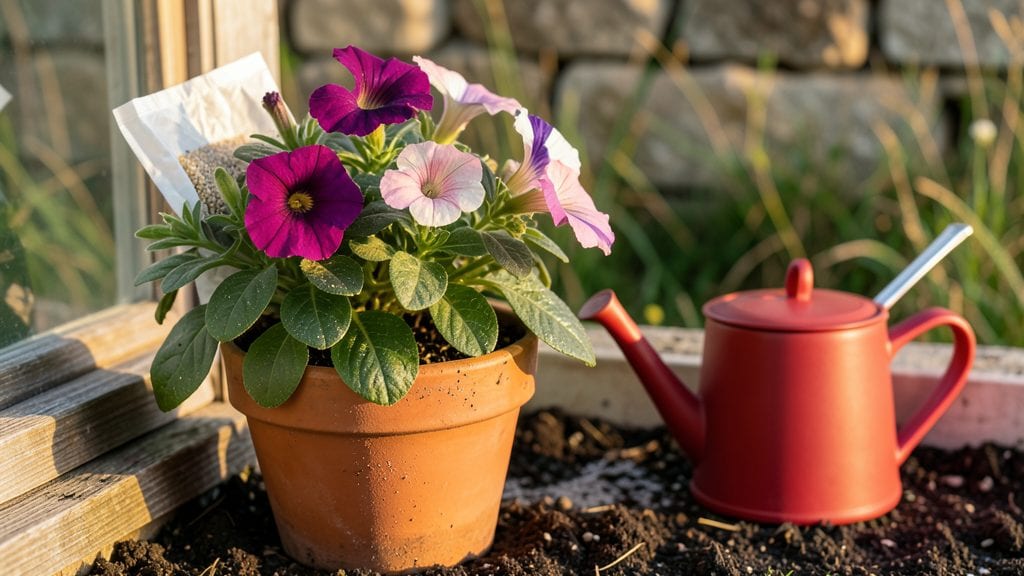
My petunia plant food secret? A balanced blend of nitrogen, phosphorus, and potassium—specifically 20-20-20—applied every two weeks during bloom time. 🌸 I learned the hard way that petunias demand consistent feeding to keep those flowers coming nonstop, and this formula delivers exactly what they crave without burning delicate roots.
The key is timing and type: use a water-soluble fertilizer for quick uptake or a slow-release granular for steady nourishment. Most gardeners overdo nitrogen, which gives lush leaves but few blooms—petunias need phosphorus for flowers.
I switch to half-strength feedings in late summer to extend the season without stressing the plants.
You’ll notice the difference within days: vibrant blooms that last weeks instead of wilting after a few days. The foliage stays glossy green, not yellow or spotted, and the flowers multiply like crazy. Even my black thumb can’t mess this up once I dialed in the schedule.
Works for hanging baskets, window boxes, or in-ground plantings—just adjust watering to prevent runoff. Here’s how to keep your petunias looking like a pro’s display all season long.
📚 In This Guide
- What you need
- Instructions
- Tips and common mistakes
- Wrapping up and next steps
What you need
- ● Balanced fertilizer: 1 tbsp 10-10-10 NPK fertilizer (or equivalent) per gallon of water
- ● OR 1 tsp 20-20-20 fertilizer (for a stronger dose)
- ● Organic boosters (pick 1-2): 1 tbsp fish emulsion (for nitrogen)
- ● 1 tbsp kelp meal (for root growth)
- ● 1 tsp bone meal (for phosphorus, if blooms are sparse)
- ● Watering can or spray bottle (with a fine rose nozzle for even distribution)
- ● Measuring spoons (for precision—petunias hate over-fertilizing!)
- ○ Gloves (optional but highly recommended if using fish emulsion or bone meal)
- ● pH test kit (to check soil acidity—petunias thrive at 6.0-7.0)
- ● Slow-release granules (like Osmocote) for month-long feeding
- ● Epsom salt (1 tbsp per gallon) for magnesium if leaves yellow
- ● Compost or worm castings (for organic soil enrichment)
How to feed petunias for vibrant, long-lasting blooms
Petunias reward consistent feeding with nonstop blooms. Here’s the simple routine I use to keep them thriving all season.
🌿 Step 1: Choose the Right Fertilizer Mix
Petunias thrive on a balanced feed with slightly more phosphorus for blooms. I use a 10-10-10 or 20-20-20 all-purpose fertilizer—the numbers mean equal parts nitrogen, phosphorus, and potassium. Avoid high-nitrogen formulas; they’ll produce lush leaves but few flowers. For organic options, try a fish emulsion (5-1-1) or compost tea diluted to half strength.
If you’re using slow-release granules, sprinkle them evenly around the base of the plant and water deeply to activate. For liquid feeds, always dilute to half-strength unless the label says otherwise—petunias are sensitive to salt buildup from concentrated fertilizers.
💧 Step 2: Feed During Active Growth
Start fertilizing 2 weeks after transplanting when new growth appears. Feed every 2 weeks during the growing season (spring through fall) for consistent blooms. I like to fertilize on a weekly schedule using a water-soluble bloom booster (like 5-10-5)—just a teaspoon per gallon of water. This keeps flowers vibrant without overwhelming the plant.
Always water the soil before applying fertilizer. Dry soil can burn roots, and petunias hate soggy feet. You’ll know it’s working when you see new buds forming within 7-10 days of feeding.
✂️ Step 3: Deadhead and Feed for Continuous Blooms
Deadheading spent blooms 2-3 times a week triggers more flowers. Pinch off faded blossoms with your fingers or snip just above the next set of leaves. After deadheading, give the plant a light feeding with a half-strength bloom booster to encourage new growth.
If flowers slow down, it’s time to switch to a phosphorus-heavy feed (like 7-9-5) for 4-6 weeks. You’ll notice more buds forming and fewer green leaves—this means the plant is focusing energy on blooms instead of foliage.
☀️ Step 4: Adjust Feeding in Heat or Drought
When temperatures hit above 85°F, petunias go dormant and need less fertilizer. Cut back to every 4 weeks and water deeply in the morning to prevent stress. If the soil feels dry 1 inch below the surface, water until it drains through the bottom of the pot.
In cooler weather (below 60°F), reduce feeding to every 3 weeks—petunias slow down and absorb nutrients more slowly. Watch for yellowing leaves (a sign of overfeeding) or drooping blooms (a sign of underwatering). Adjust accordingly.
🪴 Step 5: Transition to Dormancy Prep
As fall approaches and nights dip below 50°F, taper off fertilizing 6 weeks before the first frost. This helps petunias store energy for next year. Water lightly but consistently—never let the soil dry out completely—until leaves yellow naturally.
If you’re overwintering petunias, move them to a cool, bright spot (50-60°F) and feed once in early winter with a low-nitrogen fertilizer (like 5-10-10) to sustain them until spring.
Tips & tricks for petunia plant food success
Here’s what I’ve learned over years of keeping petunias blooming like crazy—these little tricks make all the difference.
Fertilizer Mix Insight: When choosing between 10-10-10 and 20-20-20, I always opt for the 20-20-20 in Step 1 because it provides more nutrients per application without overwhelming the plant. For organic options, I’ve found that fish emulsion (5-1-1) works wonders—just remember to dilute it to half-strength to avoid salt buildup that can stress petunias.
Timing Secret: In Step 2, the 2-week feeding schedule is perfect for consistent blooms, but I’ve discovered that switching to a weekly schedule with a bloom booster (like 5-10-5) gives me even more vibrant flowers. Just use a teaspoon per gallon of water—this precise ratio prevents overfeeding while keeping petunias thriving.
Deadheading Technique: The 2-3 times a week deadheading in Step 3 is crucial, but I’ve learned to do it right after watering. Wet fingers make it easier to pinch off faded blooms cleanly, and the plant responds faster to the light feeding that follows. This small adjustment has cut my deadheading time in half while boosting flower production.
Seasonal Adjustments: When temperatures hit above 85°F in Step 4, I cut back to every 4 weeks and always water deeply in the morning. This prevents stress from heat and ensures the roots stay hydrated. In cooler weather below 60°F, I reduce feeding to every 3 weeks—petunias slow down, and overfeeding can cause yellowing leaves or drooping blooms.
Pro Tips for Petunia Plant Food
- Here’s what I’ve learned over years of keeping petunias blooming like crazy—these little tricks make all the difference.
- Fertilizer Mix Insight: When choosing between 10-10-10 and 20-20-20, I always opt for the 20-20-20 in Step 1 because it provides more nutrients per application without overwhelming the plant.
- Timing Secret: In Step 2, the 2-week feeding schedule is perfect for consistent blooms, but I’ve discovered that switching to a weekly schedule with a bloom booster (like 5-10-5) gives me even more vibrant flowers.
Frequently asked questions
Got questions about keeping your petunias blooming like crazy? We’ve got answers!
Here are the most common queries—plus quick fixes to keep your petunias thriving all season long.
How often should I feed petunias?
Feed petunias every 2–3 weeks during active growth (spring to fall). Use a balanced liquid fertilizer (like 10-10-10) or a bloom-boosting formula. Pro tip: Reduce feeding in winter or if plants look stressed—overdoing it can burn roots!
Can I use coffee grounds or eggshells as petunia food?
Yes! Coffee grounds (used, composted) add nitrogen, while crushed eggshells provide calcium. But: Mix them into soil sparingly—too much can alter pH or attract pests. For quick results, stick to a balanced fertilizer first, then supplement with organic matter.
Why are my petunia leaves yellowing after fertilizing?
Yellowing leaves often mean over-fertilizing or root burn. Flush the soil with water to dilute excess salts, then hold off on feeding for 2–3 weeks. Fix it fast: Use a diluted fertilizer (half-strength) next time and water deeply after applying.
What’s the best petunia food for containers vs. garden beds?
| Container Petunias | Garden Petunias |
|---|---|
| Water-soluble fertilizers (applied weekly) or slow-release granules mixed into soil. | Granular or spike fertilizers (applied every 4–6 weeks) for steady nutrients. |
| Why? Containers drain faster, so frequent feeding prevents nutrient loss. | Why? Garden soil retains moisture/nutrients longer, so less frequent feeding works. |
Can I fertilize petunias in direct sunlight?
Yes, but water first to avoid burning roots. Apply fertilizer in the early morning so leaves dry quickly. Avoid late-afternoon feeding—it can stress plants in hot climates. Bonus tip: Mulch around plants to retain moisture and reduce fertilizer loss.
Wrapping up and next steps
Choosing the right petunia plant food is the secret to vibrant blooms that last all season!
Whether you opt for organic compost, balanced synthetic fertilizers, or homemade tea blends, consistency and proper timing are key. Feed your petunias with care, and they’ll reward you with nonstop color that brightens every corner of your garden.
Ready to see your petunias thrive? Start by picking your preferred fertilizer—then grab your gardening gloves and get growing! 🌸 Your future blooms will thank you.