
Companion Plants
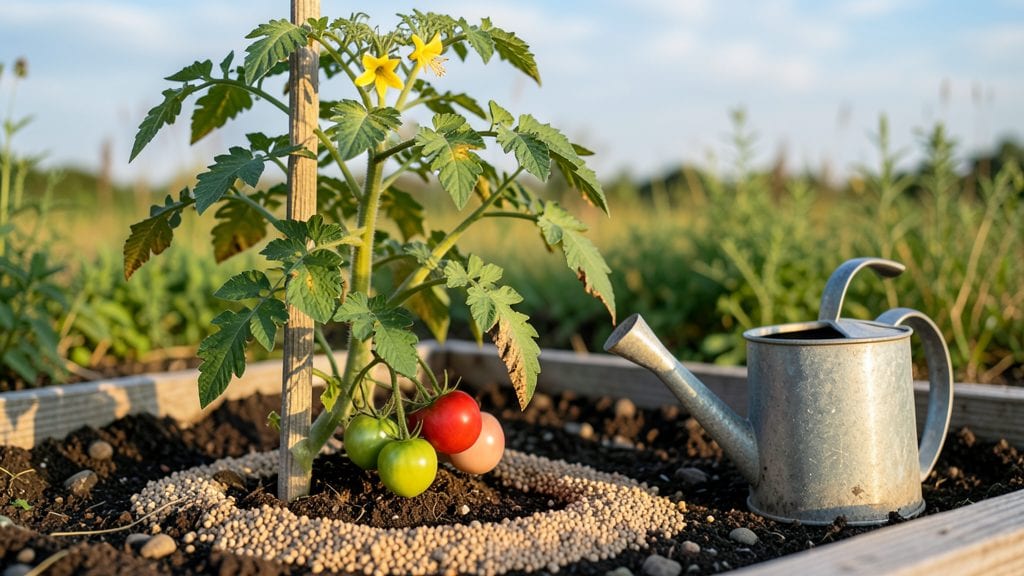
Overfeeding tomato plants turns your garden into a chemical warzone where leaves crisp like toast and roots retreat in fear. 🌱 I’ve seen it happen after just one overzealous dose of fertilizer—yellowing between veins, stunted stems, and blossoms dropping like they’re playing dead.
The problem isn’t just wasted money; it’s a harvest in jeopardy.
The culprit? Too much nitrogen or salt buildup, which burns roots and stops plants from absorbing water. My tomatoes once looked like they’d been dipped in battery acid after I doubled the fertilizer rate.
The fix starts with flushing the soil—water deeply for 10–15 minutes daily until runoff clears—and switching to a balanced, organic fertilizer like 5-5-5. Patience is key; recovery takes 2–3 weeks, but the plants bounce back stronger.
You’ll know it’s working when new leaves emerge a deep, vibrant green and growth resumes at a steady pace. Prevent future disasters by testing soil before planting and feeding only when you see new leaves forming—not on a schedule.
A little goes a long way with tomatoes; they’re picky eaters that reward precision over excess.
This works for both in-ground and container-grown tomatoes, though containers need more frequent flushing. The same rules apply whether you’re growing heirlooms or cherry varieties—overfeeding is a universal blunder. Let’s turn those sad plants into thriving vines again.
Root Causes Of Overfeeding
Overfeeding tomato plants isn’t just about piling on too much fertilizer—it’s a cascade of imbalances that disrupt their natural growth cycles. Understanding the why behind it helps you avoid costly mistakes and keeps your plants thriving. Here’s a breakdown of the most common culprits, backed by science and actionable insights.
Tomatoes thrive in soil with a balanced nutrient ratio, but overzealous fertilization—especially with nitrogen-heavy mixes—throws that balance off. Here’s how it happens:
- Excess Nitrogen (N): While nitrogen fuels leafy growth, too much suppresses flowering and fruiting. Plants prioritize lush foliage over fruit production, leaving you with shade instead of harvests.
- Deficient Phosphorus (P) & Potassium (K): Overfeeding nitrogen can starve plants of P and K, which are critical for root development, energy transfer, and disease resistance. Without these, tomatoes become weak and prone to blossom-end rot.
- Micronutrient Lockout: High salt levels from synthetic fertilizers (like urea or ammonium nitrate) can block uptake of essential micronutrients like calcium, magnesium, and iron. This leads to deficiencies that manifest as yellowing leaves or stunted growth.
💡 Pro Tip: Test your soil before feeding! A simple DIY soil test kit (or lab analysis) reveals your soil’s pH and nutrient levels. Tomatoes prefer a pH of 6.0–6.8—outside this range, nutrients become unavailable, even if they’re present.
Not all fertilizers are created equal, and misapplying them is a fast track to overfeeding. Here’s what goes wrong:
| Mistake | Why It Causes Overfeeding |
|---|---|
| Using high-nitrogen fertilizers (e.g., lawn fertilizers, blood meal) | Designed for grass, these overload tomatoes with N while ignoring their need for P and K. |
| Overapplying synthetic granules (e.g., 10-10-10) | Granular fertilizers release nutrients slowly, but if you overestimate your plant’s needs, excess salts build up in the soil. |
| Frequent liquid fertilizer applications | Liquids like fish emulsion or tomato-specific feeds provide immediate nutrients. Using them weekly (instead of every 2–3 weeks) floods the roots. |
| Ignoring dilution instructions | Many liquid fertilizers require half-strength mixes for young plants or hot weather. Skipping this step delivers a toxic dose. |
🔥 Actionable Fix: Switch to a balanced fertilizer (like 5-5-5 or 10-10-10) and follow the label’s feeding schedule. For organic growers, compost tea or worm castings provide nutrients gradually without risk of overloading.
Water acts as the delivery system for nutrients—but poor timing or technique can turn fertilizer into a liability. Here’s how:
- Fertilizing Before Rain: Rain washes away nutrients before plants can absorb them, leading to nutrient runoff and wasted fertilizer. It also dilutes soil salts, creating a toxic buildup when dry periods return.
- Overhead Watering After Fertilizing: Watering leaves (especially with sprinklers) can burn foliage when fertilizer salts concentrate on the surface. This stresses plants and reduces photosynthesis.
- Inconsistent Watering: Tomatoes need 1–2 inches of water per week. If you fertilize during a drought but then drench the soil, roots can’t absorb nutrients efficiently, leading to fertilizer burn.
🌡️ Science Note: Fertilizer salts lower soil osmotic pressure, making it harder for roots to pull up water. In dry conditions, this causes wilting even when soil appears moist.
✨ Best Practice:
- Water deeply (1–2 inches) before fertilizing to help dilute salts.
- Use drip irrigation or soaker hoses to target roots, not leaves.
- Avoid fertilizing within 48 hours of rain.
Stressed tomatoes can’t process nutrients efficiently, even if they’re in the right amounts. Common stressors that amplify overfeeding risks:
- Root Bound Containers: Tomatoes in small pots (under 5 gallons) have limited soil volume. Excess fertilizer has nowhere to go but to concentrate around roots, causing burn.
- Competition for Nutrients: Overcrowded plants compete for resources, leading to uneven growth. The strongest stems hog nutrients, while others starve or become fertilizer victims.
- Temperature Fluctuations: Extreme heat or cold slows nutrient uptake. If you fertilize during a heatwave, roots can’t absorb nutrients fast enough, leading to toxic buildup.
- Pests or Diseases: Aphids, whiteflies, or fungal infections damage plant tissues, reducing the plant’s ability to metabolize nutrients. Overfeeding in these cases worsens stress.
🎯 Prevention Tip: Give tomatoes space (18–24 inches apart) and room to grow (5+ gallon containers). If repotting, leach the soil first by watering heavily to flush out excess salts.
Fixing Overfed Tomato Plants
Overfeeding tomato plants can feel like a gardener’s worst nightmare—your greens are thriving, but your fruit is lagging, or worse, your plants are struggling to survive. The good news? With the right steps, you can reverse the damage and get your tomatoes back on track.
Below, we’ll break down practical fixes for each cause of overfeeding, plus prevention tips to keep your plants happy and productive.
Signs: Crusty soil surface, yellowing leaves with brown edges, stunted growth, or white salt deposits.
How to Fix It:
- 💦 Flush the Soil
- Water deeply for 5–7 days straight to leach out excess salts. Use rainwater or distilled water if possible—tap water can worsen salt buildup.
- Aim for 1–2 inches of water per day (check soil moisture 2 inches deep).
- 🌱 Loosen the Soil
- Gently rake or fork the top 4–6 inches of soil to improve drainage.
- Mix in 2–3 inches of compost or aged manure to restore organic matter.
- ⚖️ Balance the pH
- Test soil pH (ideal for tomatoes: 6.0–6.8). If too high (alkaline), add sulfur or peat moss; if too low (acidic), use lime.
- Avoid quick fixes like vinegar—it can burn roots.
💡 Prevention Tip:
- Space feedings 2–3 weeks apart and reduce fertilizer strength by half once fruit sets.
- Use slow-release fertilizers (like organic pellets) instead of liquid feeds.
Signs: Brown, crispy leaf edges, wilting, or blackened stems near the soil.
How to Fix It:
- 🚰 Stop Fertilizing Immediately
- Cut off all nitrogen-heavy feeds (like blood meal or synthetic 10-10-10). Switch to low-nitrogen, high-potassium options (like banana peel tea or wood ash) to help recovery.
- 🌿 Prune Damaged Foliage
- Snip off only the most severely burned leaves (never more than 1/3 of the plant). This reduces stress and directs energy to healthy growth.
- 💧 Hydrate & Detox
- Water with 1 tablespoon of Epsom salt per gallon (magnesium sulfate helps repair cell damage).
- Apply a mulch of straw or grass clippings to protect roots from further shock.
💡 Prevention Tip:
- Always follow label instructions—more isn’t better! For tomatoes, half-strength feedings are often sufficient.
- Water before fertilizing to dilute salts and reduce burn risk.
Signs: Roots turn black or mushy, wilting despite moist soil, or a sour smell near the base.
How to Fix It:
- 🔪 Trim Damaged Roots (If Repotting)
- If roots are severely affected, gently remove the plant, rinse roots in water, and trim any black, slimy sections with sterile scissors.
- Repot in fresh, well-draining soil (mix garden soil with perlite or vermiculite).
- 🍄 Boost Beneficial Microbes
- Sprinkle compost tea or mycorrhizal fungi around the roots to restore beneficial bacteria.
- Avoid chemical fertilizers for 4–6 weeks to let roots recover.
- 🌡️ Adjust Watering
- Water only when the top inch of soil is dry—overwatering worsens root rot.
- Use drip irrigation (not overhead watering) to keep foliage dry.
💡 Prevention Tip:
- Test soil every 2–3 months—overfeeding is often a sign of poor soil health, not just excess nutrients.
- Rotate crops to prevent nutrient depletion in the same spot.
Signs: Lush green leaves but few or no tomatoes, or blossoms that drop without setting fruit.
How to Fix It:
- 📊 Shift to a Potassium-Rich Diet
- Switch to low-nitrogen fertilizers like:
- Banana peel tea (steep peels in water for 24 hours)
- Wood ash (1 tablespoon per plant, sprinkled around the base)
- Fish emulsion (5-1-1 ratio) diluted to half-strength
- Switch to low-nitrogen fertilizers like:
- 🌱 Encourage Flowering
- Prune suckers (side shoots) to redirect energy to fruit production.
- Hand-pollinate flowers by gently shaking plants or using a small brush.
- 🌞 Optimize Light & Heat
- Ensure 6–8 hours of sunlight daily—weak light + excess nitrogen = leafy but barren plants.
- If nights are cool, use row covers to keep temps above 55°F (13°C).
💡 Prevention Tip:
- Stop high-nitrogen feeds once flowers appear. Tomatoes need more phosphorus (P) and potassium (K) at this stage.
- Side-dress with compost instead of synthetic fertilizers for a balanced boost.
Once your tomato plants are on the mend, keep these habits to prevent future overfeeding: - 📅 Feed on a schedule: Every 3–4 weeks max, not weekly. - 🌿 Use organic matter: Compost, worm castings, or well-rotted manure outperform synthetic fertilizers for tomatoes. - 🌱 Monitor soil health: Add mulch (straw, grass clippings) to retain moisture and regulate nutrients. - 🍅 Watch the plant’s signals: Yellow leaves? Less nitrogen.
No fruit? More potassium. Adjust accordingly.
Remember: Tomatoes are resilient! With these fixes, your plants should bounce back stronger—and you’ll be rewarded with a bountiful, healthy harvest. 🍅🌱
Frequently asked questions
Why do my tomato plants look like they're burning after feeding?
Brown, crispy leaf edges or yellowing between veins mean excess fertilizer salts are damaging your plants. This usually happens when you use too much synthetic fertilizer or apply it too frequently. The roots can't absorb all the nutrients, causing salt buildup that burns foliage. Flush the soil with water for 5-7 days to dilute the salts.
Can I still save my tomato plants if I've overfed them?
Stop fertilizing immediately and focus on recovery. Water deeply for several days to flush out excess nutrients, then switch to a balanced organic fertilizer like compost tea. Prune any severely damaged leaves and monitor for new growth. With proper care, most plants bounce back within 2-3 weeks.
What's the best fertilizer ratio for tomatoes?
Tomatoes thrive with a balanced fertilizer like 5-5-5 or 10-10-10. The key is to avoid nitrogen-heavy mixes (like lawn fertilizers) that promote leafy growth at the expense of fruit. For flowering and fruiting stages, use a low-nitrogen, high-potassium fertilizer like banana peel tea or wood ash. Always follow label instructions!
How often should I fertilize tomato plants?
Feed tomato plants every 3-4 weeks during the growing season, not weekly. Once flowers appear, reduce frequency to every 4-6 weeks. Young plants need less fertilizer than mature ones. Use organic matter like compost instead of synthetic fertilizers for more gradual nutrient release.
What are the signs of overfeeding in container-grown tomatoes?
Look for white crusty deposits on soil surface, yellowing leaves with brown edges, and stunted growth. Container plants are especially vulnerable because excess salts have nowhere to drain. Flush the soil thoroughly and consider repotting with fresh, well-draining mix.