
Pruning
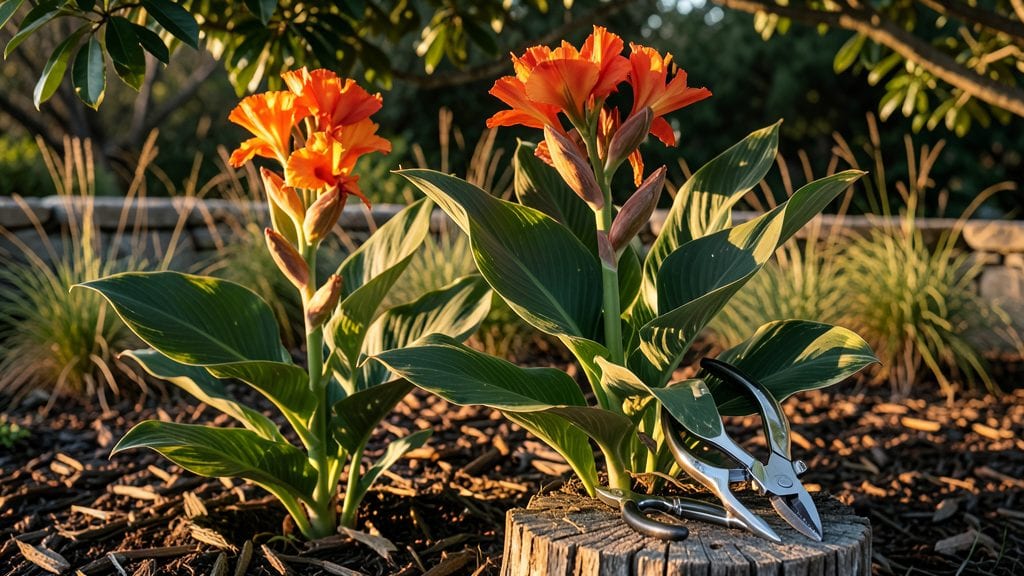
My canna plants look shockingly lush every summer because I prune them three times a year—spring cleanup, midsummer refresh, and fall prep.
The key isn’t just cutting back; it’s timing those snips to match the plant’s natural rhythm, and I’ll show you exactly how to do it without sacrificing next season’s blooms.
You’ll need sharp pruners, a clean cutting surface, and about 20 minutes per plant. The right tools prevent ragged cuts that invite disease, and I’ve learned the hard way that skipping this step leads to weak regrowth.
Start with the dead or yellowed leaves in early spring, then move to shaping in summer, and finally, prepping for dormancy in fall.
After each trim, your cannas will bounce back with bold new shoots within days. The foliage stays dense, the stems stay strong, and you avoid that sad, leggy look that plagues neglected cannas. Plus, dividing rhizomes during pruning gives you free plants for neighbors who’ll be jealous of your garden.
This method works in zones 7-11, whether you’re growing cannas in pots or in-ground beds. The same principles apply—just adjust timing for your local frost dates. Ready to keep your cannas thriving all season long?
📚 In This Guide
- What you need
- Instructions
- Tips and common mistakes
- Wrapping up and next steps
What you need
- ● Pruning shears – Bypass pruners (sharp, 5–7" blades) for clean cuts on stems and leaves. 1 pair (sterilize with rubbing alcohol between cuts!).
- ● Hand pruners – Bypass or anvil type (for smaller stems). 1 pair (avoid dull blades—they crush stems!).
- ● Garden gloves – Heavy-duty, cut-resistant (canna leaves can be spiky!). 1 pair (nitrile or leather preferred).
- ● Disinfectant – 70% isopropyl alcohol or hydrogen peroxide (3% solution). Small spray bottle (prevents disease spread!).
- ○ Garden twine or zip ties – For supporting tall cannas (optional but helpful for windy areas). 1 roll.
- ● Compost bin or bag – For removing pruned debris. Medium-sized (or a dedicated "green waste" bin).
- ● Sharp knife or saw – For thick, woody stems (if your shears struggle). 1 (sterilize first!).
- ● Plant food or fertilizer – Balanced 10-10-10 or compost tea (feed after pruning to boost regrowth). Small container.
- ● Mulch – Straw or shredded leaves (protects roots post-pruning). 1–2 bags.
- ○ Pruning sealant – Optional for large cuts (prevents sap loss on thick stems). Small tube.
Step-by-Step guide for pruning canna plants seasonally
Pruning cannas isn’t just about keeping them tidy—it’s the secret to bigger blooms and stronger stems.
Early Spring Trim to Stimulate New Growth
Start in late February or early March when new shoots begin pushing through the soil. Cut back any dead or damaged foliage from last season using clean, sharp pruners. You’ll want to remove any stems that are brown, mushy, or completely collapsed—these won’t regenerate. Stop cutting where you see fresh green growth emerging from the base of the plant.
This is the moment that matters: pruning now removes last year’s energy drainers and redirects nutrients to new shoots. If you wait too long, you’ll miss the window for vigorous spring regrowth. After trimming, add a 2-inch layer of mulch around the base to protect emerging shoots from late frosts and retain moisture.
Mid-Summer Pruning for Airflow and Blooms
Around mid-July, when your cannas are about halfway through their bloom cycle, it’s time for the second trim. Focus on removing spent flower stalks—these are the dried-up stems with no buds left. Cut them back to the nearest leaf node or side branch. You’ll also want to thin out any crowded stems that are rubbing against each other, as this prevents disease and improves airflow.
Here’s the thing—cannas bloom best when they’re not overburdened with old flowers. Each time you remove a spent stalk, you’re signaling the plant to redirect energy toward new, healthier blooms. After pruning, give the plant a light application of balanced fertilizer (10-10-10) to support the fresh growth you’ve just encouraged.
Late Summer to Early Fall Hardening for Winter
In late August or early September, when daytime temperatures start dropping below 80°F, perform your final trim of the season. Cut back one-third of the tallest stems to about 18 inches from the ground. This helps the plant redirect energy into thickening its rhizomes (the underground stems) for winter survival. Remove any yellowing or diseased leaves—these can harbor pests or diseases that might overwinter.
This is where it gets strategic: pruning now prevents the plant from putting all its energy into late-season growth that might get damaged by frost. After trimming, reduce watering slightly but keep the soil moist—this helps the plant prepare for dormancy without stress. If you’re in a colder climate, consider wrapping the base of the plant with burlap for extra frost protection.
Post-Bloom Cleanup for Next Season
Once frost kills the foliage in fall, cut back all remaining stems to about 2 inches above the ground. This makes it easier to spot new shoots in spring and reduces the risk of disease carrying over. Remove and compost all plant debris—never leave old canna leaves in the garden, as they can harbor fungal spores.
I know it seems counterintuitive to cut back so aggressively, but this is how you reset the plant for next year. The rhizomes will stay dormant underground, storing energy for faster, stronger regrowth in spring. After cleanup, add a 3-inch layer of mulch to insulate the rhizomes and keep them protected through winter.
Tips & tricks for pruning canna plants seasonally
Pruning cannas at the right time and in the right way makes all the difference between a struggling plant and one that thrives year after year.
The Timing Factor: Pay close attention to the seasonal cues in Step 1 and Step 3. In late February or early March, you're looking for fresh green growth emerging from the base—this is your signal to prune. Similarly, in late August or early September, watch for daytime temperatures dropping below 80°F. These temperature shifts are nature's way of telling you it's time to prepare the plant for dormancy. Missing these windows can mean weaker regrowth or less robust blooms the following season.
Tool Selection Matters: Always use clean, sharp pruners for every cut. Dull pruners crush stems instead of making clean cuts, which can damage the plant and invite disease. I like to sterilize my pruners with rubbing alcohol between plants, especially when dealing with diseased foliage in Step 4. This simple habit prevents cross-contamination that could spread problems throughout your garden.
Strategic Pruning for Blooms: When you reach Step 2 in mid-July, focus on removing only the truly spent flower stalks. I've seen gardeners get overzealous and cut back too much healthy growth, which can actually reduce the number of blooms. Aim to remove just what's necessary—those dried-up stems with no buds—and leave the rest to continue photosynthesizing and supporting new growth.
Mulch Depth Wisdom: The mulch recommendations in Steps 1 and 4 are more important than you might think. A 2-inch layer in spring protects emerging shoots from late frosts, while the 3-inch layer in fall provides crucial insulation for the rhizomes. I've found that using straw or shredded leaves works better than wood chips, as they break down more quickly and provide better insulation. Just be sure to keep mulch a few inches away from the stems to prevent rot.
Pro Tips for Canna Plant Pruning
- Pruning cannas at the right time and in the right way makes all the difference between a struggling plant and one that thrives year after year.
- The Timing Factor: Pay close attention to the seasonal cues in Step 1 and Step 3.
- Tool Selection Matters: Always use clean, sharp pruners for every cut.
Frequently asked questions
Got questions about keeping your canna plants thriving through strategic pruning? Here’s what you need to know—from timing to troubleshooting—so you can avoid common pitfalls and maximize growth year-round.
When is the best time to prune canna plants?
Prune canna plants three times a year: early spring (to encourage new growth), late summer (to shape and control size), and fall (to prep for dormancy). Avoid pruning during flowering unless deadheading—this ensures energy stays focused on foliage and root strength.
How much should I trim back my canna leaves?
For seasonal pruning, cut back one-third of the foliage to maintain shape and airflow. Use clean, sharp shears to avoid tearing. If a leaf is brown or mushy, remove it entirely to prevent disease. Never trim more than 30% at once—this can stress the plant.
What should I do with cuttings after pruning?
Save healthy cuttings (3–6 inches long with at least one node) to propagate! Dip in rooting hormone (optional) and plant in moist soil or water. Canna cuttings root quickly—place them in bright, indirect light until new growth appears. Discard diseased or weak stems.
Why are my canna leaves turning yellow after pruning?
Yellowing leaves post-pruning are usually normal if only older, lower leaves are affected. However, if new growth yellows, check for overwatering, poor drainage, or nutrient deficiencies (like nitrogen). Adjust care and monitor for 2–3 weeks—if issues persist, test soil pH or fertilize lightly.
Can I prune canna plants during flowering season?
Yes, but minimize heavy pruning while flowers are open. Focus on removing dead or damaged blooms (deadheading) to redirect energy to new flowers. Avoid trimming more than 10% of foliage—this can reduce flowering potential. Save major pruning for off-season.
Wrapping up and next steps
Mastering canna plant pruning is your golden ticket to lush, year-round blooms and robust growth! By trimming in spring, summer, and fall, you’ll encourage healthier foliage, more vibrant flowers, and even bigger tubers for next season. 🌿✨
Ready to give your cannas the TLC they deserve? Grab your pruners, follow the seasonal steps, and watch your garden thrive. Next up: share your pruning wins with fellow plant lovers—or treat yourself to a well-earned break in the shade with your newly refreshed cannas! 🌞💚