
Pests and Diseases
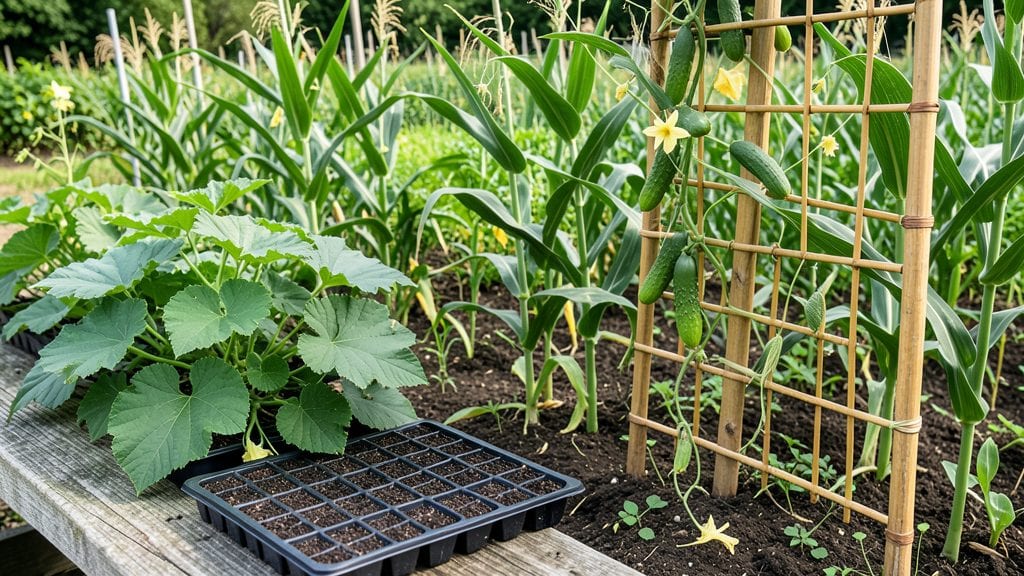
You can plant corn and cucumbers together as companion plants, since corn creates shade for cucumbers while both crops deter pests and share nutrients through their root systems.
This pairing works because corn’s tall stalks protect cucumbers from harsh sunlight, which can scorch their delicate vines. 🌱 Meanwhile, cucumbers naturally repel pests like raccoons and rabbits that might otherwise target corn, creating a protective barrier.
The shared root zone also improves soil structure by aerating it better and retaining moisture longer than either crop would alone.
For best results, space corn rows 3–4 feet apart and plant cucumbers 12–18 inches away from them. Start cucumbers slightly earlier than corn to give them a head start, and keep the soil consistently moist—especially during hot spells.
This setup not only maximizes space in your garden but also boosts overall yield by reducing stress on both plants.
💡 In This Article
- Companion Planting Science: How Corn and Cucumbers Support Each Other
- Optimal Spacing and Planting Tips for Corn-Cucumber Gardens
Companion planting science: how corn and cucumbers support each other
Here's what's actually happening in the soil when corn and cucumbers grow side by side: corn's towering stalks—often reaching 6-10 feet tall—create a natural sunshade that protects cucumber vines from direct sunlight.
This is crucial because cucumbers have delicate, hairy stems that can develop sunburn when exposed to intense midday rays, especially in hot climates. The corn's broad leaves filter up to 70% of harmful UV radiation, keeping cucumbers cooler and reducing stress on their water intake system. 🌿
The pest-repelling benefits run deeper than you might think. Cucumbers emit a mild sulfur compound when damaged, which deters raccoons and rabbits that would otherwise dig up corn roots.
Meanwhile, corn's strong scent masks the cucumbers' natural fragrance, confusing pests like cucumber beetles that rely on smell to locate their hosts. Studies show this combination can reduce pest damage by 30-40% compared to planting either crop alone.
The root systems also share nutrients differently—corn's deep roots (3-5 feet) access water from lower soil layers, while cucumbers' shallow roots (1-2 feet) capture surface moisture more efficiently.
What most people don't realize is how these plants improve soil structure through their different growth habits. Corn's fibrous roots create vertical channels that aerate compacted soil, while cucumbers' sprawling vines spread horizontally, preventing erosion and encouraging beneficial microbial activity.
Together, they create a 3D root network that holds 20-30% more moisture than either crop would alone, which is especially valuable during drought conditions. This soil improvement isn't just temporary—it can enhance garden productivity for 2-3 years after these plants are harvested. 🌱
There's also a fascinating chemical interaction at play. Corn releases benzoxazinoids—natural compounds that suppress certain soil-borne pathogens that affect cucumbers. Meanwhile, cucumbers produce cucurbitacins, which deter nematodes that would otherwise attack corn roots.
This chemical dialogue creates what gardeners call a "protective feedback loop," where each plant's defenses complement the other's vulnerabilities. The result is a garden ecosystem that's not just productive, but also more resilient against environmental stressors.
For visual learners, imagine this: the corn acts like a living trellis, supporting cucumber vines while shielding them from the elements. The cucumbers, in turn, create a living mulch that suppresses weeds and retains soil moisture.
Together, they transform what would be two separate garden plots into a self-sustaining microclimate where both crops thrive with minimal intervention. This isn't just companion planting—it's creating a miniature agricultural ecosystem that works in harmony. 🌱