
Companion Plants
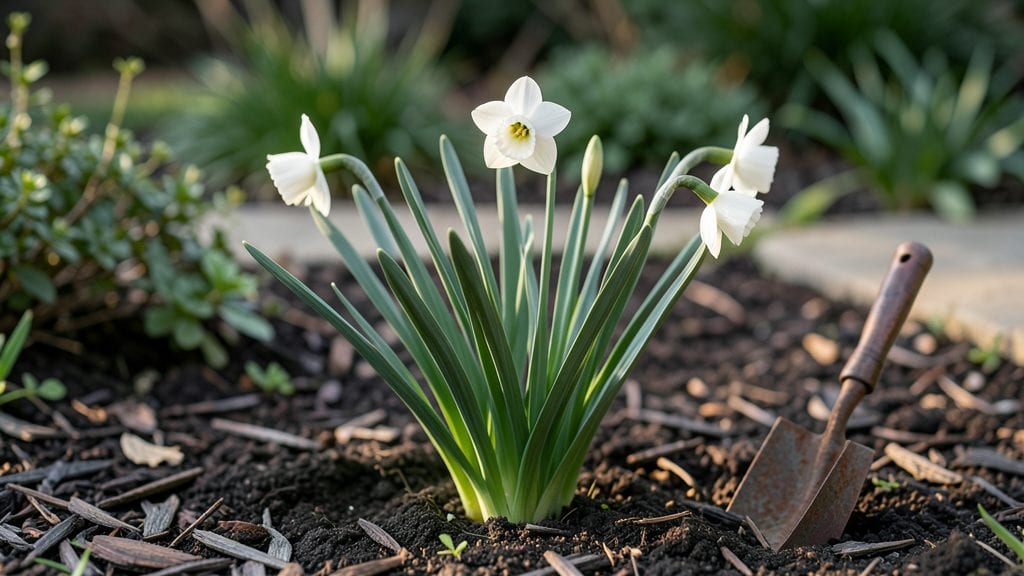
Those deep purple blind daffodils (Narcissus 'Ice Follies') steal the show every spring with their dramatic blooms and no-flower-stalk stems. 🌱 I planted my first batch last fall and couldn’t believe how they outshone my traditional yellow varieties—no green stems to hide their bold color.
The key to growing them well starts with the right spot and soil prep, not just tossing them in the ground like regular daffodils.
Blind daffodils thrive in full sun to partial shade and well-draining soil—just like their traditional cousins, but they reward you with richer color when given consistent moisture. Most gardeners overlook their need for fertile soil, which is why their blooms sometimes look pale.
A handful of compost at planting time makes all the difference, and they’ll come back year after year with minimal fuss.
What sets them apart is their unique growth habit: those fat, flower-filled stems emerge directly from the ground, creating a striking display. They multiply quickly, so divide clumps every 3-4 years to keep them vigorous.
By late spring, your garden will be dotted with deep purple pops that turn heads—no green stems to distract from their showstopping blooms.
Perfect for borders, containers, or naturalizing under trees where traditional daffodils might struggle. Here’s how to get them thriving in your garden without the common pitfalls—no green stems, just bold color.
The Hidden Triggers Behind Blind Blooms
If your blind daffodil plants (like the striking Narcissus 'Ice Follies' or 'Thalia') are refusing to produce flowers despite lush foliage, don’t panic—there’s usually a clear reason.
Understanding these causes helps you take corrective action before next season. Let’s break down the science behind why your daffodils might be staying "blind."
Daffodils are light-hungry—they need 6–8 hours of direct sunlight daily to trigger flowering. When they don’t get enough light, their energy goes into leaf growth instead of bloom production.
- Why it happens: Light is critical for photosynthesis, which fuels flower bud formation. In shady spots, plants prioritize survival over reproduction.
- Actionable fix:
- Move plants to a sunnier location (even partial sun helps).
- Thin nearby trees or structures blocking light.
- Consider reflective surfaces (like mirrors or white mulch) to bounce extra light onto shaded areas.
- Pro tip: 💡 If relocating isn’t possible, opt for low-light-tolerant daffodil varieties like 'Tête-à-Tête' (compact and adaptable).
Daffodils thrive in well-draining, slightly acidic to neutral soil (pH 6.0–7.0). Nutrient deficiencies—especially phosphorus or potassium—can starve flower buds before they open.
| Nutrient Deficiency | Symptoms | Solution |
|---|---|---|
| Phosphorus (P) | Dark green leaves, no flower stalks, stunted growth | Apply bone meal or compost in early fall. |
| Potassium (K) | Weak stems, yellowing leaf edges, poor bloom quality | Use a balanced fertilizer (10-10-10) or wood ash (sparingly). |
| Nitrogen (N) Excess | Lush foliage but no flowers (too much leafy growth) | Reduce nitrogen-rich fertilizers; switch to low-N, high-P/K blends. |
pH matters too: Soil that’s too acidic (pH <5.5) or alkaline (pH >7.5) locks out nutrients. Test your soil and amend with:
- Lime (to raise pH)
- Sulfur or peat moss (to lower pH)
Daffodils need 3–5 years to mature and reliably bloom. Young bulbs focus on growing larger before producing flowers. Additionally, overcrowded bulbs compete for resources, leading to "blind" plants.
- Why it happens:
- Bulbs younger than 2–3 inches in diameter often skip flowering.
- Clusters of bulbs too close together (less than 4–6 inches apart) exhaust energy on leaves.
- Actionable fix:
- Be patient—wait until bulbs mature (check size in fall).
- Dig up and separate bulbs every 3–5 years, discarding small or damaged ones.
- Replant with proper spacing (4–6 inches apart) for better airflow and nutrient access.
- Pro tip: 🌡️ If your daffodils are newly planted, they may not bloom until next spring—this is normal!
Daffodils follow a cold-then-warm cycle to bloom. If they don’t get enough chilling hours (30–45°F for 12–16 weeks) in winter, they’ll produce leaves but skip flowers.
- Why it happens:
- Mild winters (e.g., <60°F) prevent proper dormancy.
- Early planting (after September 15) may expose bulbs to warm soil, delaying chilling.
- Greenhouse-grown bulbs lack natural cold exposure.
- Actionable fix:
- Plant bulbs 6–8 weeks before frost (ideal: October–November).
- In warm climates, pre-chill bulbs in the fridge (35–40°F) for 8–12 weeks before planting.
- Avoid mulching too early—wait until after the first frost to insulate bulbs.
- Pro tip: ✨ In Zone 8+, try 'Carlton' or 'February Gold'—they tolerate warmer winters better.
Remember: Most "blind" daffodils are just biding their time—adjusting one or two of these factors can bring back those bold purple blooms next season!
Revive Your Daffodils Now
Blind daffodil plants—those striking purple blooms that steal the show—deserve a little TLC when they start looking lackluster. Whether your plants are struggling with poor growth, sparse flowers, or stubborn pests, these practical solutions will help you nurse them back to health.
Below, we’ve mapped out common issues and their fixes, so you can get your daffodils thriving again in no time.
If your daffodils are short, leggy, or just not putting on the vigor they should, the problem likely lies in their care routine. Here’s how to turn things around:
🔥 Improve Soil Quality
Daffodils love well-draining, slightly acidic soil (pH 6.0–7.0).
If your soil is compacted, clay-heavy, or nutrient-poor, it’s time for an upgrade. - 🍳 Amend the Soil: Mix in 2–3 inches of compost or well-rotted manure before planting (or top-dress existing plants). - 👨🍳 Add Perlite or Sand: Improves drainage if your soil is too dense.
Aim for a 50/50 mix with existing soil. - 🌡️ Test Your pH: Use a soil test kit (available at garden centers) and adjust with lime (to raise pH) or sulfur (to lower it) if needed.
⏰ Plant at the Right Time and Depth Timing and depth matter!
Blind daffodils (like Narcissus ‘Ice Follies’ or ‘Thalia’) need: - 📅 Fall Planting: Bulbs should go in 6–8 weeks before the first frost (typically September–October in most zones). - 🔪 Depth: Plant bulbs 6 inches deep (or 3x their height) with the pointed end up. - 🌟 Spacing: Keep bulbs 4–6 inches apart to prevent overcrowding.
💡 Pro Tip:
If your daffodils are already planted but struggling, top-dress with a balanced fertilizer (10-10-10) in early spring to boost growth. Avoid high-nitrogen fertilizers—they encourage leafy growth at the expense of flowers!
If your daffodils are producing only a few flowers—or none at all—it’s often a sign of improper feeding, overcrowding, or poor light.
🍽️ Feed for Flowers
Daffodils need phosphorus and potassium to produce vibrant blooms.
Try this: - 🥗 Early Spring Boost: Apply a low-nitrogen, high-phosphorus fertilizer (like 5-10-10) when shoots emerge. - 🍎 Mid-Season Support: Switch to a balanced fertilizer (10-10-10) after blooming to strengthen bulbs for next year. - ☀️ Deadhead Wisely: Remove spent blooms, but leave the foliage until it yellows—this feeds the bulb for next season!
🌿 Prevent Overcrowding
Daffodil bulbs multiply over time, leading to smaller blooms.
Thin them out every 3–4 years: - 🔪 Dig Up Bulbs: After foliage dies back, carefully lift clumps and separate offsets (smaller bulbs). - 📏 Replant Selectively: Choose the largest, healthiest bulbs and replant them at the correct depth.
🌡️ Give Them the Right Light
Blind daffodils thrive in full sun to partial shade (6+ hours of sunlight daily).
- ✨ Too Much Shade? Move plants to a sunnier spot or thin nearby competitors (like trees or tall perennials).
- 🔥 Too Much Heat? In hot climates, provide afternoon shade to prevent stress.
Even tough daffodils can fall prey to pests and diseases. Here’s how to fight back:
🐛 Common Pests & Fixes
| Pest | Signs | Solution |
|---|---|---|
| Narcissus Fly | Wilting, yellowing foliage | 🔪 Remove and destroy infested bulbs. Treat soil with beneficial nematodes before planting. |
| Squirrels/Rats | Missing bulbs or chewed foliage | 🛡️ Use repellents (like hot pepper spray) or chicken wire over bulbs. |
| Aphids | Sticky residue, curled leaves | 💦 Blast off with water or spray with neem oil (repeat every 5–7 days). |
🌡️ Disease Prevention
- 🍄 Gray Mold or Bulb Rot: Caused by wet conditions.
- Fix: Improve drainage, avoid overhead watering, and remove infected plants immediately.
- 🍅 Viral Diseases (e.g., Yellow Stripe): No cure—dig up and destroy infected plants to prevent spread.
✨ Pro Tip:
Rotate planting spots every few years to prevent soil-borne diseases from building up.
Once your daffodils are back on track, keep them happy with these prevention tips: - 💧 Water Wisely: Keep soil evenly moist (but not soggy) during growing season.
Reduce watering once foliage yellows. - 🍂 Mulch Lightly: Use 2–3 inches of mulch (like straw or shredded bark) to retain moisture and regulate soil temp. - 🌱 Companion Planting: Pair daffodils with alliums, tulips, or ferns to deter pests and improve garden aesthetics.
With these solutions, your blind daffodils will be bold, blooming, and back to their purple-best in no time! 💜🌸 Whether you’re fixing stunted growth, coaxing more flowers, or fending off pests, a little targeted care goes a long way. Happy gardening!
Frequently asked questions
What makes blind daffodils different from regular daffodils?
Blind daffodils (like Narcissus 'Ice Follies') grow their flower stems directly from the ground, creating a bold, stemless look. Unlike traditional daffodils with green stalks, these varieties produce fat, flower-filled stems that emerge straight from the bulb. Their deep purple blooms also stand out more dramatically in garden designs.
When is the best time to plant blind daffodil bulbs?
Plant them 6-8 weeks before your first frost, typically between September and November in most climates. This timing ensures bulbs establish roots before winter dormancy. In warmer zones (Zone 8+), pre-chill bulbs in the fridge (35-40°F) for 8-12 weeks to mimic winter conditions.
Why aren't my blind daffodils blooming?
Common reasons include insufficient sunlight (they need 6+ hours daily), overcrowded bulbs (space them 4-6 inches apart), or young bulbs (they need 3-5 years to mature). Also check soil pH (6.0-7.0) and nutrient levels—too much nitrogen creates leafy growth without flowers.
How do I care for blind daffodils after they bloom?
Leave foliage until it fully yellows (6-8 weeks after blooming) to feed the bulb for next year. Reduce watering gradually, then mulch lightly (2-3 inches) to protect roots. In fall, fertilize with a low-nitrogen, high-phosphorus blend to encourage strong bulb development.
Can I grow blind daffodils in containers?
Yes! Choose containers with drainage holes and use a well-draining potting mix with added perlite. Plant 3-5 bulbs per 10-inch pot at 6 inches deep. Place in full sun to partial shade and water when the top 1-2 inches of soil dry out. They thrive in containers for 3-4 years before needing division.