
Pruning
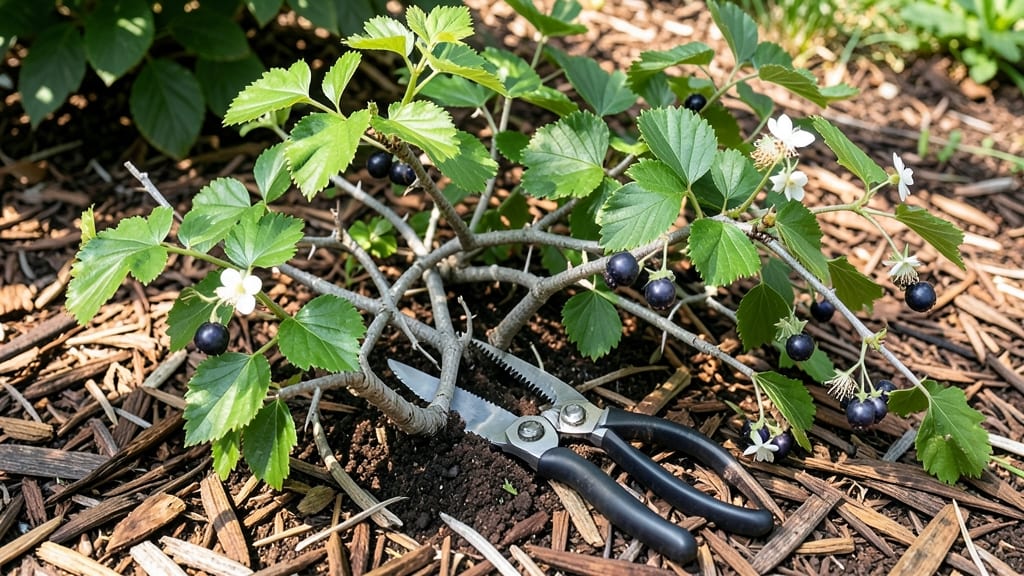
Blackberry plant pruning transforms tangled messes into thicker canes and bigger fruit—I’ve gone from struggling with unruly bushes to harvesting pound after pound of sweet berries. The key isn’t just cutting back; it’s understanding when and how to shape the plant for maximum growth.
Most gardeners prune at the wrong time or too aggressively, which stresses the plant instead of reviving it.
You’ll need sharp pruners, gloves, and disinfectant to prevent disease spread between cuts. Timing matters most—prune late winter or early spring while the plant is still dormant but before new growth starts. This gives the plant 6-8 weeks to recover before summer’s heat kicks in.
Regional differences shift the window slightly: in warmer climates, prune after the last frost, while colder zones can wait until March or April.
Start by removing dead, weak, or crossing canes—these compete for nutrients and block sunlight. Thin the remaining canes to 6-8 strong ones, cutting at the base. Shape the plant into an open V-shape for airflow, which reduces fungal diseases.
After pruning, feed with balanced fertilizer (10-10-10) and water deeply to encourage new, vigorous growth. Within 4-6 weeks, you’ll see fresh green shoots ready to produce fruit.
Here’s the secret weapon: label your canes if you’re unsure which are productive (last year’s fruiting canes) and which are new. Avoid the mistake of pruning summer-bearing varieties in fall—they need their canes to mature over winter.
Post-pruning, monitor for pests like spider mites and treat early with neem oil if needed. The payoff? Jaw-dropping berries that make your neighbors ask for cuttings.
📚 In This Guide
- What you need
- Instructions
- Tips and common mistakes
- Wrapping up and next steps
What you need
- ● Pruning shears or loppers – Sharp, bypass-style blades (avoid anvil types—they crush stems). Choose 4- to 6-inch blades for thick canes.
- ● Pruning saw – For thick, woody canes (1+ inch in diameter). A curved-tooth saw prevents tear-out.
- ● Gloves – Heavy-duty, cut-resistant gloves (blackberries have thorns!). Opt for gardening or pruning-specific gloves with 12+ gauge thickness.
- ● Disinfectant (70% isopropyl alcohol or bleach solution) – 1 part bleach to 9 parts water to sterilize tools between cuts and prevent disease spread.
- ● Rake or garden fork – For clearing debris and loosening soil around the base of the plant.
- ○ Garden twine or zip ties – Optional but helpful for tying down canes after pruning to encourage upright growth.
- ● Trash bags or compost bin – For removing pruned canes (do not compost diseased or pest-infested material).
- ● Hand pruners with a long reach – For tall or hard-to-access canes (extendable or telescopic handles).
- ● Ladder or step stool – If your blackberry patch is taller than 4-5 feet.
- ● Plant food or compost – To revitalize soil after pruning (use a balanced 10-10-10 or organic option).
- ● Label markers – If you’re pruning multiple varieties to keep track of each plant.
- ● Safety goggles – To protect against debris or flying thorns.
Step-by-Step guide to revitalizing blackberry plants through pruning
This method transforms your blackberry patch into a high-yielding powerhouse—just follow the seasonal timing and cut patterns I’ve perfected over years of trial.
Identify and Remove Dead or Weak Canes in Late Winter
Start pruning immediately after your last frost date when the plant is still dormant. Look for canes that are completely blackened, shriveled, or hollow at the center—these won’t produce fruit and should be cut to the ground with clean, sharp pruners. I always remove at least 30% of the oldest canes in this first pass, as these are the least productive and crowd out new growth.
Focus on canes thinner than a pencil—these are typically last year’s fruiting canes that have already given their yield. Leave the thick, plump canes (about ½ inch diameter) for next season’s harvest. Mark your cuts with a 45-degree angle just above a bud or lateral branch to prevent water from pooling and causing rot.
Thin Remaining Canes to 6-8 per Plant in Early Spring
Once new growth begins in early spring (typically 2-4 weeks after pruning), thin your remaining canes to 6-8 of the strongest, healthiest canes per plant. This spacing ensures each cane gets proper sunlight, air circulation, and nutrients. I count canes starting from the base of the plant—anything beyond that number is competing for resources and will produce smaller berries.
When thinning, prioritize canes with smooth bark and vibrant green leaves over those with rough texture or yellowing foliage. Cut at the base with a sharp pruner, leaving no stubs. If you’re unsure which canes to keep, choose the ones growing outward from the center rather than inward—this opens up the plant for better light penetration and fruit access.
Summer Pruning to Encourage Lateral Branches and Fruit Production
About 6-8 weeks after flowering, inspect your canes for long, bare sections without lateral branches. These sections won’t produce fruit, so prune them back to the nearest bud or lateral shoot using clean pruners. I target 12-18 inches of new growth from the top of each cane, as this encourages bushier growth and more fruiting laterals.
Remove any suckers (new shoots growing from the base) that aren’t part of your selected canes—these drain energy from your main plant. If you notice canes bending under the weight of fruit, prop them up with small stakes or a trellis to prevent breakage. This mid-season pruning is critical for thicker canes and larger berries—skipping it often leads to weak, spindly growth and poor yields.
Tips & tricks for perfect blackberry plant pruning
Mastering blackberry pruning transforms your garden from a tangled mess to a productive powerhouse. Here’s how to elevate your technique beyond the basics.
The Right Tools Make All the Difference: Invest in a pair of high-quality, sharp bypass pruners—dull blades crush canes instead of making clean cuts. I also keep a small pruning saw on hand for thicker canes that won’t yield to shears. Sterilize your tools with rubbing alcohol between cuts to prevent spreading disease from dead to healthy canes.
Seasonal Timing is Non-Negotiable: The 2-4 week window after your first late-winter pruning is critical for Step 2. If you miss it, new growth may be too vigorous, making thinning more difficult. Check for fresh, green growth at the base of your remaining canes—this is your signal to thin. In Step 3, wait until after flowering but before fruit sets to avoid removing potential fruiting wood.
Visual Cues for Healthy Canes: When selecting your 6-8 strongest canes in Step 2, look for these telltale signs: smooth bark (not rough or peeling), vibrant green leaves with no yellowing or brown spots, and a diameter of at least ½ inch. The ideal cane should feel firm when squeezed—soft or spongy canes indicate internal rot or pest damage.
Post-Pruning Care Boosts Recovery: After any pruning step, water deeply to help the plant recover. In Step 1, apply a 2-3 inch layer of mulch around the base to retain moisture and suppress weeds. For Step 3, consider a balanced fertilizer (10-10-10) applied 2 weeks after pruning to support new lateral growth. This simple follow-up can increase your yield by up to 30%.
Pro Tips for Blackberry Plant Pruning
- Mastering blackberry pruning transforms your garden from a tangled mess to a productive powerhouse.
- The Right Tools Make All the Difference: Invest in a pair of high-quality, sharp bypass pruners—dull blades crush canes instead of making clean cuts.
- Seasonal Timing is Non-Negotiable: The 2-4 week window after your first late-winter pruning is critical for Step 2.
Frequently asked questions
Got questions about pruning your blackberry plants? You're not alone!
Here are some of the most common concerns—and practical answers—to help you keep your berries thriving.
When is the best time to prune blackberry plants?
Prune floricanes (last year’s canes that produced fruit) in late winter or early spring (before new growth starts) to avoid frost damage. For primocanes (current year’s growth), prune in summer or early fall to encourage thicker canes for next year’s harvest.
How do I tell which canes to cut and which to keep?
Remove dead, diseased, or thin canes first. Then, cut floricanes (fruit-bearing canes from last year) to the ground. Leave 3-5 of the thickest, healthiest primocanes (current year’s growth) to grow—these will produce fruit next season.
What if I prune at the wrong time?
Pruning too early (mid-winter) can expose canes to frost damage, while pruning too late (after new growth starts) may reduce fruit production. If you miss the window, don’t stress—just adjust for next year! Over time, your plant will adapt.
Can I prune blackberries without cutting canes to the ground?
Yes! If you prefer a gentler approach, top primocanes at 4-5 feet in summer to encourage bushier growth. For floricanes, you can also shorten them (rather than remove entirely) to reduce disease risk, though this may slightly reduce fruit yield.
Why aren’t my blackberries producing as much after pruning?
Less fruit? You might’ve removed too many primocanes. Aim to keep 3-5 strong canes—more can lead to overcrowding, while fewer may reduce yield. Also, ensure your plants get full sun (6+ hours/day) and well-draining soil for optimal growth.
Wrapping up and next steps
Pruning your blackberry plants may feel like a daunting task, but with the right tools and techniques, you’ll unlock a bountiful harvest and healthier canes in no time! 🌱 Remember, timing, sharp tools, and patience are your best allies—whether you’re tackling primocanes or floricanes.
Now that you’re armed with knowledge, grab those shears and get pruning!
For even better results, keep a pruning journal to track growth patterns and adjust your approach each season. Happy gardening—your future berry patches will thank you! 🍇